Most advice about a point of difference is too soft to be useful.
It tells you to “stand out,” “clarify your message,” or “find your unique voice.” That sounds fine until you've spent real money on ads, hired a few agencies, and realized every brand in your category is saying the same polished thing. Better service. Better results. Better experience. Buyers stop hearing it.
A real point of difference doesn't start in copy. It starts in operations. If you can't trace your claimed difference to a repeatable input, a measurable customer experience, and a revenue outcome, it's not a market advantage. It's a line on a homepage.
For small and mid-sized businesses, that distinction matters more now than ever. Acquisition is harder. Attribution is messier. Privacy changes have removed a lot of lazy targeting. The businesses that keep winning usually don't just sound sharper. They run tighter systems, define success more clearly, and deliver a better customer journey after the click.
Why Your Point of Difference Is More Than Just a Slogan
The common advice says your point of difference is the thing you say that others don't.
That's backwards.
Most businesses don't lose because they failed to invent a clever phrase. They lose because their “difference” can be copied by lunch. If your positioning is based on generic benefits, competitors can mirror the language with almost no effort. Research on market differentiation makes the point clearly: true points of difference are harder to imitate when they come from durable capabilities like proprietary data or operational speed, while generic claims collapse into sameness as others copy the wording. It also argues that a PoD must be an audited system, not just a slogan in this discussion of durable differentiation.

Claim versus operational advantage
A lot of teams mix up three related ideas:
- USP is usually the sales claim.
- UVP is the customer-facing value promise.
- Point of difference is the reason that promise is believable and hard to copy.
That last part is where most companies get sloppy.
Saying “we respond faster” is a claim. Building a lead handling process that routes, tags, and follows up consistently is an operational advantage. Saying “we protect your brand reputation” is a claim. Having a documented review workflow, escalation path, and service recovery process is an advantage. That's why businesses that take reputation management strategy seriously often sound more credible. Their marketing reflects a system customers can feel.
Buyers don't pay extra for different wording. They pay for lower risk, clearer outcomes, and a smoother path to getting the result they want.
What a weak point of difference looks like
Weak differentiation usually has three traits:
- It's broad: “high quality,” “full service,” and “customer focused” apply to everyone.
- It's unproven: nobody can show how the claim appears in delivery.
- It's detached from revenue: the message may sound polished, but it doesn't improve close rates, retention, or lead quality.
A strong point of difference usually feels more grounded.
| Weak version | Stronger version |
|---|---|
| We deliver better leads | We qualify and route leads using a consistent definition of fit |
| We care about customer experience | We monitor reviews, handoffs, and follow-up as part of the same system |
| We're data-driven | We use shared definitions so the same conversion means the same thing across teams |
The practical test
If you want to know whether your point of difference is real, ask three blunt questions:
- Can the team explain how it works without using brand language?
- Can operations deliver it consistently?
- Would the business still have that advantage if the homepage copy disappeared tomorrow?
If the answer is no, you don't have a point of difference yet. You have a marketing draft.
A Framework for Finding Your Revenue-Driving PoD
A useful point of difference usually shows up in one of three places: customer language, competitor weakness, or operational discipline.
That means the work isn't brainstorming in a conference room. It's an audit.

Start with what customers already reward
Customers tell you what matters long before your brand deck does. The problem is that most businesses look at reviews and support conversations only for reputation control, not strategic insight.
Read through sales call notes, onboarding questions, review themes, cancellation reasons, and support tickets. Look for repeated patterns in buyer language.
Not every repeated comment is a differentiator. Some are just baseline expectations. But when customers consistently mention the same kind of relief, speed, clarity, or trust, you may be looking at something deeper than messaging.
Use prompts like these:
- What do customers praise without being prompted?
- Where do they say previous providers let them down?
- What part of your process reduces friction for them?
- Which outcome do they describe in business terms, not vanity terms?
If several buyers don't rave about the ad itself but keep mentioning how quickly your team followed up, that's a clue. The point of difference may live in the handoff, not the headline.
Audit competitors for gaps, not inspiration
Most competitor research is shallow. Teams screenshot ads, copy the offers, and end up with category wallpaper.
A better approach is to inspect where competitors create doubt. Their weaknesses often reveal the gap your business can own.
Look for things like:
- Mismatch between promise and proof
- Slow or inconsistent follow-up
- Reviews that mention poor communication
- Generic offers with no operational detail
- Landing pages that talk features but not buyer risk
You're not trying to sound louder. You're trying to identify where buyers feel friction and where your business has a cleaner answer.
Field note: The strongest positioning often comes from fixing something operationally messy in your category, then making that fix visible in your marketing.
Look inward at measurement discipline
Many real advantages hide here.
In data-driven advertising, a strong point of difference often comes from operational precision. When a business defines conversion events and quality signals consistently, it reduces ambiguity and improves decision-making across teams and channels, as noted in this discussion of measurement precision in advertising.
That sounds technical, but the business implication is simple. When your team agrees on what counts as a qualified lead, a booked appointment, a retained customer, or a successful handoff, your campaigns improve faster. You stop optimizing toward noise.
Businesses using stronger customer behavior analytics usually discover that their edge isn't just creative quality. It's cleaner definitions, cleaner data, and better decisions.
Build the shortlist
Once you've reviewed customer signals, market gaps, and internal operations, narrow your possible points of difference with a simple filter.
A candidate PoD should be:
- Relevant to buyers: customers have to care about it.
- Visible in the experience: prospects should notice it before and after the sale.
- Defensible over time: it should come from a capability, process, or system competitors can't quickly mimic.
Here's a practical way to frame it:
| Candidate idea | Keep it if | Drop it if |
|---|---|---|
| Faster response | you can support it with workflow and staffing | it depends on one person being online |
| Better lead quality | the team shares the same qualification rules | sales and marketing define quality differently |
| Better customer experience | the process includes follow-up and feedback loops | it's only a statement in brand copy |
Pressure-test the finding
Before you lock in a point of difference, say it without adjectives.
Instead of “premium full-service partner,” say what the business does.
Instead of “best-in-class reporting,” say how reporting changes decisions.
Instead of “white-glove experience,” say where customers get speed, clarity, and accountability that others don't provide.
If the plain-English version still sounds strong, you're onto something. If it collapses without polished language, it probably wasn't a real differentiator.
How to Validate Your PoD Before You Invest in Growth
A point of difference should earn budget, not just applause in a strategy meeting.
The safest way to treat a new PoD is like a new ingredient in a recipe. You don't change the whole menu on instinct. You test a small batch first and see what happens.
What validation actually means
Validation doesn't have to be complicated. You're trying to answer one question: does this claimed difference change buyer behavior in a meaningful way?
That can happen through:
- Landing page tests that compare one value angle against another
- Ad tests that hold audience steady while message changes
- Sales call tracking that records which differentiator improves conversion quality
- Post-lead surveys that ask what made the offer feel more credible
The mistake is jumping straight from idea to full rollout. That's how teams burn budget on internal assumptions.
Separate noise from signal
Not every lift is real. Some results happen because of timing, small samples, or random variation.
In business experimentation, a result is often considered statistically significant when the p-value is below 0.05, meaning the observed difference would occur by chance less than 5% of the time. That threshold helps filter random noise from a more repeatable effect, according to this explanation of statistical significance.
That matters because a point of difference isn't just “version B did better last week.” It's a difference that can survive a probability test. Even then, significance doesn't automatically mean the result is commercially important. You still need to examine effect size, business value, and lead quality.
A low-risk validation model
You don't need a lab coat for this. Use a simple operating rhythm.
Write the hypothesis
Example: “If we lead with our speed of follow-up and closed-loop customer communication, more qualified prospects will take the next step.”Define the operational meaning
Technical and operational definitions are essential. A technical definition states what a term means in a field, while an operational definition states how you will measure it in practice, as explained in this overview of technical and operational definitions. “Better leads” is too vague. “Leads that match our qualification criteria and book the next appointment” is usable.Run a contained test
Change one major variable at a time. Message, offer framing, landing page proof, or follow-up sequence.Review business outcomes
Don't stop at click behavior. Tie the test back to marketing ROI calculations and downstream sales quality.
A message that attracts more responses but worse-fit buyers isn't a validated point of difference. It's a more efficient way to create noise.
What to do when tests are inconclusive
Sometimes the market doesn't reject your idea. It just doesn't care enough.
That usually means one of three things:
- The differentiator is real, but not important to buyers
- The differentiator matters, but the message is too vague
- The difference depends on later-stage experience, not first-click creative
When that happens, don't force a grand narrative. Adjust the test. You may need stronger proof, a tighter audience, or a different place in the funnel to communicate the advantage.
Turning Your Point of Difference into High-Performing Ads
Once your point of difference has earned the right to be in market, your ads need to do one job well. They need to make the advantage obvious fast.
That doesn't mean louder headlines or clever copy tricks. It means translating an operational truth into a buying reason.

Stop writing ads around features
A weak ad usually starts with what the business offers.
A strong ad starts with what the buyer gains because your business operates differently.
Here's the difference.
| Feature-first ad | PoD-driven ad |
|---|---|
| Full-service marketing for growing businesses | Stop losing leads between click and callback |
| We manage campaigns across multiple channels | Get a system that tracks, follows up, and protects the customer experience |
| Custom strategy for your business | Turn ad interest into qualified conversations with less leakage |
The second column works better because it ties the promise to an operating reality. It speaks to friction the buyer already feels.
Use proof that matches the claim
If your point of difference is faster response, show the process that enables speed.
If it's cleaner lead quality, explain how inquiries are filtered, routed, or qualified.
If it's stronger customer trust, show how feedback, follow-up, and reputation are managed after the click.
That proof can appear in several creative elements:
- Headline: name the business problem your system solves
- Primary copy: explain the mechanism in plain English
- Visual: reinforce the process, not just the brand aesthetic
- CTA: point toward the next step that keeps the promise consistent
Before and after examples
Here are a few practical rewrites.
Before
“We help local businesses grow with expert ad management.”
After
“Your ads shouldn't stop at the lead. Build a system that captures, follows up, and converts demand.”
Before
“More leads. Better ROI. Done for you.”
After
“Attract high-intent prospects and route them into a cleaner follow-up process, so interest doesn't die in the handoff.”
Before
“Get a customized strategy for your brand.”
After
“Fix the gap between campaign performance and customer experience. That's where revenue usually leaks.”
The best ad copy doesn't claim uniqueness. It makes the cost of staying generic feel expensive.
Match the message to the stage
Not every buyer needs the full story at once.
Top-of-funnel creative should surface the pain your operational advantage solves. Mid-funnel assets should explain how your system works. Bottom-funnel pages should reduce risk with clarity, proof, and next-step confidence.
That's where strong advertising headlines help. A headline shouldn't just create curiosity. It should frame your point of difference in terms a prospect can act on.
Keep the creative honest
A final warning. Don't let your creative team outrun your operations.
If the ad promises white-glove follow-up and the lead sits untouched, the campaign didn't fail because of media buying. It failed because the message exposed a delivery gap.
That's why the best-performing ads usually come from businesses with disciplined handoffs, shared definitions, and a customer experience that supports the claim.
Integrating Your PoD Across the Entire Ad Stack
A point of difference fails the moment it depends on copy alone.
Teams love to workshop slogans because slogans are easy. Revenue comes from the harder work: carrying the same advantage through the landing page, CRM, follow-up logic, sales process, and customer experience. If those pieces don't agree, the market spots the gap before your team does.
Your website has to continue the sales case
A click is not proof that the message worked. It only proves the ad earned a second look.
The landing page has one job: confirm the claim and make the next step easy. If the ad promises a faster path to revenue, the page should show the process, remove friction from conversion, and give the buyer enough proof to keep going. If the ad frames your company as the organized option, the page should feel organized. Clear page structure, direct calls to action, and proof tied to the promise do more than clever phrasing here.
Strong campaigns often break. The ad makes a sharp argument, then the landing page retreats into generic service language, vague claims, and soft calls to action. That reset kills momentum and makes the PoD look invented.
Your CRM is where differentiation becomes repeatable
A real PoD survives handoffs.
If you claim speed, lead routing and first-response standards need to support speed. If you claim clarity, the buyer should get clean communication, visible next steps, and no internal confusion leaking into the thread. If you claim a premium experience, the process cannot depend on one high-performing employee remembering everything.
That is why the CRM matters so much. It turns a promise into a process.
A well-built marketing automation workflow helps teams enforce timing, sequencing, ownership, and follow-up standards. Automation should not fake human care. It should protect the customer experience from inconsistency, dropped tasks, and delayed responses.
A differentiator is real when the business can deliver it on an ordinary Tuesday.
Reviews test whether the promise survives contact with reality
Reputation management is not cleanup after the campaign. It is part of the operating system.
Your ads create expectations. Delivery either confirms them or breaks them. Reviews then publish that verdict at scale. If your PoD is responsiveness, buyers should mention responsiveness. If your PoD is trust and follow-through, that pattern should show up in customer feedback without your team forcing the language.
This is a practical revenue issue, not a branding side project. Weak delivery hurts acquisition twice. You pay once for the click, then again when future buyers see inconsistent proof.
Shared definitions keep the stack honest
A lot of ad stacks underperform because each team uses a different definition of success.
Marketing celebrates lead volume. Sales filters out poor-fit inquiries. Operations inherits messy expectations. Leadership sees blended reporting and assumes the system is working. It usually isn't. The problem is not visibility alone. The problem is that the business never agreed on what a qualified lead, a good handoff, or a healthy customer journey means.
Shared definitions fix that. They let media, creative, sales, and delivery optimize toward the same commercial outcome. Once those definitions are in place, your point of difference stops behaving like a campaign angle and starts acting like an operating standard.
Measure the PoD like a system change
The cleanest question is simple: did this version of the business perform better than the old one?
Answer that by comparing controlled changes across the stack. Run the new PoD message on selected landing pages. Route those leads through the new follow-up process. Track downstream quality, speed-to-contact, appointment progression, close rates, retention signals, and review themes against a comparable baseline. That gives you a far better read than celebrating higher click-through rates while lead quality stays flat.
A simple structure looks like this:
| Area | New PoD system | Legacy setup |
|---|---|---|
| Landing pages | pages built around the current claim, proof, and next step | pages using older messaging |
| Follow-up | leads routed through defined response rules and automation | leads handled through the prior process |
| Customer feedback | review requests and feedback collection tied to the new experience | feedback handled inconsistently |
That kind of comparison shows whether the PoD changed business performance or just changed reporting optics.
The moat is built in execution
Competitors can copy a headline in an afternoon. They have a much harder time copying disciplined routing, message continuity, sales enablement, service delivery, and review generation across the full ad stack.
That is the advantage. A point of difference gets stronger when it is built into how the company operates, measured, and improved over time. At that point, the PoD is no longer a claim you publish. It is a system that produces revenue in a way generic brands struggle to match.
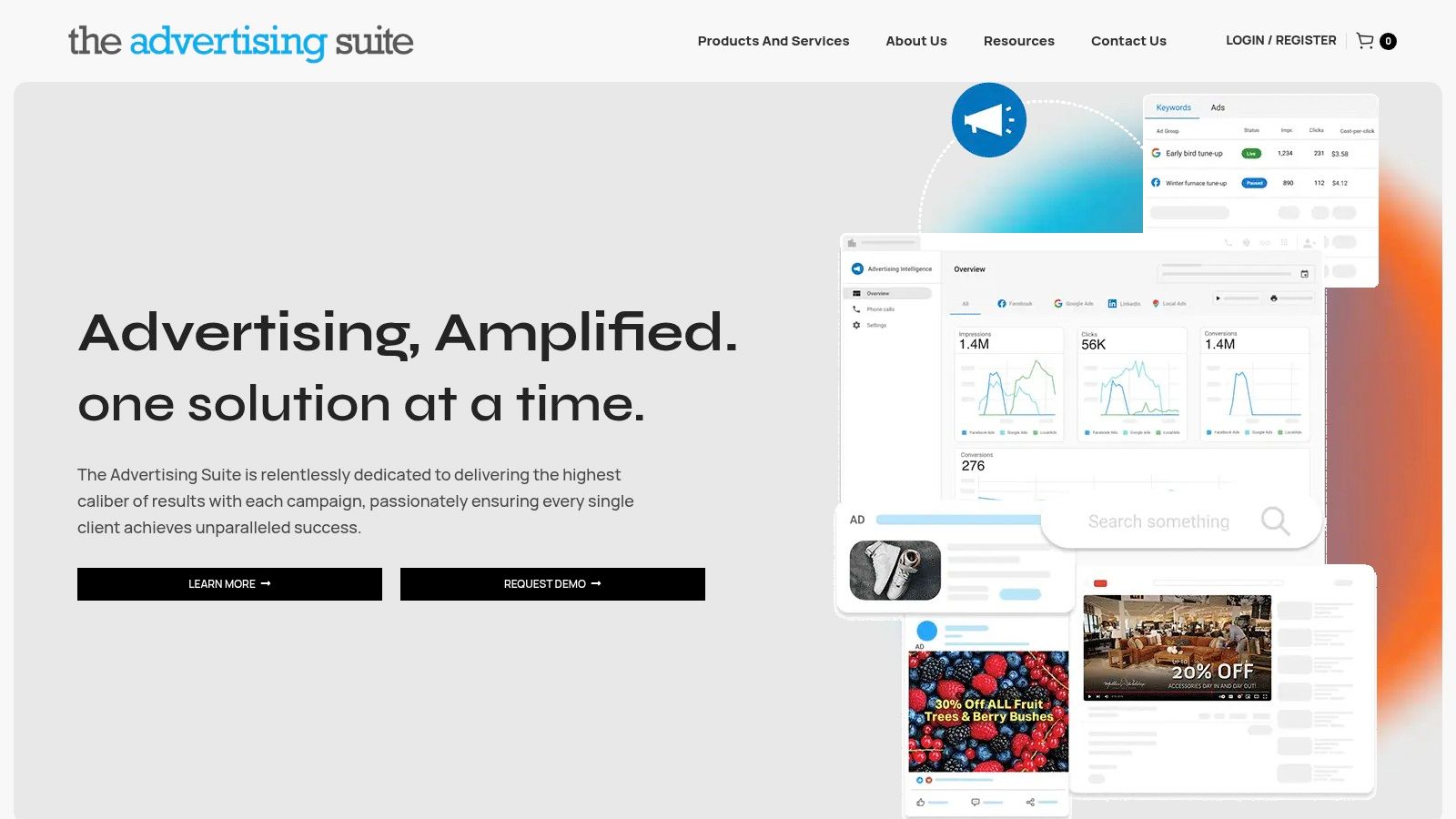
If you want a growth partner that treats your point of difference like a revenue system instead of a tagline, The Advertising Suite is built for that job. We combine human-led strategy with an integrated CRM and reputation ecosystem, so your ads, follow-up, and customer experience work as one engine. For businesses that are done paying for vanity metrics, you can request a demo or explore the membership to access the built-in software and the 25% discount on services. It's a practical way to make your marketing team stronger without adding more chaos to the stack.