Most advice about performance marketing is outdated. It treats the job as buying traffic cheaply, reporting clicks quickly, and hoping revenue shows up later.
That's backwards.
If your ads aren't connected to what happens after the click, you don't have a performance system. You have a media buying habit. Plenty of businesses learn this the expensive way. They get dashboards full of activity, a pipeline full of weak leads, and no clean answer to the only question that matters: did this investment create profitable growth?
Real performance marketing solutions don't stop at the ad platform. They connect targeting, creative, landing pages, CRM follow-up, and customer experience into one revenue engine. That's the difference between renting attention and building a predictable growth model.
Moving Beyond Clicks to Conversions
The old playbook says performance marketing is about getting more traffic for less money. That sounds efficient. It also ignores how businesses make money.
A click is not revenue. A form fill is not revenue. Even a lead isn't revenue if your team can't reach it, qualify it, book it, and convert it.
Performance marketing now makes up a major share of digital advertising in the U.S. Digital ad revenue reached $259 billion in 2024, up 15% year over year, with search at $102.9 billion and digital video at $62.1 billion, which shows how outcome-oriented channels dominate spend in major markets, as explained in this overview of performance marketing strategy and U.S. digital ad revenue.
The channel-first model is broken
Most businesses don't need another vendor promising cheaper clicks. They need a system that answers three hard questions:
- What produced qualified demand
- What converted into customers
- What generated profitable revenue
That's why obsessing over platform metrics alone is a mistake. A campaign can look great inside an ad account and still fail inside the business. Weak intake, slow follow-up, poor reviews, clunky landing pages, and missed calls can destroy performance long before accounting ever sees the bill.
Practical rule: If your agency can report ad metrics but can't explain pipeline quality, close rates, and customer experience, they're managing campaigns, not growth.
Revenue starts after the click
The smartest operators now treat performance marketing as a cross-channel operating system. Search captures intent. Social and video shape demand. Landing pages filter attention. CRM workflows keep opportunities from going cold. Reputation management helps buyers trust you enough to act.
That's also why business owners need a tighter grip on how to calculate marketing ROI. If you can't trace spend to outcomes, you can't scale confidently. You're guessing with better graphics.
A serious performance strategy doesn't celebrate activity. It removes friction between first touch and paid customer. That's where conversions happen. That's where cash flow improves. And that's where most “performance” setups subtly fail.
The Five Core Components of a Revenue-First System
A real growth system has moving parts, but it isn't complicated in theory. You need the right message, in the right channels, measured correctly, improved constantly, and connected to sales and service.

Miss one of those pieces and the whole thing gets expensive fast.
Strategic creative that earns attention
Creative is not decoration. It's the entry point to the entire system.
Bad creative attracts the wrong click. Bland creative gets ignored. Confused creative creates friction before a prospect even reaches your site. Strong performance marketing solutions start with messaging built around buyer intent, urgency, trust, and clarity.
That usually means:
- Clear offer framing: The buyer should understand what you do, who it's for, and why it matters in seconds.
- Specific problem language: Generic copy attracts generic interest. Specific pain points attract action.
- Credibility cues: Proof, process clarity, and strong positioning reduce hesitation before the lead form ever appears.
Creative has one job. Qualify attention before the rest of your funnel has to do cleanup.
Omnichannel execution that matches intent
Most businesses don't need to be everywhere. They need to be present where intent is highest and where their sales process can support demand.
A buyer who searches with urgency behaves differently from someone discovering your offer while scrolling. Your channel mix should reflect that reality. Search often captures demand. Social and video often shape it. Retargeting helps recover what leaks out of the funnel. Local businesses may need map visibility and call-driven conversion paths. Longer sales cycles may need tighter audience sequencing.
Don't confuse more channels with more strategy. More channels often just means more places to lose attribution.
Teams should map channel roles before launching campaigns. Otherwise, they force every platform to do every job and wonder why performance gets muddy.
Tracking and attribution that tell the truth
Without measurement, every opinion gets equal weight. That's a terrible way to allocate budget.
Performance marketers need a clean view of spend, sessions, lead quality, sales outcomes, and revenue signals across channels. That requires disciplined tagging, conversion tracking, CRM feedback loops, and a reporting model that doesn't break every time a user switches devices or buys later.
At the metric level, the basics still matter. Conversion rate equals conversions divided by clicks. Cost per conversion equals total spend divided by total conversions. ROAS equals revenue divided by ad spend. This breakdown of performance marketing metrics and core formulas lays out why those relationships matter. If a campaign spends $10,000 and generates 200 conversions, cost per conversion is $50. If that same spend generates $40,000 in revenue, ROAS is 4.0 or 400%.
Those formulas are simple. What matters is whether your setup captures the right inputs.
Conversion rate optimization that fixes the leaks
Many businesses try to buy their way out of a conversion problem. That usually fails.
If your landing page is slow, your forms are clunky, your offer is vague, or your booking flow creates friction, more traffic just means more waste. Conversion rate optimization is where grown-up marketing happens. It forces you to improve what buyers experience.
Focus on three friction points first:
- Message match between ad and landing page
- Form and booking simplicity so interested buyers can act fast
- Trust signals that reduce second-guessing at the decision point
Even small funnel leaks add up when paid traffic is feeding the system every day.
CRM and reputation management that turn leads into revenue
This is the part most agencies ignore because it sits outside the ad account. It's also where profit gets won or lost.
If leads sit untouched, your ad spend decays. If your pipeline isn't organized, you can't see what happened after inquiry. If reviews are weak or unmanaged, high-intent prospects hesitate at the finish line. That's why CRM and reputation systems are not optional add-ons. They are core infrastructure.
A good setup should handle the basics without drama:
| Component | What it must do |
|---|---|
| CRM pipeline | Track every lead from inquiry to closed revenue |
| Follow-up workflows | Trigger fast outreach, reminders, and reactivation |
| Review management | Generate fresh proof and protect trust at the decision stage |
If your current setup treats these as separate from marketing, that's your problem. Marketing creates demand. CRM captures and advances it. Reputation helps close it.
A connected marketing automation workflow makes that handoff visible and repeatable. That's when performance marketing solutions stop behaving like campaigns and start behaving like a business system.
Why Your Marketing KPIs Are Failing You
A lot of reporting is built to make underperforming work look respectable.
Clicks look busy. Impressions look big. Cost per lead can look efficient, right up until your sales team tells you the leads are junk. That's why agency-burned founders are skeptical. They should be.

Vanity metrics create false confidence
If a partner leads with clicks, reach, or raw lead volume, they're staying at the easiest layer of analysis. Those numbers can help diagnose campaign behavior, but they don't tell you whether the business made money.
The metrics that matter are tied to economic outcomes. According to this guide to performance marketing analytics and measurable KPIs, effective performance marketing is organized around ROI, CPA, CTR, CPC, and conversion rate. It also emphasizes that ROAS equals revenue divided by spend and CPA equals spend divided by conversions, which makes spend accountable to outcomes.
That's the difference between observation and accountability.
The three numbers owners should demand
Use the following lens every time you review marketing performance:
- CPA tells you what it costs to acquire the action you care about. If that action isn't tied to qualified business outcomes, CPA still needs context.
- ROAS tells you whether revenue justifies ad spend. Useful, but only if the revenue tracking is credible.
- LTV tells you what a customer is worth over time. Without it, you may cut campaigns that look expensive up front but are profitable over the full relationship.
If your reporting stops before revenue quality, the dashboard is incomplete.
Notice what's missing from that list. Impressions. Reach. Engagement rate. Those can support analysis, but they should never be the headline for a business owner trying to protect margin.
Simple formulas, hard truth
You don't need complicated math. You need disciplined definitions.
| KPI | Formula | Why it matters |
|---|---|---|
| Conversion rate | Conversions ÷ Clicks | Shows whether traffic is turning into action |
| CPA | Spend ÷ Conversions | Shows acquisition efficiency |
| ROAS | Revenue ÷ Spend | Shows return from ad investment |
These formulas force clarity. They also expose weak operations. A poor CPA might reflect bad traffic. It might also reflect a weak landing page or slow sales follow-up. A weak ROAS might come from the wrong offer, poor close rates, or broken attribution.
That's why marketing attribution matters so much. You need to know which touchpoints influenced conversion, where buyers drop off, and whether each channel is generating actual business value.
What to ask in your next reporting call
Stop accepting reports that float above revenue. Ask direct questions:
- Which campaigns produced qualified customers, not just leads
- What is our CPA by meaningful conversion type
- How much revenue can be tied back to each channel
- What changed in conversion rate after traffic hit the site
- Where are leads stalling after they enter the funnel
Those questions usually change the tone of the meeting. Good. They should.
How to Evaluate Performance Marketing Solutions
Most businesses don't fail because they chose the wrong ad channel. They fail because they hired a channel specialist when they needed an operating partner.
That distinction matters when you evaluate performance marketing solutions. You're not buying ads. You're buying a system for turning budget into revenue without losing visibility between click and close.
Look for one source of truth
If reporting lives in five disconnected dashboards, you will waste time arguing over numbers instead of improving them.
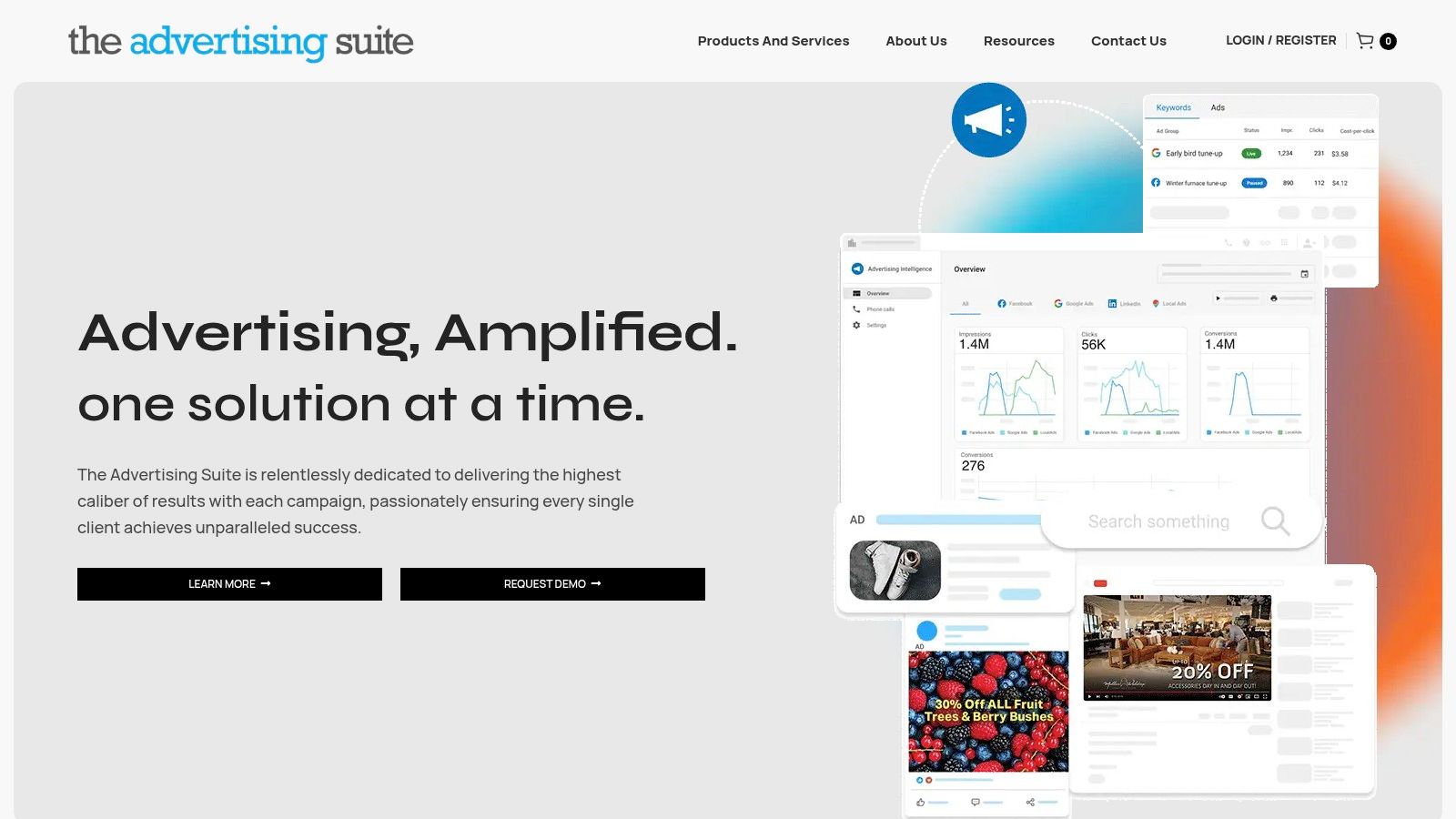
A strong performance marketing stack reduces error by consolidating data from over 500 marketing and revenue sources into a single source of truth, which helps reconcile paid media costs with web analytics and improves optimization decisions, as outlined in this article on what a performance marketing data stack should do.
That matters because fragmented reporting creates predictable problems:
- Budget confusion: Teams can't agree on which channel is working.
- Attribution gaps: Leads and revenue get disconnected from the campaigns that influenced them.
- Optimization delay: Decisions stall because no one trusts the data set.
If a provider can't explain how they unify media, conversion, and revenue data, keep looking.
Ask better questions before you sign
Most sales calls are too easy. Ask questions that force operational honesty.
Here are the ones worth using:
- How do you define success
- What happens after the lead is generated
- How do you connect ad spend to closed revenue
- What parts of the funnel do you actively improve
- How do you handle reporting when multiple channels influence one sale
A weak provider will answer with channel tactics. A stronger one will talk about funnel integrity, CRM visibility, sales handoff, and customer experience.
The fastest way to spot a glorified media buyer is simple. Ask what happens after the click.
Red flags that should end the conversation
A few warning signs show up again and again:
- Channel obsession: They talk endlessly about platform features, but not about your business model.
- Lead volume fixation: They celebrate inquiries without discussing qualification, follow-up, or close rates.
- Tech fragmentation: They rely on scattered tools with no clean reporting logic.
- No review strategy: They ignore the trust layer that often decides whether a buyer converts.
That last point gets underestimated. For local and service businesses especially, reputation isn't branding fluff. It affects response rates, conversion confidence, and sales efficiency.
Evaluate fit by economics, not style
Don't choose based on presentation polish. Choose based on whether the model can scale with your margin structure, sales process, and average deal quality.
Use this quick filter:
| Evaluation area | Strong answer | Weak answer |
|---|---|---|
| Attribution | Connects spend to pipeline and revenue | Reports only platform metrics |
| Technology | Unified data and operational visibility | Separate systems with manual exports |
| Optimization | Improves ads, pages, process, and follow-up | Adjusts bids and creative only |
| Success metric | Profitability and revenue efficiency | Traffic and lead volume |
If you want a practical benchmark for efficiency planning, start with target cost per acquisition. That gives you a grounded way to judge whether a proposed strategy fits your economics before you throw money at it.
Real-World Playbooks for Your Business
The lazy way to package strategy is by industry. The smarter way is by need-state.
That matters because two companies in the same category can need completely different performance marketing solutions. One may need fast demand capture. Another may need lead quality control. Another may need better retention and follow-up before scaling spend.

A Bain analysis argues that segmenting SMBs by underlying needs, such as growth stage, price sensitivity, and operational maturity, is more effective than grouping them only by industry. It also recommends testing one subsegment before scaling, as explained in this piece on need-state segmentation for SMB growth.
E-commerce brands that need cleaner conversion paths
An e-commerce business usually doesn't have a traffic problem for long. It has a conversion efficiency problem.
The common pattern looks like this. Ads bring visitors to product pages. Some add to cart. Too many disappear. The fix isn't just better targeting. It's a tighter system.
For this type of business, the playbook should include:
- Offer-led creative: Push clear product value, urgency, and buyer objections into the ad itself.
- Cart recovery through CRM: If a shopper shows intent and leaves, follow-up should start automatically.
- Landing and product page refinement: Simplify decisions, reduce distraction, and reinforce trust near checkout.
A useful starting point is this guide to e-commerce growth strategies, especially if you're trying to connect paid demand with post-click conversion behavior.
Local service businesses that live or die on trust
A local service brand can generate leads and still lose the market. Usually for boring reasons. Slow response. Missed calls. Thin reviews. No follow-up. Weak intake.
That's why local performance systems need tight alignment between advertising, operations, and reputation. Search intent often matters most here because the buyer already wants a solution. The primary goal is to convert that urgency before it goes elsewhere.
A practical local playbook looks like this:
| Need-state | Recommended focus |
|---|---|
| Immediate demand capture | High-intent search campaigns with clear service offers |
| Lead handling discipline | Fast CRM routing, reminders, and booked follow-up |
| Trust reinforcement | Automated review collection after service completion |
A local business with average ads and excellent follow-up often outperforms a local business with excellent ads and weak operations.
That's not glamorous. It's just how revenue works.
Scale-ready B2B firms that need pipeline visibility
B2B teams often get trapped in lead-stage reporting. Marketing celebrates form fills. Sales complains about quality. Finance sees no clean line to revenue. Everyone gets annoyed, and no one fixes the system.
The better playbook starts with sales reality. If the sales cycle is consultative, longer, or multi-touch, then your marketing setup must feed CRM stages, not just a lead count. That means your campaigns should be judged by progression through pipeline, not just first conversion.
For this need-state, focus on three areas:
- Message precision that filters out poor-fit buyers early
- CRM-connected campaign tracking so each opportunity is visible after the handoff
- Revenue-stage reporting that shows which campaigns support actual deal movement
A lot of SMBs overspend. They scale ad activity before they've built operational maturity. Bain's need-state view is useful because it forces the tougher question: can this business absorb and convert more demand profitably right now?
That's the right question. Not whether a platform can deliver more clicks.
Your Next Step to Predictable Growth
Most businesses don't need more marketing activity. They need fewer disconnects.
That's the core idea behind effective performance marketing solutions. Ads matter. Creative matters. Channel strategy matters. But none of it works reliably when your CRM is messy, your follow-up is slow, your attribution is weak, or your customer experience creates friction after the lead comes in.
The businesses that scale cleanly understand this. They stop treating marketing as a stack of separate services and start treating it as one integrated revenue system. That shift changes everything. It sharpens decisions, exposes waste faster, and makes growth more predictable because every part of the funnel is being held accountable.
If you've been burned by vanity metrics, this is the reset. Stop asking who can get you the most clicks. Ask who can help you turn demand into customers, customers into revenue, and revenue into something repeatable.
That's the standard. Anything less is just campaign management dressed up as strategy.
If you're ready to replace fragmented marketing with a revenue-first system, The Advertising Suite is built for exactly that. As a growth-tech hybrid, they combine strategy, advertising execution, CRM, and reputation management into one accountable framework designed to support real business growth. Their membership also includes a 25% discount on services and provides access to proprietary software, and their approach has been validated by over 10,000 satisfied customers. If you want a partner that works like an extension of your team, request a demo or explore the membership.