Revenue does not stall because your team needs more tactics. It stalls because the business is measuring activity that looks busy and pays poorly.
Plenty of e-commerce brands can buy clicks, collect screenshots of rising engagement, and still miss their revenue targets by a mile. Traffic is not the strategy. Revenue is. If acquisition, conversion, retention, and margin management are disconnected, growth turns into an expensive reporting exercise.
A store grows when the whole system pulls in the same direction. Ads need to match buyer intent. Landing pages need to remove friction. Reviews need to lower hesitation. CRM data needs to drive follow-up that converts. Operations need to support the promise marketing makes. Break any one of those links and revenue leaks out fast.
The market is still getting bigger, and that raises the penalty for sloppy execution. The U.S. Census Bureau reports that e-commerce continues to account for a growing share of total retail sales, which is a strong signal that brands cannot treat digital growth like a side project anymore. Bigger demand attracts more competition, and weak systems get exposed quickly.
That is why this guide uses a revenue-first framework instead of a bag of generic tips. Each strategy is here for one reason. It has a direct path to stronger revenue, whether that comes from lower customer acquisition costs, higher conversion rates, stronger retention, or better lifetime value.
You will also see a practical bias throughout. The execution tips show what to do. The pros highlight likely quick wins. The business-fit guidance shows when it makes sense to bring in a growth-tech hybrid partner to speed up results, tighten tracking, and avoid wasting budget on guesswork, especially if your team still struggles with marketing attribution across channels.
These ten strategies are not equal. Some fix leaks. Some create lift. The smart move is knowing which one earns attention first.
1. Omni-Channel Advertising Integration
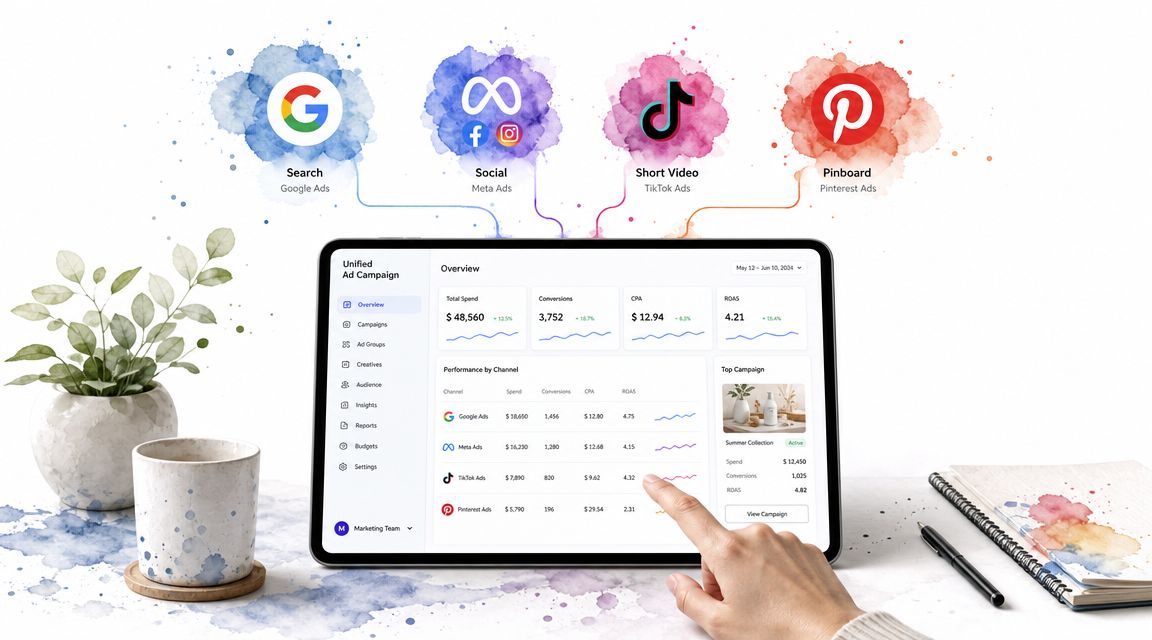
Treating paid search, paid social, and email as separate programs is a revenue mistake. Customers move across channels in one buying journey. Your reporting and budget decisions need to reflect that reality, or you will keep crediting the wrong touchpoints and starving the ones that close sales.
A shopper might first see a short-form video, return later through a product search, then buy after a reminder email. If those interactions sit in different systems with different naming rules, your team gets a distorted view of performance. Bad attribution leads to bad budget allocation. Bad budget allocation gets expensive fast.
What to tighten first
Omni-channel integration works when four pieces are in place:
- Unified customer records: Send lead, purchase, and repeat-order data into one CRM so the full customer path is visible.
- Consistent tracking rules: Use the same UTM structure every time. Sloppy naming conventions ruin reporting long before teams notice.
- Platform signal repair: Configure server-side and on-site conversion tracking so optimization models are not guessing.
- Shared audience logic: Build segments once, then use them across channels while keeping the offer consistent.
The quick win is not “being everywhere.” It is getting one clear operating view of spend, behavior, and revenue. That gives you cleaner retargeting, fewer reporting fights, and a much better chance of spotting assisted conversions before someone cuts the wrong campaign.
This strategy matters most for brands hitting a ceiling with paid media efficiency, messy attribution, or repeated disconnects between acquisition and retention. That is also the point where a growth-tech hybrid earns its keep. If your team cannot trace revenue across touchpoints, fix that first with a proper marketing attribution framework and a disciplined conversion rate improvement process for e-commerce traffic. Otherwise, you are scaling confusion, not revenue.
2. Fixing the Leaks with Revenue-Focused CRO
More traffic does not fix a store that leaks revenue. It just makes the loss easier to measure.
Revenue-focused CRO means improving the pages and flows that decide whether paid clicks turn into orders, bigger carts, and repeat buyers. The goal is not a prettier storefront. The goal is higher revenue per visitor.

Where leaks usually hide
Start where purchase intent is already high and friction is expensive.
- Product pages: State the value fast, show proof early, and answer buying objections before shoppers start hunting through tabs, reviews, or FAQs.
- Cart and checkout: Cut extra fields, remove surprise costs, and make shipping, returns, and delivery timing easy to understand.
- Mobile experience: Thumb-stopping ads are useless if the mobile path to purchase feels clumsy, slow, or crowded.
- CTA hierarchy: Give each page one clear job. If every button screams for attention, none of them win.
A simple rule works here. Prioritize the pages with the most traffic and the highest commercial intent. That is where small conversion gains produce the fastest revenue lift.
Use heatmaps, session recordings, and checkout drop-off data to spot friction, then test changes one at a time. Judge the result by revenue per visitor, average order value, and completed purchases. Vanity metrics do not pay invoices.
The quick wins are usually boring, which is exactly why they work. Better product imagery. Sharper copy. Fewer checkout steps. Stronger proof near the add-to-cart button. Short video assets built for ads and product selling often help here because they answer objections faster than paragraphs of brand copy.
This strategy matters most for brands paying to acquire traffic but failing to convert enough of it, especially when paid media costs keep rising faster than on-site performance. That is the point where a growth-tech hybrid can move faster than an in-house team stuck debating redesigns and opinion-based tweaks. If your store has traffic but weak yield, get serious about improving conversion rate. Every unresolved leak makes scaling more expensive.
3. Data-Driven Creative That Stops the Scroll
Pretty creative gets compliments. Revenue-focused creative gets clicks, qualified traffic, and purchases.
The difference is discipline. Winning ads are built from first-party signals, not internal opinions. Your best hooks are already sitting in customer emails, support chats, reviews, post-purchase surveys, and sales notes. If buyers keep asking about sizing, shipping speed, durability, or whether the bundle is a better deal, answer those points in the ad before they become objections on the product page.

A skincare brand makes this obvious fast. One ad can lead with ingredient clarity for skeptical buyers. Another can focus on visible texture improvement for problem-aware shoppers. A third can use customer proof to show that the routine is simple enough to stick with. Same product. Different buying trigger. Cleaner read on what drives revenue.
Build creative from evidence
Run this process every week:
- Pull language from customer conversations: Support tickets, CRM notes, reviews, and survey responses give you copy people already trust because they said it themselves.
- Test distinct hooks, not cosmetic variations: Problem-first, benefit-first, proof-first, and offer-first angles attract different intent levels.
- Match the asset to the channel: Social needs speed and a strong opening frame. Product-focused traffic needs specificity, proof, and a clear next step.
- Use proof as the creative backbone: Customer demos, UGC-style clips, comparisons, and testimonials usually beat polished brand language because they answer doubt with something concrete.
This is the quick win. One strong message tested across several hooks often outperforms a full batch of visually polished ads that say nothing specific.
If your team keeps shipping attractive creative with vague claims, stop rewarding that habit. Use video assets built around real customer objections and proof to test messages faster and find the angle that improves click-through rate, conversion quality, and revenue per impression.
This strategy matters most for brands spending consistently on acquisition but seeing creative fatigue, weak click quality, or rising CPMs without a matching lift in sales. A growth-tech hybrid earns its keep here by connecting ad performance, customer insight, and production speed. That closes the loop faster than an in-house team stuck debating aesthetics while revenue stalls.
4. The Membership Loop for Retention and Lifetime Value
A lot of brands talk about growth while bleeding margin on the second purchase.
If revenue resets to zero every month unless new customers show up, retention is the first problem to fix. Paid acquisition can scale. It also gets more expensive the moment competition rises, creative weakens, or attribution gets messy. A membership loop gives you a cleaner path to revenue because it increases purchase frequency, lifts average customer value, and gives buyers a reason to stay engaged after the first order.
The goal is not a cute points program sitting in the footer. The goal is a retention system tied to buying behavior.
What a retention engine actually needs
Build it around actions that change revenue:
- Behavior-based segmentation: Separate first-time buyers, repeat buyers, inactive buyers, and high-value buyers so each group gets a relevant offer instead of the same generic campaign.
- Automated win-back sequences: Trigger outreach based on time since purchase, category bought, or drop in engagement. Timing matters more than volume.
- Tiered rewards: Give customers a concrete reason to place the next order faster or increase basket size to reach the next threshold.
- Post-purchase timing: Follow up while product interest is still active with education, replenishment prompts, cross-sells, and referral asks.
The quick win is simple. Start with the second purchase. If a customer buys once and disappears, your acquisition system is doing all the work and your retention system is asleep.
The Advertising Suite's own model gets this right. The Membership ties CRM, follow-up, and offer delivery into one operating system, with a 25% discount on services plus access to the proprietary CRM. That matters when a brand has enough order volume to justify lifecycle automation but not enough internal bandwidth to build, test, and maintain it well. A growth-tech hybrid earns its keep here by connecting segmentation, offer logic, and campaign execution before retention turns into another neglected spreadsheet.
If you know what a customer bought, when they bought it, and what they did next, you have enough data to build a stronger retention system than a surprising number of e-commerce stores.
The mistake is overcomplicating loyalty before fixing the basics. Start with replenishment timing, second-order incentives, VIP segmentation, and win-back flows. Get those working first. Then add membership mechanics that increase repeat revenue instead of dressing up weak retention with prettier labels.
5. Building Your Own Traffic Source with Content and SEO
Brands that rely only on paid media stay one budget cut away from a traffic problem. Content and SEO fix that by building an acquisition channel you do not have to rebuy every week.
The goal is not to chase vanity traffic. The goal is to capture buying intent before, during, and after the click. A home goods brand should not publish generic lifestyle fluff and call it strategy. It should publish room sizing guides, material care pages, assembly help, style comparisons, and category content that answers the exact questions buyers ask before they purchase.
That kind of content pulls in qualified visitors and makes product pages work harder.
What to publish
Build around revenue-first assets:
- Buying guides: Help shoppers choose between similar products and reduce decision friction.
- Problem-solving content: Turn repeated support questions into search-driven entry points.
- Collection and category pages: Target commercial intent with pages built to rank and sell.
- Topic clusters: Connect related pages so authority, relevance, and internal navigation improve together.
SEO pays off when it supports product discovery, not when it becomes a blog cemetery full of nice articles that never influence revenue. Prioritize pages tied to category demand, product education, and comparison intent. Then connect those pages to email capture, merchandising, and retargeting so the traffic does more than visit.
The quick win is simple. Start with the questions buyers ask right before they convert. If your team hears the same objections in support tickets, sales chats, or post-purchase confusion, publish answers and tie them directly to relevant products.
A growth-tech hybrid matters once content production, technical SEO, and conversion paths start competing for time and ownership. That is usually the point where internal teams publish inconsistently, fail to update money pages, or treat search traffic like an awareness channel instead of a revenue channel. Partnering with a team that can connect SEO strategy, on-site conversion, and trust signals keeps content from becoming another half-finished marketing project. If reputation signals are weak, fix that in parallel with a review and reputation management strategy, because search visibility without trust still leaks revenue.
If your brand appears only while ads are active, you do not have a durable acquisition system. You have a media bill. Build pages that rank for intent, support the sale, and keep producing qualified traffic after the campaign ends.
6. Automating Trust with Review and Reputation Management
Traffic gets the meeting. Reviews close the case.
A product page with no recent reviews forces buyers to do the risk assessment themselves. Many will not bother. They will leave, compare, and buy from a brand that already looks safer. That makes review collection a revenue function, not a customer service chore.
The practical upside is fast. Strong review volume and visible responses reduce hesitation on product pages, tighten the gap between first visit and purchase, and surface the operational issues depressing conversion in the first place. If returns keep showing up in reviews, the problem is not your star rating. It is the product, packaging, shipping, or expectation setting.
Use a system that keeps proof flowing:
- Automate review requests: Send email or SMS after delivery, timed to when the customer has used the product.
- Respond with ownership: Answer negative feedback quickly, fix what you can, and show future buyers that someone is paying attention.
- Place reviews where doubt shows up: Product pages, cart, and checkout-adjacent areas matter more than a forgotten testimonial page.
- Reuse customer language: Pull credible phrases into ads, lifecycle emails, and landing pages to strengthen conversion across channels.
Here is the revenue-first way to judge it. Reviews are the execution layer. They raise trust at the point of sale, create quick wins for conversion, and expose the frictions costing you money. A five-star average with thin volume is weak proof. A steady stream of specific, recent reviews with visible brand responses does more work because it answers real objections before support has to.
A growth-tech hybrid becomes useful once review generation, response speed, on-site placement, and cross-channel reuse start breaking across teams. That is usually when marketing wants proof for ads, support owns replies, ecommerce owns product pages, and nobody owns the full trust system. A disciplined review and reputation management strategy fixes that by turning scattered feedback into a repeatable revenue asset.
Silence hurts more than criticism. Criticism can be answered. Silence leaves the buyer to invent the risk.
7. Growth Through Association with Strategic Partnerships and Affiliates
Partnerships are one of the fastest ways to add revenue without bidding against everyone else for the same click.
The catch is simple. Bad partnerships create noise, weak traffic, and payout disputes. Good partnerships put your offer in front of buyers who already trust the person or brand making the introduction. That trust shortens the path to purchase and often lowers acquisition costs at the same time.
A premium coffee equipment brand pairing with a specialty bean subscription company is a good example. The audiences match. The products make each other more useful. The promotion feels helpful, not rented.
How to keep partnership revenue clean
Run partnerships with the same discipline you expect from paid media and lifecycle marketing:
- Pick for buyer fit, not vanity reach: Complementary audiences beat large audiences.
- Give partners a tight asset kit: Approved messaging, visuals, landing paths, and offer terms reduce brand drift and weak traffic.
- Track every referral source: Clear attribution prevents payout fights and shows which partners bring new customers instead of discount hunters.
- Pay for outcomes: Strong partners should earn stronger economics. Weak partners should not stay in the program out of politeness.
The quick win is obvious. A well-matched partner can send purchase-ready traffic faster than a new content program and with less waste than broad targeting. The downside is just as obvious. If your affiliate mix fills up with coupon sites, low-trust publishers, or partners chasing last-click commissions, you will inflate reported performance while real incrementality gets worse.
That is why this channel needs a revenue-first filter. Judge partners by margin, new customer rate, average order value, and repeat purchase behavior. A partner that drives volume but trains customers to wait for discounts is not helping. It is taxing future demand.
A growth-tech hybrid becomes useful when partnerships stop being a side project and start touching finance, ecommerce, paid media, and retention at once. That usually happens when attribution gets messy, partner onboarding slows down, creative quality varies, and nobody can answer a basic question: which partnerships are creating net new revenue instead of cannibalizing demand you would have captured anyway?
Association can grow a brand quickly. Discipline decides whether it grows profit too.
8. Scaling with Personalization and Dynamic Content
Personalization earns its keep only when it changes revenue outcomes. If it does not lift conversion quality, average order value, repeat purchase rate, or margin, cut it. A personalized experience that looks smart and sells nothing is just expensive theater.
The right move is narrower than the hype suggests. Personalize where buyer intent is already visible and where the message can help a shopper make a faster, higher-confidence decision. Do not start with flashy site-wide automation. Start with moments close to purchase.
Where personalization actually pays
Strong use cases tend to be practical:
- Recently viewed reminders: Useful for shoppers comparing options before they commit.
- Behavior-based product recommendations: Effective when the recommendation logic is clear and tied to real browsing or purchase signals.
- Lifecycle messaging: First-time buyers, repeat customers, and lapsing customers should not get the same email sequence.
- Segment-specific on-site content: Different bundles, proof points, or offers can improve response from distinct customer groups.
The quick win is speed. Brands often get an immediate lift by cleaning up basic segmentation and replacing generic messaging with buyer-relevant offers. The trap is just as predictable. Teams pile on dynamic banners, endless rules, and AI copy variations before they have trustworthy data, clear control groups, or any proof that the changes improve profit instead of shifting demand from one page to another.
Use first-party data. Keep your logic visible. Test against a holdout group. If a dynamic experience cannot beat the default experience on revenue quality, it does not deserve more traffic.
This is also where execution usually breaks. Merchandising owns offers, CRM owns segments, paid media drives the click, and ecommerce owns the on-site experience. If those systems do not agree, personalization becomes inconsistent fast. A shopper clicks a high-intent ad, lands on the wrong category message, gets a weak recommendation set, and receives irrelevant follow-up. That is not personalization. That is operational sloppiness.
A growth-tech hybrid becomes useful when personalization starts crossing channel boundaries and nobody owns the full revenue path. That usually shows up when segmentation lives in three different tools, product feeds are unreliable, lifecycle campaigns drift from on-site messaging, or paid traffic needs tighter alignment with landing page intent. If that is the bottleneck, a tighter paid search strategy for high-intent traffic helps only when it is connected to the experience after the click.
For brands with a connected CRM and clean first-party data, this gets simpler. You do not need a moonshot. You need a short list of segments, clear message rules, disciplined testing, and a hard standard for success. Personalization should make the buying path more relevant and more profitable. If it cannot do both, stop funding the illusion.
9. The Revenue Focus with Performance Marketing and Ad Optimization
Paid media gets blamed for a lot of problems it did not create. Usually, it is just the fastest way to expose weak offers, bad economics, sloppy tracking, or a landing page that asks buyers to do too much work.
Run this channel like a revenue system, not a traffic faucet. Budget should flow to campaigns that produce profitable orders, acceptable customer acquisition costs, and healthy payback. Everything else is noise with a media spend attached.
What disciplined optimization looks like
A revenue-first approach stays boring on purpose. It focuses on the few inputs that change the outcome:
- Use clean conversion signals: Server-side tracking, first-party data, and accurate event mapping give ad platforms better inputs.
- Prioritize purchase intent: Fund the queries, audiences, and product categories closest to a sale before you chase broader reach.
- Match channel to job: Prospecting should create qualified demand. Retargeting should recover missed revenue. Branded search should protect demand you already created.
- Cut laggards fast: If a campaign keeps spending without producing margin, pause it and move the budget.
The quick win is usually simpler than teams want to admit. Tighten targeting. Fix feed quality. Align the ad promise with the product page. Remove campaigns that look busy but fail on contribution margin.
This is also the point where a growth-tech hybrid earns its keep. Once paid media depends on clean attribution, feed health, landing page continuity, and lifecycle follow-up, channel managers alone will not fix the bottleneck. If your acquisition reporting looks strong but cash flow says otherwise, or your search campaigns drive clicks that do not convert into profitable orders, bring in a team that can connect media, measurement, and site experience. A sharper paid search strategy for high-intent traffic helps only when the click, the page, and the offer work as one system.
Good ad optimization does not rescue a weak business model. It makes the truth arrive faster. That is exactly why it matters.
10. Building a Moat with Community and Engagement Strategy
A strong community gives customers a reason to stay connected when they aren't actively shopping. That matters because attention is expensive, and loyalty built only on discounting tends to disappear the moment somebody else offers a bigger coupon.
Community works best when it creates participation, not just audience size. User-generated content, feedback loops, member perks, and shared identity all deepen retention. The point isn't to create noise. It's to create belonging around the brand.
A fitness brand can feature customer milestones. A beauty brand can invite members into early product feedback. A hobby brand can spotlight setups, tutorials, and customer wins. Those actions create repeat touchpoints that don't rely on another ad impression.
What makes community revenue-relevant
Keep it practical:
- Set clear values: Members need to know what the community is for.
- Create recurring engagement: Challenges, product drops, Q&As, and spotlights keep activity alive.
- Use feedback operationally: Community comments should shape products, bundles, and messaging.
- Reward participation: Early access and recognition often work better than endless discounting.
This strategy pairs well with everything above. Community supplies content for ads, proof for product pages, insights for CRM segmentation, and reasons for repeat purchase. That's a moat. Not because it's trendy, but because it gets harder for competitors to copy customer attachment than to copy your product photos.
10-Point E-Commerce Growth Strategy Comparison
| Strategy | Implementation complexity | Resource requirements | Expected outcomes | Ideal use cases | Key advantages |
|---|---|---|---|---|---|
| Omni-Channel Advertising Integration | High, centralized tracking and cross-platform setup | Significant: tracking infra, dashboard, cross-channel managers, budget | Unified attribution, cohesive customer journey, improved ROAS | Brands with multi-channel ad spend and complex funnels | Consistent messaging, cross-channel optimization, better budget efficiency |
| Fixing the Leaks: Revenue-Focused CRO | Medium, testing framework and funnel analysis | Moderate: analytics, A/B tools, design/dev, sufficient traffic | Higher conversion rates and revenue from existing traffic | Sites with steady traffic seeking better monetization | Low-cost revenue uplift, actionable user insights, compounding gains |
| Data-Driven Creative That Stops the Scroll | Medium–High, data integration plus creative ops | Creative team, testing budget, analytics and performance tools | Higher engagement, CTRs and faster creative optimization | Campaigns needing improved ad performance and creative refresh | Relevance-driven creative, reduced wasted spend, scalable templates |
| The Membership Loop: Retention & LTV Maximization | Medium, CRM and automation workflows | CRM/CDP, loyalty platform, content and comms resources | Increased CLV, predictable recurring revenue, lower churn | Subscription models and repeat-purchase ecommerce | Cheaper retention vs acquisition, predictable revenue, referrals |
| Building Your Own Traffic Source with Content & SEO | Medium, strategy, technical SEO and content systems | Content creators, SEO tools, time investment (6–12 months) | Compounding organic traffic, lower long-term CAC, authority | Brands aiming for sustainable long-term inbound growth | Long-term traffic asset, brand trust, scalable inbound leads |
| Automating Trust: Review & Reputation Management | Low–Medium, automation and monitoring setup | Review platform, integration, response team | Higher conversions, better local SEO and trust signals | Local services, e-commerce, SaaS using social proof | Social proof increases conversions, improves search visibility |
| Growth Through Association: Strategic Partnerships & Affiliates | Medium, partner sourcing and program management | Partnership managers, tracking, commission budget | Access to new audiences, pay-for-performance customer acquisition | SMBs and brands seeking rapid audience expansion | Fast reach growth, cost-effective acquisition, credibility by association |
| Scaling with Personalization & Dynamic Content | High, CDP integration and real-time systems | CDP/CRM, engineering, AI tools, data governance | Higher conversion, AOV and engagement through tailored experiences | High-traffic ecommerce or platforms with rich first-party data | Tailored experiences, lifts in conversion/AOV, less reliant on cookies |
| The Revenue Focus: Performance Marketing & Ad Optimization | Medium–High, tracking, bidding and rapid iteration | Skilled media buyers, attribution tools, ad budgets | Measurable ROAS, quick scalable revenue impact | Brands needing immediate, measurable paid growth | Direct ROI measurement, rapid optimization, budget flexibility |
| Building a Moat: Community & Engagement Strategy | Medium, platform setup and ongoing management | Community managers, content, events, moderation | Strong loyalty, UGC, organic referrals and lower churn over time | Lifestyle brands, creators, long-term retention-focused companies | Emotional loyalty, organic growth, rich product feedback |
Stop Tinkering, Start Integrating Your Path to Scalable Revenue
Most brands don't need more tactics. They need fewer disconnected ones.
That's a core lesson behind these e-commerce growth strategies. Omni-channel advertising works better when attribution is clean. CRO works better when reviews remove doubt. Personalization works better when CRM data is unified. Paid media performs better when retention lifts customer value. Community gets stronger when your follow-up and loyalty systems already exist. When these pieces connect, revenue gets more predictable.
That integrated approach matters because the market is still getting bigger. Ecommerce continues to take share from offline retail, social commerce keeps expanding, and online shopping adoption remains enormous. Opportunity isn't the problem. Execution is. Brands lose because they chase isolated wins while ignoring the system that turns wins into durable growth.
A lot of agencies still sell motion. They celebrate reach, clicks, and platform screenshots that look good in a slide deck. Founders who've been burned by that know the pattern. The campaign sounds exciting. The reporting is colorful. The bank account remains unimpressed.
The fix is a partner that speaks the language of revenue.
The Advertising Suite is built for that. It's a growth-tech hybrid, not a disconnected service stack. Strategy, paid media, CRO, CRM, and reputation management work together because they should. The built-in software isn't an add-on you forget to use. It's part of the operating model. That includes the proprietary CRM, automated review management, and a Membership structure that provides a 25% discount on services. You also get the confidence of a methodology validated by over 10,000 satisfied customers.
If you're running an e-commerce brand, a multi-location business, or a scale-ready company that's tired of juggling separate vendors, this is the upgrade. You don't need another team sending reports about "engagement." You need a partner that helps turn ad spend into sustainable growth, improves customer experience after the click, and gives your team a cleaner system for scaling.
Request a Demo if you want to see the growth-tech hybrid model in action. Explore the Membership if you want the CRM advantage and the built-in discount. Either way, stop patching together tools that don't talk to each other.
Build a growth engine that does.
If you're done paying for marketing that looks busy but doesn't move revenue, The Advertising Suite is the partner to call. Request a Demo to see how the growth-tech hybrid model connects ads, CRM, CRO, and reputation into one results-first system, or Explore the Membership to access the proprietary software ecosystem, a 25% service discount, and a team that operates like an extension of your business.