Clicks make reports look healthy. Revenue tells you whether the business is healthy.
That distinction gets ignored all the time. Owners get campaign updates packed with impressions, traffic, and click volume, then look at sales and see the same old numbers. Attention without action is not growth. It is expense.
If you're asking what is CVR in digital marketing, treat it like a revenue filter. CVR shows how often a visitor takes the action that produces business value. That action might be a purchase, a booked call, a form submission, a demo request, or a trial signup. If people arrive and do nothing, the campaign did not perform in any way that matters.
CVR belongs in the same conversation as pipeline, sales efficiency, and return on ad spend. Business owners who want clearer reporting and stronger accountability usually need performance marketing solutions built around measurable growth, not another traffic spike dressed up as success.
The formula is simple. Conversion rate = conversions / total visitors x 100. What matters is what you do with it. A higher CVR usually means your message matched the visitor's intent, your offer made sense, and your path to action was easy enough to finish.
Stop asking whether people clicked. Start asking whether they converted.
Stop Chasing Clicks and Start Driving Revenue
A lot of businesses still judge ad performance by the easiest numbers to see. Clicks. Impressions. Reach. That's lazy reporting.
Clicks only prove someone noticed your ad enough to tap it. They do not prove your offer made sense, your landing page built trust, or your process turned interest into revenue. If your team celebrates traffic while sales stay quiet, you're measuring the wrong thing.
The problem with vanity metrics
A founder gets a report showing strong engagement, healthy traffic, and plenty of ad activity. Sounds good. Then they check the pipeline and realize nothing meaningful moved.
That's why CVR matters. It tells you whether the experience after the click did its job. If the ad brought the right visitor but the page failed to convert them, your campaign didn't work. It just looked busy.
Practical rule: If a metric can rise while revenue stays flat, it should never sit at the center of your reporting.
The businesses that grow consistently stop asking, “How many people saw this?” and start asking, “How many qualified people took the next step?”
Revenue-first thinking wins
A strong CVR usually means three things are aligned:
- The audience is right: You didn't just attract random traffic. You brought in people with intent.
- The message is clear: The promise in the ad matches what the visitor sees next.
- The action is easy: The page, form, checkout, or booking path doesn't create unnecessary friction.
When one of those breaks, conversion drops. Then your acquisition costs get heavier, your pipeline gets noisier, and your team starts blaming the wrong part of the funnel.
If you want a clearer framework for building campaigns around outcomes instead of noise, review performance marketing solutions built for growth.
CVR isn't glamorous. Good. Revenue usually isn't glamorous either. It's practical, measurable, and unforgiving. That's exactly why serious operators should care about it.
Calculating Your True Conversion Rate
A lot of businesses calculate CVR in a way that flatters reporting and weakens decision-making. If you want a number that helps you make more money, you need to define the conversion, the denominator, and the point in the funnel you're measuring.

The standard formula
The basic formula is straightforward:
CVR = (Number of Conversions / Total Number of Visitors) × 100
If 1,000 people land on your page and 50 of them buy, submit a form, or book a call, your conversion rate is 5%.
That part is easy. The mistake happens right after. Businesses lump every visit together, count weak actions as wins, and end up with a CVR that looks healthy while revenue stays stuck. A downloaded PDF is not equal to a qualified lead. A form fill is not equal to a closed deal. If your definition of conversion is loose, your CVR will lie to you.
The distinction many teams miss
There are two common ways to measure conversion rate, and they answer different questions.
Post-click CVR measures conversions after someone clicks and reaches your site or landing page. This is the version you use to judge the strength of your page, offer, form, checkout, or booking flow.
Post-impression CVR measures conversions against ad impressions. That view matters when ads influence demand before a click happens, especially in longer buying cycles or campaigns built to stay visible over time.
Use the wrong version and you'll diagnose the wrong problem. A weak post-click CVR usually points to friction after the click. A weak post-impression CVR can point to poor targeting, weak creative, low buying intent, or all three.
Which version should you use
Use this framework:
| Measurement | Formula | Best use |
|---|---|---|
| Post-click CVR | Conversions divided by clicks or visitors | Diagnosing landing page, offer, and user experience performance |
| Post-impression CVR | Conversions divided by impressions | Measuring ad influence across the full buying journey |
For most business owners, post-click CVR is the number that deserves the most attention first. It gives you a cleaner read on whether paid traffic is turning into action once people arrive.
But don't stop there.
If your sales happen over the phone, in a showroom, through a sales rep, or days after the first visit, platform reporting misses part of the revenue picture. You need offline conversion tracking for revenue attribution to connect ad exposure and clicks to actual closed business.
A useful CVR is not just mathematically correct. It reflects the action that creates revenue and the funnel stage you're trying to improve. If it can't do that, it's a vanity metric wearing a calculator.
Why Your CVR Is More Than Just a Number
CVR isn't just a dashboard metric. It's a pressure test for your whole funnel.
When CVR is weak, every other number gets more expensive. You need more traffic, more ad spend, more follow-up, and more patience just to get the same business result. That's not scaling. That's compensating for leaks.
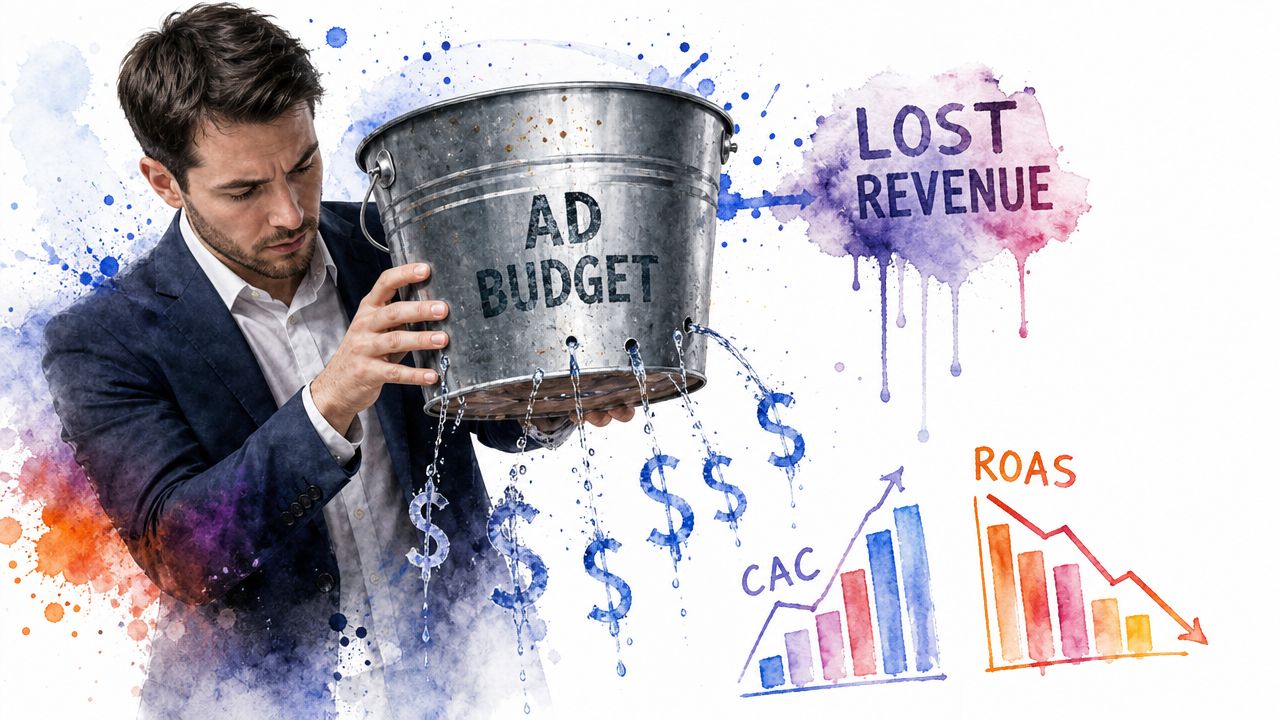
The leaky bucket problem
A lot of campaigns don't have a traffic problem. They have a conversion problem.
You can pour more money into ads, generate more visitors, and still lose efficiency if the landing page, offer, or booking flow doesn't persuade people to act. That's why the “leaky bucket” analogy is useful. You're buying water and wondering why the bucket never fills.
According to this explanation of how CTR, CPA, and CVR work together, CVR is distinct from Click-Through Rate and Cost Per Acquisition because it measures the percentage of clicks that turn into conversions, isolating landing page and post-click user experience performance. The same source notes that a high CTR with a low CVR, such as under 2%, signals a leaky bucket where traffic arrives but the offer or page fails to persuade.
That's the difference between attention and outcomes.
Why business owners should care more than marketers do
A marketer can get excited about a rising click-through rate. A business owner should ask a harder question: did those clicks turn into pipeline, customers, and cash flow?
Use CVR to diagnose three revenue issues:
- Acquisition waste: If visitors don't convert, you pay to attract interest that never turns into business.
- Experience friction: Slow pages, confusing forms, weak trust signals, or unclear calls to action erode sales.
- False optimism: Strong top-of-funnel numbers can hide bottom-of-funnel weakness for months.
Key takeaway: CTR tells you whether people cared enough to click. CVR tells you whether the business gave them a reason to stay and act.
If you want cleaner economics, start treating conversion as a profitability problem, not a design problem. That shift changes the questions you ask, the pages you fix, and the campaigns you keep funding.
For operators looking at margin, not marketing theater, contribution margin analysis for growth decisions is the right lens.
What a Good Conversion Rate Looks Like
A “good” conversion rate is the one that produces profitable growth.
That answer frustrates people who want a neat benchmark. Too bad. A single percentage without context is how businesses keep funding campaigns that look busy and underperform on revenue.
Treat broad CVR ranges as a rough reference, not a goal. What matters is whether your traffic converts at a rate that supports customer acquisition costs, sales capacity, and margin. A 3% conversion rate can be excellent for a high-ticket service with qualified leads. The same 3% can be weak for a simple low-friction offer.
What changes the standard
Conversion rate rises or falls based on buying intent, sales friction, and trust.
Someone searching for an immediate solution is closer to revenue than someone clicking a curiosity-driven social ad. A short checkout flow will convert differently than a demo request with qualification steps. A page with clear proof, strong copy, and sharp persuasion techniques in advertising will usually outperform a page that makes visitors work to understand the offer.
Here are the variables that matter:
- Traffic source: High-intent search traffic usually converts differently from cold paid social or display traffic.
- Offer type: Free trials, quote requests, purchases, and booked calls each carry different levels of commitment.
- Sales cycle: Short buying decisions convert faster than considered purchases with multiple stakeholders.
- Audience quality: The right visitors can make an average page profitable. The wrong visitors can make a good page look broken.
- Page credibility: Proof, clarity, and a direct call to action affect whether interest turns into action.
Judge CVR by business outcome, not ego
Use your conversion rate to answer one question. Is this traffic producing revenue efficiently enough to keep buying more of it?
| If your CVR sits here | What it usually means |
|---|---|
| Clearly below your normal range | You likely have a problem with audience fit, offer clarity, page friction, or trust |
| Within your normal range | The funnel is stable, but you should still look for gains in lead quality and cost efficiency |
| Well above your normal range | You found a strong combination of traffic, message, and offer. Protect it and learn from it |
Benchmarks are useful for orientation. Your own baseline is what should drive decisions.
Compare like with like. Measure branded search against branded search. Measure cold social against cold social. Measure one offer against the same offer over time. If you mash everything together, you hide the actual story and make bad budget calls.
A lower CVR is not automatically a failure. If the leads close at a higher rate or produce more revenue, the campaign may still win. A higher CVR is not automatically a success either. If those conversions are low-quality, your sales team pays for it later.
Actionable Tactics to Increase Your CVR
Most CVR advice is too vague to be useful. “Improve the landing page” isn't a strategy. It's a shrug.
If you want better conversion, tighten the points where buyers hesitate. That usually means aligning your promise, reducing friction, increasing trust, and filtering for the right audience.

Fix the message-match first
A lot of low CVR comes from a broken handoff between ad and page.
- Mirror the promise: If the ad offers speed, savings, convenience, or a specific solution, the landing page should repeat that promise immediately.
- Keep the offer singular: Don't send paid traffic to a page with five competing calls to action.
- Use intent-specific pages: A visitor responding to one pain point should land on a page written for that pain point, not a generic services page.
This is basic discipline. Too many businesses skip it, then blame traffic quality.
Remove avoidable friction
Buyers rarely announce why they left. They just leave.
Audit the path from click to conversion and look for unnecessary work:
- Shorten forms: Ask only for what your team needs at that stage.
- Tighten page flow: Visitors should know what you do, why it matters, and what to do next within seconds.
- Prioritize mobile usability: If your mobile experience feels clumsy, your CVR will pay for it.
According to this breakdown of conversion rate factors in e-commerce, having 50 or more verified product reviews increases CVR by approximately 4.6%. The same finding reinforces a broader truth. Trust signals don't sit on the sidelines. They directly affect conversion behavior.
Build trust before asking for action
People don't convert because your button color is clever. They convert because they believe you.
Use proof in the places where hesitation happens most:
- Show verified reviews: Put them near key decision points, not buried on a separate page.
- Clarify the next step: State what happens after the form fill, booking request, or purchase.
- Answer objections upfront: Delivery concerns, response times, qualifications, pricing approach, and service area should not feel mysterious.
If a visitor has to guess what happens next, many of them won't continue.
For businesses that want a stronger framework for shaping buyer decisions, persuasive advertising techniques that improve action can sharpen both creative and landing pages.
Improve the quality of who arrives
Not every conversion problem starts on the page. Sometimes you're attracting the wrong person.
Try this simple review:
- Check your keyword or audience intent. Curiosity traffic often looks active and converts poorly.
- Review your creative honesty. Overpromising gets clicks and kills conversion.
- Segment by traffic source. One source may be carrying the other.
The best CVR gains often come from boring fixes. Better alignment. Better proof. Fewer steps. Less confusion. That's good news, because boring fixes usually outperform flashy redesigns.
The Tech Advantage in Measuring What Matters
A surprising number of businesses still measure conversions in fragments. One platform reports leads. Another reports calls. The sales team logs deals somewhere else. Then someone tries to stitch the story together in a spreadsheet and calls it attribution.
That's not measurement. That's hopeful assembly.
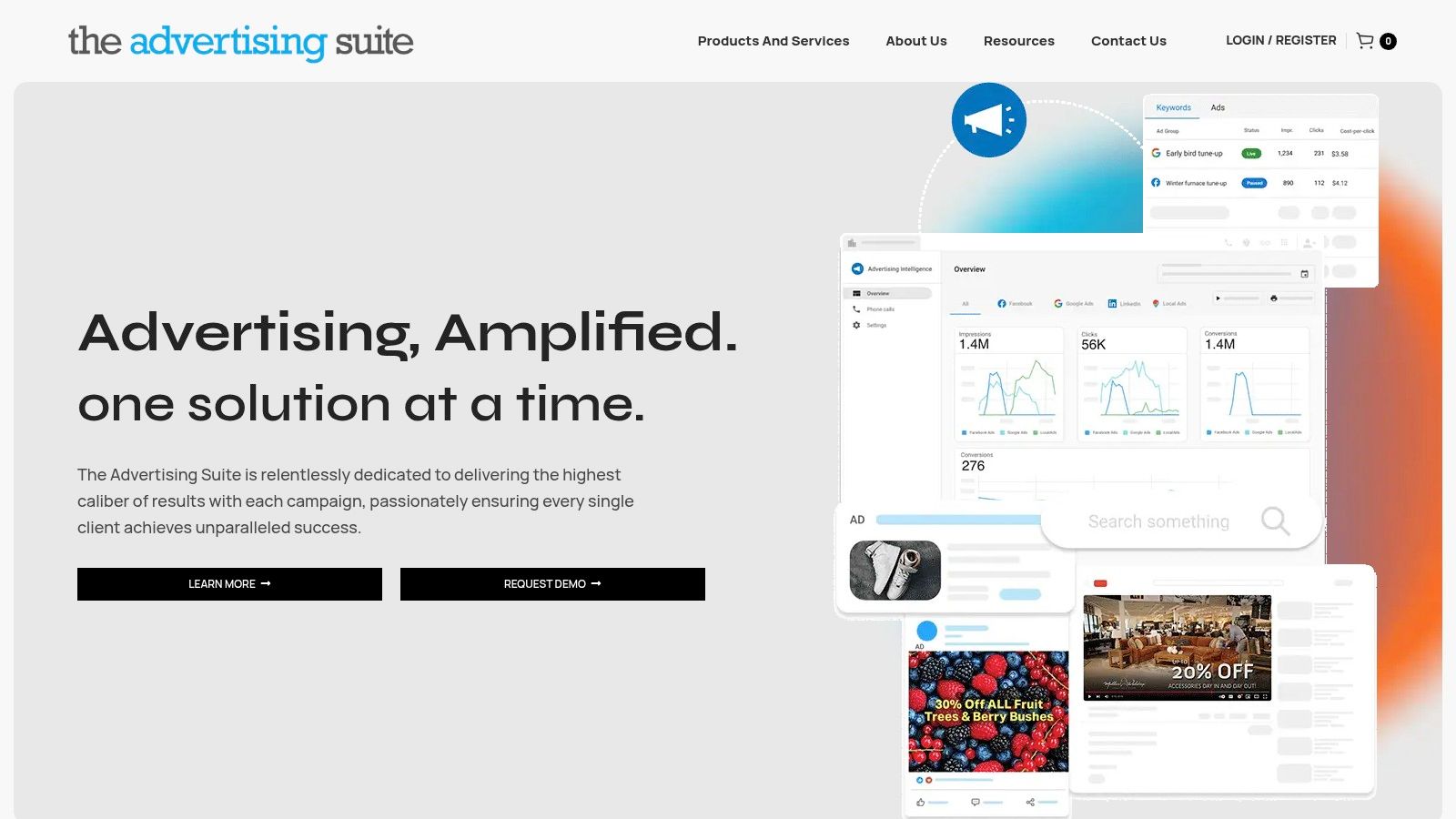
Platform reporting has limits
A platform can tell you what happened inside its own walls. It usually can't tell you the full business outcome with clean context.
That becomes a problem when your buying journey includes:
- Phone calls and manual follow-up
- Sales-qualified lead review
- Multiple touchpoints before purchase
- Offline closing steps
- Reputation signals that influence later conversion
If you only trust platform-level reporting, you'll optimize toward what is easiest to count, not what produces revenue.
A single source of truth changes the game
CVR gets more useful when it connects to the entire customer journey. That means seeing who clicked, who became a lead, who was qualified, who booked, and who closed.
An integrated measurement setup helps teams answer better questions:
| Question | Why it matters |
|---|---|
| Which campaigns create real customers? | Stops you from overvaluing cheap but low-quality conversions |
| Where do leads stall? | Helps separate ad issues from sales-process issues |
| Which touchpoints deserve credit? | Prevents underfunding campaigns that assist conversion earlier in the journey |
Operator mindset: Don't optimize for the conversion event that's easiest to fire. Optimize for the one that best predicts revenue.
This is why disconnected reporting creates bad decisions. One team pauses a campaign because form fills looked expensive, while the sales pipeline shows those leads were the best ones.
If you want a clearer view of performance across the funnel, a marketing dashboard that ties activity to outcomes is far more useful than isolated channel reports.
The more your measurement reflects real buying behavior, the more reliable your CVR becomes. And reliable CVR is what lets a business scale with confidence instead of superstition.
Turn Your Ad Spend into Sustainable Growth
CVR is the bridge between marketing activity and business results. That's the point too many companies miss.
Traffic matters. Visibility matters. Creative matters. None of it deserves applause if visitors don't take the action that moves revenue forward. Because CVR measures the transition from passive browsing to customer action, it helps businesses turn marketing into a more predictable profit center by fixing leaks instead of just driving more traffic, as explained in this discussion of CVR and conversion optimization.
What smart operators do differently
They stop asking for more traffic by default.
They ask better questions:
- Is the audience right?
- Does the page match the promise?
- Is trust obvious enough to remove hesitation?
- Can we track the path from click to closed business clearly?
That's how you move from noisy reporting to controlled growth.
Stop buying more water for a broken bucket
If your CVR is weak, spending more on acquisition usually magnifies the problem. It doesn't solve it. You'll just pay to expose the same friction to more people.
That's why disciplined businesses treat CVR optimization as a powerful multiplier. A stronger conversion path makes every click more valuable, every campaign more accountable, and every growth decision less dependent on guesswork.
The businesses that win over time usually aren't the ones with the flashiest ads. They're the ones with tighter systems, sharper follow-up, stronger trust signals, and cleaner measurement.
That approach scales. Noise doesn't.
The Advertising Suite has earned trust from over 10,000 satisfied customers by staying focused on what business owners care about: turning spend into sustainable growth, not dressing up vanity metrics as progress.
If you're tired of reports that look busy but don't move revenue, The Advertising Suite is built for you. We operate as a growth-focused partner, not a vendor, combining strategy with an integrated CRM and reputation ecosystem that supports the full conversion path. You can Book a Growth Consult to diagnose where your funnel is leaking, or Explore the Membership to access the proprietary software plus a 25% discount on all services. Either way, you get a team that works like an extension of your business, focused on accountable growth.