Most advice on sales enablement is backwards.
It treats enablement like a support function. Build some decks. Run a training. Upload scripts. Hope reps use them. Then leadership wonders why activity goes up, meetings happen, content gets downloaded, and revenue still feels unpredictable.
That isn't a sales enablement strategy. That's admin with a nicer label.
A real sales enablement strategy should do one job: help sales teams produce more revenue with less friction. If it doesn't improve how reps qualify, present, follow up, and close, it's just expensive internal theater. That's why so many founders feel burned. They paid for motion, not momentum.
The fix is simple, but not easy. Stop treating enablement as a pile of materials and start treating it like an operating system. The strategy has to connect buyer insight, sales behavior, content, coaching, and technology into one revenue engine. If those pieces live in different silos, the whole thing leaks.
Why Most Sales Enablement Efforts Fail
The phrase “sales enablement” sounds helpful. That's part of the problem.
Enablement is too passive when companies interpret it as support instead of execution. A folder of collateral doesn't close deals. A certification badge doesn't handle objections. A quarterly workshop doesn't rescue a pipeline full of weak-fit prospects.
Most failed efforts break in one of three places:
- They optimize for activity: Teams track training attendance, content uploads, and internal adoption, but never connect those actions to closed revenue.
- They live in silos: Marketing creates assets. Sales improvises in calls. Leadership asks for reporting. Nobody owns the full path from lead to deal.
- They ignore workflow: Reps won't leave their day to hunt for the right proof point, email, or talk track. If the guidance isn't available where they already work, it won't get used.
That's why companies spend months “improving enablement” and still get the same sales outcomes. They built a library, not a system.
The real issue isn't content
Content matters. Training matters. Coaching matters.
But none of them matter in isolation.
An effective sales enablement strategy only works when it supports the exact moments where deals move or die. Discovery. Qualification. Proposal framing. Follow-up. Objection handling. Renewal conversations. If your materials don't improve those moments, they're decoration.
Sales teams don't need more assets. They need fewer, better assets tied to the moments that decide revenue.
That also means your pipeline process has to be clean. If your stages are vague, your handoffs are messy, and your follow-up rules change by rep, no enablement program will save you. Fix the machine first. Then add acceleration. If your pipeline itself needs work, start with a tighter sales pipeline management process.
Revenue-first beats resource-first
The strongest companies don't ask, “What content should we create?” They ask, “What buyer decision keeps stalling, and what does the rep need to move it forward?”
That shift changes everything.
A revenue-first approach forces every enablement decision through three filters:
| Bad question | Better question |
|---|---|
| Do we have training? | Are reps using a repeatable method in live deals? |
| Do we have content? | Does the content help buyers make a decision faster? |
| Do we have tools? | Do the tools reduce friction inside the sales workflow? |
If your previous efforts felt busy but not profitable, that's why. You were funding support activity instead of building a revenue system.
The Core Components of a Revenue-First Strategy
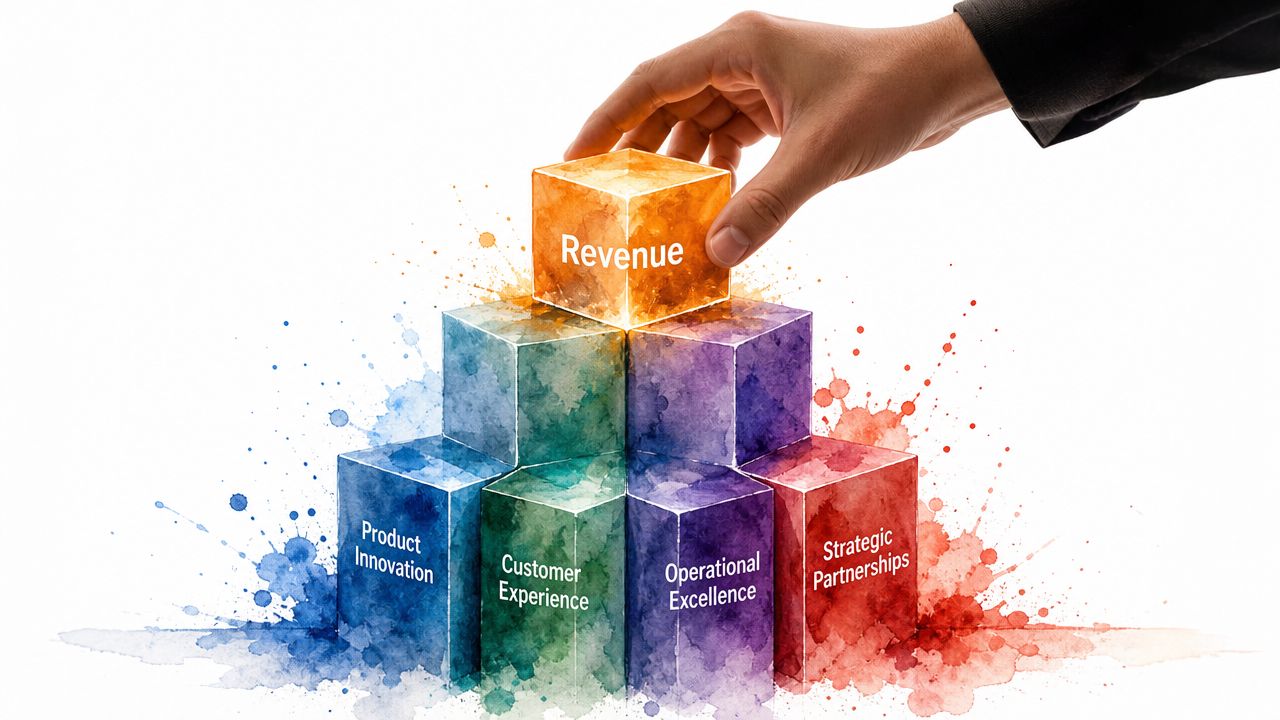
A strong sales enablement strategy works like a high-performance engine. Fuel alone won't move the vehicle. Neither will a polished exterior. Every critical part has to work together under pressure.
That means three components matter more than everything else: revenue-ready content, behavior-centric coaching, and an integrated growth stack.
Revenue-ready content
Most sales content is written to inform. Winning sales content is built to advance a decision.
That means every asset should answer a buyer question that shows up in a real conversation. Not generic brand fluff. Not bloated overview decks. Specific material for specific friction points.
Use your content in three lanes:
- Early-stage clarity: Short materials that help a prospect understand the problem and why it matters now.
- Mid-stage confidence: Objection-handling assets, comparison guidance, implementation expectations, and proof that reduce hesitation.
- Late-stage commitment: Proposal support, onboarding expectations, and risk-reduction content that helps buyers say yes.
If you haven't mapped content to buyer questions, start there. A useful buyer persona process makes content sharper because it forces your team to understand who's buying, what they fear, and how they decide.
Behavior-centric coaching
At this stage, most companies get lazy. They train broadly and measure completion. That tells you almost nothing.
A proper strategy must focus on the few selling behaviors that influence revenue. The standard is blunt and correct: a sales enablement strategy must define exactly two or three specific selling behaviors, explicitly tie each behavior to a concrete revenue outcome, and state the precise metric used to measure adoption, because measuring training completion alone, such as a full attendance sheet, provides zero evidence that reps changed their on-deal actions (SalesScreen on sales enablement strategy).
Practical rule: If you can't observe the behavior in a live deal, you can't manage it.
Examples of behavior focus include how reps open discovery, how they qualify urgency, or how they handle pricing pressure. The point isn't variety. The point is consistency.
An integrated growth stack
You can't run a revenue-first sales enablement strategy from scattered systems.
When buyer data sits in one place, marketing insights sit in another, and rep activity lives in memory or spreadsheets, your team loses speed. Reps guess. Managers coach from fragments. Marketing produces materials without seeing what closes.
An integrated stack fixes that by doing three things at once:
- Centralizing buyer context
- Embedding enablement into the workflow
- Making performance visible across the funnel
The engine analogy matters here. Content is fuel. Coaching is timing. Technology is the drivetrain. Miss one, and the whole system underperforms.
How to Build Your Sales Enablement Playbook
A sales enablement playbook shouldn't read like a corporate handbook. It should function like a field manual.
If your team can't use it during real selling hours, it's too abstract. If it only gets opened during onboarding, it's already dead.

Start with revenue goals, not training goals
Don't begin by asking what materials you need. Begin by asking where revenue is getting stuck.
Look at stalled opportunities, weak conversion points, poor follow-up, inconsistent qualification, and fragile handoffs between marketing and sales. Your playbook exists to solve those problems. Nothing else.
A simple build sequence works best:
Define the revenue target
Pick the commercial outcome you want to improve. That might be better close quality, cleaner qualification, stronger follow-up discipline, or more consistent pipeline movement.Identify the moments that influence that outcome
Find the conversations, handoffs, and decision points where reps create or lose momentum.Document the winning behavior
Write down what good looks like in plain language. Keep it practical enough for a rep to use midweek, not theoretical enough for a strategy workshop.
Audit what your team already has
Most companies don't have a content shortage. They have a relevance problem.
Sales reps often sit on decks, one-pagers, call notes, proposal templates, and email sequences that nobody has reviewed in months. Marketing keeps publishing material sales doesn't use. Leadership assumes more content will fix the issue. It rarely does.
Run a hard audit against three questions:
- Does this help a rep move a deal forward?
- Does this match a real buyer objection or decision point?
- Can a rep find and use it fast?
Cut ruthlessly. Keep what earns its place.
If reps need a search party to find the right asset, they'll wing it instead.
Build feedback into the system
A playbook fails when it becomes static.
Sales learns things every week. New objections show up. Buyer language changes. A pricing concern starts appearing in calls. Competitor pressure shifts. Your playbook has to absorb that reality fast.
Create a standing loop between sales, marketing, and leadership. Not a ceremonial meeting. A working session where your team reviews live friction points, updates messaging, and retires weak material.
A useful loop usually includes:
- Rep input: What objections are repeating?
- Manager review: Where are deals stalling?
- Marketing response: What content or messaging needs to change?
- Operational update: What gets documented inside the playbook?
Put enablement inside the workflow
This is the piece companies skip, then act surprised when adoption is weak.
According to research cited by Cognism and G2, 76% of companies report a 6–20% increase in sales immediately after implementing a formal sales enablement program. That same research also points to workflow-native enablement as the biggest driver of rep adoption. That tracks with reality. Reps use what shows up where they already work.
That's why your playbook should connect directly with your day-to-day process through a marketing automation workflow. When prompts, content, tasks, and context show up at the right stage, adoption stops being a compliance issue and becomes a natural part of selling.
Treat the playbook like a living system
A good playbook changes when the market changes. It changes when your offer changes. It changes when buyers start asking harder questions.
So don't obsess over making it perfect before launch. Build the first version around actual deal movement, review it often, and update it based on what the field is telling you. The playbook isn't the product. Revenue improvement is.
The Tech Advantage Your Competitors Are Missing
Most businesses don't have a sales problem. They have a systems problem.
Their lead data is in one tool. Their follow-up process is in another. Their customer feedback sits somewhere else. Sales reps fill the gaps with memory, sticky notes, and heroic effort. That might work for a while. It doesn't scale.
A modern sales enablement strategy needs a central nervous system. Without it, every team works from partial information, and partial information kills conversion.
Disconnected systems create expensive blind spots
Here's what usually happens in fragmented environments:
| What breaks | What it causes |
|---|---|
| Lead context gets lost | Reps repeat questions buyers already answered |
| Follow-up isn't standardized | Strong leads cool off while teams scramble |
| Reviews and customer sentiment stay isolated | Sales and marketing miss the proof points buyers trust |
| Reporting is fragmented | Leadership sees activity, not actual revenue drivers |
That isn't a software issue alone. It becomes a revenue issue fast.
When systems don't speak to each other, your team can't see the full customer journey. Marketing can't tell which messages attract serious buyers. Sales can't tell which lead sources produce cleaner closes. Leadership can't coach against real patterns because the evidence is scattered.
Integration changes how teams sell
The advantage of a connected stack isn't convenience. It's execution quality.
When your CRM, automation, and customer feedback systems work together, reps stop operating on fragments. They get full context. They see where the lead came from, what action the prospect took, what message they engaged with, what concern showed up in the process, and what proof will help move the decision forward.
That's what unified customer profiles are supposed to do. They turn disconnected touchpoints into one usable picture. And that picture matters because buyers don't experience your departments separately. They experience one company.
A rep with partial context gives generic follow-up. A rep with full context gives relevant follow-up.
Reputation data belongs inside sales enablement
A lot of businesses still treat reviews like a side task for customer service or location managers. That's shortsighted.
Review trends reveal the language customers use when they describe value, hesitation, trust, speed, and service quality. That material is sales fuel. It sharpens messaging, surfaces proof, and helps reps answer concerns in the buyer's own vocabulary.
The companies that connect sales process with customer experience data build a stronger loop. Ad messaging improves. Sales conversations improve. Post-sale trust improves. That's how you turn marketing from a lead generator into a predictable growth system.
Measuring What Matters KPIs That Drive Growth
If your dashboard makes everyone feel busy but nobody can explain revenue movement, your measurement system is broken.
That's common in sales enablement. Teams track downloads, attendance, logins, completions, and content views because those numbers are easy to collect. Easy doesn't mean useful. Vanity metrics make weak systems look active.
The better question is simple: what changed in selling behavior and business outcome?
Use this, not that
Here's the cleanest way to reset your measurement:
| Avoid | Use instead |
|---|---|
| Content downloads | Content influence on deal progression |
| Training completion | Observable rep behavior in live deals |
| Platform logins | Stage-by-stage adoption of the playbook |
| Generic activity totals | Win rate, quota attainment, and deal movement quality |
The reason is straightforward. A download doesn't prove usage. Attendance doesn't prove behavior change. Logging in doesn't prove a rep sold better.
What you want are metrics that answer business questions.
The KPIs that actually matter
Organizations that implement an effective sales enablement strategy achieve an average win rate of 49%, which is 12% higher than companies without a formal strategy, and they hit sales quotas 35% more frequently (Mindtickle sales enablement statistics).
That data points to the scorecard worth watching.
Win rate
This answers, “Are we helping reps convert qualified opportunities more consistently?” If this number doesn't improve, your enablement probably isn't changing real selling behavior.Quota attainment
This answers, “Is the strategy lifting broad team performance or just helping a few top performers?” Strong enablement should make execution more repeatable across the roster.Sales cycle quality
Don't reduce this to speed alone. Shorter isn't always better if deals become sloppier. Track whether the right opportunities move with less friction and fewer avoidable stalls.Average deal quality
Look at whether your team is closing better-fit business, not just more business. Revenue with poor retention or weak handoff quality will come back to bite you.
Key checkpoint: If a KPI can't influence coaching, forecasting, or budget decisions, it belongs lower on the dashboard.
Tie measurement to attribution
One more problem ruins otherwise solid reporting. Teams measure sales performance in one place and marketing performance in another, then argue about who deserves credit.
That's amateur stuff.
You need shared visibility into what influenced the opportunity before it closed. A practical marketing attribution model helps leadership see which messages, campaigns, and sales actions contributed to revenue. Without that, enablement gets judged by opinion instead of evidence.
The point of measurement isn't to create prettier reports. It's to make better decisions, faster. When your KPIs stay tied to revenue, you stop rewarding motion and start rewarding progress.
Real-World Examples in Action
Theory is easy. Real operations are messy.
That's why a revenue-first sales enablement strategy has to work in businesses with different buying cycles, different teams, and different pressure points.
A service-based franchise fixed inconsistency
A multi-location service brand had solid demand but uneven booking performance across locations. Some teams answered leads well. Others responded late or used weak messaging. Reviews were strong in a few markets and ignored in others.
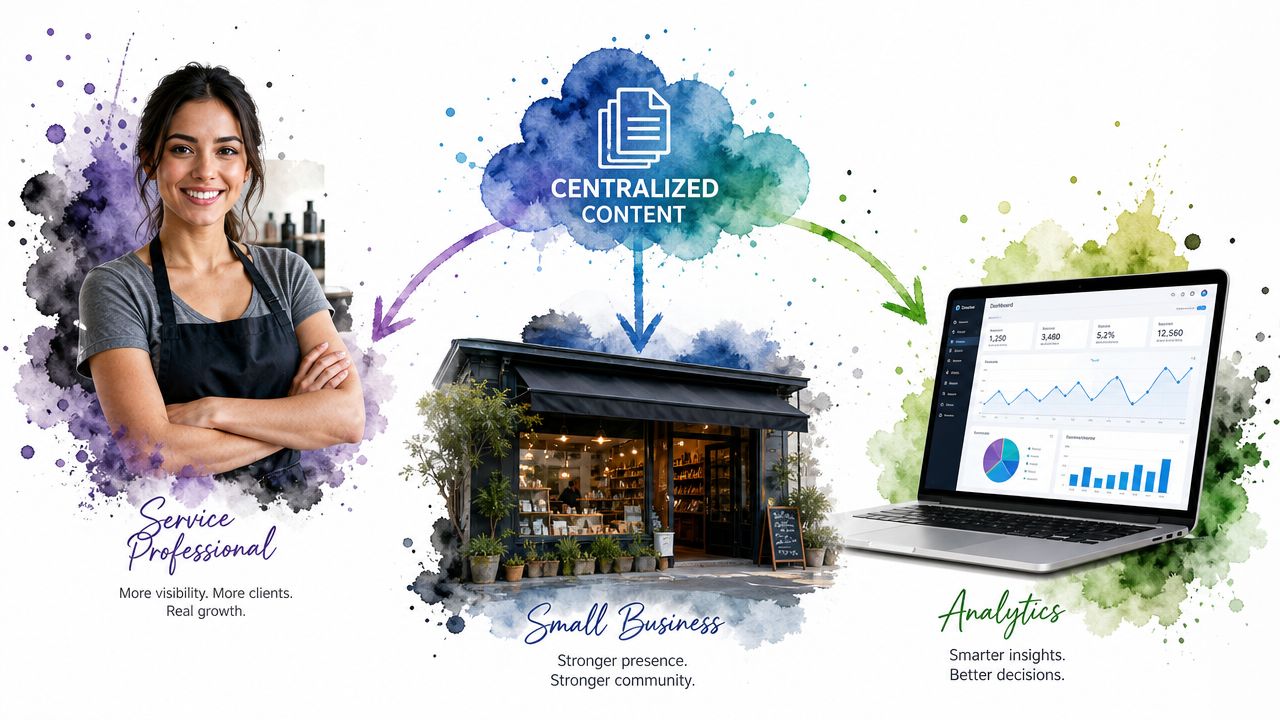
The fix wasn't “more marketing.” Leadership built a centralized library of approved responses, objection-handling language, and local proof points pulled from customer feedback. Once reps and front-desk staff used the same message in the same workflow, booking quality got more consistent and local trust became easier to reinforce.
A scale-ready SMB cleaned up its process
A growing B2B company had enough leads, but the pipeline felt sticky. Reps ran discovery differently, proposals varied by seller, and managers coached from anecdotes instead of process.
They tightened the sales motion around a handful of observable behaviors, documented a cleaner deal path, and connected their rep workflow to a central system. Suddenly, coaching became specific. Follow-up became faster. Sales conversations stopped sounding like individual improvisations and started sounding like one company.
An agency-burned founder finally aligned the funnel
An e-commerce operator had already spent heavily on campaigns and had plenty of top-of-funnel activity. The problem showed up after the click. Messaging from ads didn't match sales follow-up, lead intent wasn't clear, and nobody could tell which conversations were worth prioritizing.
The turnaround came from aligning pre-click promise with post-click sales action. Creative, lead capture, qualification, and follow-up used the same buyer language and the same expectations. The founder stopped judging success by front-end buzz and started judging it by cleaner handoffs and better conversion quality.
Sales enablement works when the promise made in marketing matches the conversation that happens in sales.
These aren't flashy transformations. They're operational ones. That's the point. Predictable revenue usually comes from fewer leaks, not louder campaigns.
Your Next Step Toward Predictable Revenue
A sales enablement strategy isn't a binder, a training calendar, or a content folder. It's a revenue system.
When the strategy works, sales and marketing stop pulling in different directions. Reps know what to say, when to say it, and where to find the right support in the moment. Leaders stop guessing which activity matters. The business gets a cleaner path from attention to trust to closed revenue.
That shift matters because acquisition costs keep rising and buyer patience keeps shrinking. You can't afford disconnected campaigns, disconnected teams, and disconnected tools. The companies that scale are the ones that connect message, behavior, process, and technology into one operating model.
If you're serious about predictable growth, audit your current system with brutal honesty. Find where deals stall. Find where messaging breaks. Find where reps improvise because the process failed them. Then rebuild around revenue, not activity.
If you're done wasting budget on disconnected marketing and sales efforts, The Advertising Suite is built for that exact problem. We're a growth-focused partner, not just another agency. Our Growth-Tech Hybrid model pairs strategy with an integrated CRM and reputation ecosystem so your team can turn ad spend into sustainable revenue. If you want a direct path forward, Book a Growth Consult. If you want tighter economics and deeper system access, Explore the Membership, which includes a 25% discount on all services and provides access to the proprietary software stack. More than 10,000 satisfied customers have already chosen a results-first framework. The next step is simple. Bring in a partner that operates like an extension of your team.