Most advice on how to create buyer personas is wrong in one expensive way. It treats personas like a branding worksheet instead of a profit tool.
If your team builds a pretty PDF, names a fictional customer, adds a stock photo, and never ties that profile to lead quality, sales velocity, or customer fit, you haven't created a buyer persona. You've created overhead.
Used properly, personas work. According to industry research on buyer persona performance, 90% of companies that implement buyer personas develop a significantly better understanding of their consumers, 82% improve their value proposition, and high-performing companies are 2.4 times more likely to use buyer personas for demand generation. That's the gap. Not between companies with personas and companies without them, but between companies that operationalize them and companies that file them away.
A revenue-first business doesn't ask, “What does our customer look like?” It asks, “Which buyer patterns produce profitable deals, shorter sales cycles, stronger retention, and less wasted acquisition spend?” That's the standard.
Why Your Buyer Personas Are Costing You Money
Most buyer personas fail because they start with surface-level detail and stop there.
Teams obsess over age range, job title, and vague personality traits. Then they build campaigns around assumptions. The result is predictable. They attract clicks, collect weak leads, and send sales teams into conversations with people who were never a fit in the first place.
Static personas create expensive decisions
A static persona becomes a liability the moment your market shifts, your offer changes, or buyer objections evolve. If you're still targeting based on last year's assumptions, your ad spend is working off stale intelligence.
That's why the question isn't whether personas matter. It's whether your version of a persona can help someone make a better revenue decision today.
Three signs your persona is costing you money:
- It isn't tied to buying behavior. You know their role, but not what triggers action.
- It doesn't help sales qualify faster. Marketing likes it. Sales ignores it.
- It can't influence budget allocation. If it doesn't change where and how you spend, it isn't strategic.
Static personas don't just underperform. They push budget toward the wrong audiences with more confidence than guesswork.
Revenue-first personas work differently
A useful persona should sharpen three business decisions.
| Decision area | Weak persona | Revenue-first persona |
|---|---|---|
| Targeting | Broad audience assumptions | Clear fit based on pain, urgency, and purchase triggers |
| Messaging | Generic benefits | Specific claims matched to real objections |
| Conversion strategy | Traffic-first thinking | Lead quality and deal quality focus |
Many businesses fail to grasp the core truth. They chase vanity metrics and call it momentum. More traffic isn't the win if your margins are getting crushed. More leads aren't the win if sales spends half the week disqualifying them.
If you care about profit, you need personas that support better filtering, stronger positioning, and better unit economics. That's the same discipline behind contribution margin analysis for smarter growth decisions.
Stop building for “everyone who might buy”
The companies that get value from personas don't try to describe everybody. They isolate the patterns that matter most. They identify who buys, why they buy, what slows them down, and what usually predicts a good customer relationship.
That's how to create buyer personas that move revenue. Not as a creative exercise. As an operating system for acquisition and conversion.
Uncovering Actionable Insights for Your Personas
You don't start by brainstorming. You start by digging through evidence.
The fastest way to ruin persona work is to gather the leadership team in a room and ask, “Who do we think our ideal customer is?” That question produces opinions, not insight. Start with what buyers already did, then validate it with real conversations.
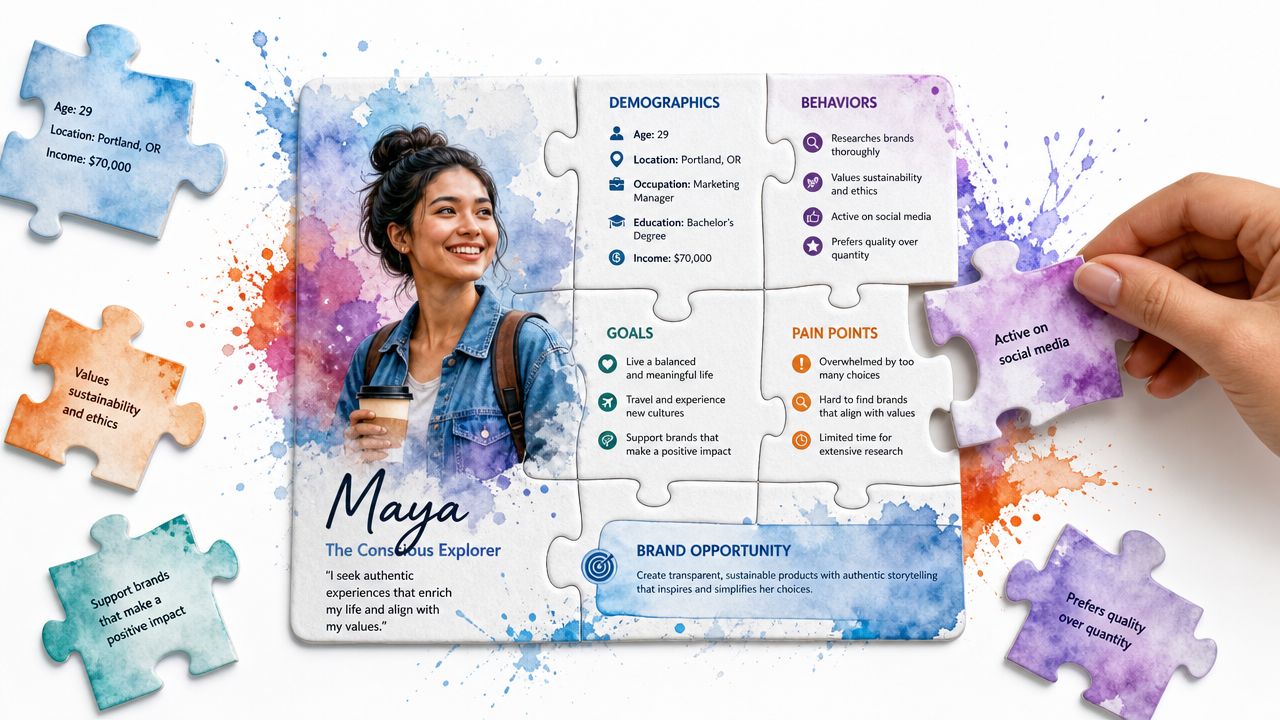
Pull the hard data first
A solid methodology begins with quantitative data and then moves into interviews. According to buyer persona research on analytics, CRM, and interviews, a high-impact process starts with analytics and CRM data, followed by 3 to 5 interviews per persona, and can improve conversion alignment by 20% to 35% when done rigorously.
That means your first job is to identify patterns in:
- Website behavior. Which pages attract serious buyers, not casual visitors?
- CRM history. Which lead sources, deal types, and customer segments close cleanly?
- Social engagement. What language, objections, and desires keep showing up?
- Sales notes. Where do deals stall? What questions come up before a purchase?
If you're in B2B, professional data matters too. Adobe's guidance on professional buyer personas notes that analyzing LinkedIn data for job titles, skills, industry experience, and professional interests is a key part of building an accurate professional persona.
If your CRM is messy, fix that before you build personas. Dirty input creates bad targeting.
For teams trying to sharpen this research layer, customer behavior analytics helps connect activity to actual buying patterns instead of surface engagement.
Then interview for the why
Data tells you what happened. Interviews tell you why it happened.
You only need a focused sample if you ask the right questions. Don't waste those conversations on basic demographics you can already pull from records. Use them to uncover:
What triggered the search
Ask what changed internally. A missed target? A staffing gap? A reputation issue? A growth push?What problem felt urgent
Most buyers don't act because a problem exists. They act because the problem became expensive.How they evaluated options
Find out what they compared, who influenced the decision, and what proof they needed.What nearly stopped the purchase
Objections are gold. Pricing pressure, timing concerns, implementation fear, internal politics. This is messaging fuel.
Practical rule: If an interview question can't influence targeting, copy, qualification, or sales handling, cut it.
Look for buying patterns, not trivia
After the data review and interviews, sort everything by shared commercial behavior.
Focus on clusters like:
- Common pain points
- Repeated objections
- Trigger events
- Decision criteria
- Preferred research channels
- Signs of urgency versus passive interest
This is the difference between a persona and a biography. You're not trying to write fan fiction about your customer. You're trying to build a tool that helps marketing and sales pursue higher-intent revenue with less waste.
Good persona research is blunt. It separates buyers by the way they behave around a purchase, not by details that feel interesting in a workshop.
Assembling a Persona That Actually Works
Once the research is in, teams often make a second mistake. They dump findings into a document that no one uses.
A persona has to be clear enough for media buyers, copywriters, sales reps, and operators to act on it fast. If it reads like a strategy novel, it dies in a shared folder.

Build the profile around buying decisions
A strong persona should answer the questions your team faces every week.
Use this structure:
Role and context
What kind of buyer is this, and what business environment are they operating in?Primary goal
What outcome are they under pressure to achieve?Top friction points
What keeps them from getting that result today?Purchase triggers
What event makes the problem urgent enough to solve now?Decision criteria
What proof, reassurance, or capability matters most before they buy?Likely objections
What do they hesitate over, and what language lowers that resistance?Channel behavior
Where do they actively look for solutions, and where do they ignore noise?
Many teams tend to overcomplicate the process. Keep what's commercially useful. Cut what's decorative.
Write the story so the team can use it
A useful persona isn't just a list. It needs a narrative people can remember.
According to buyer persona profile guidance with narrative requirements, a detailed profile should include a specific, fabricated story of at least 300 words covering the persona's daily life, major challenges, information search methods, decision-making process, and common objections.
That advice is more practical than it sounds. A well-written “day in the life” forces your team to understand sequence, context, and pressure. It stops people from treating the persona like a demographic tile.
Here's what that story should reveal:
| Persona element | What the narrative should show |
|---|---|
| Daily pressure | What they juggle before they ever speak to you |
| Buying context | Who else influences the decision |
| Search behavior | How they look for answers |
| Trust threshold | What evidence they need before moving forward |
A story makes the persona memorable. A buying context makes it useful.
Example of a persona that sales and marketing can both use
Say you're targeting a scale-ready service business owner.
Don't write, “Owner, mid-career, growth-focused, values quality.” That says nothing.
Write something closer to this in your internal version: this owner is stretched between operations and growth, frustrated by lead inconsistency, skeptical because past vendors delivered traffic but not booked revenue, and likely to respond to messaging around qualified leads, conversion visibility, and reduced waste. They research carefully, ask pointed questions, and need proof that your solution won't add complexity.
That version can drive ad copy, landing page structure, qualification criteria, and follow-up scripts.
For teams trying to centralize this information across touchpoints, unified customer profiles make the persona easier to activate beyond a one-time workshop.
If you're learning how to create buyer personas, remember this. A persona is only finished when someone can use it to make a sharper decision in the next campaign or the next sales call.
The Power of the Negative Persona to Boost ROI
Most businesses spend too much time defining who they want and almost none defining who they should avoid.
That's backwards.
If your acquisition costs are rising, excluding bad-fit traffic is often more profitable than expanding reach. Not every lead deserves nurturing. Some deserve disqualification.
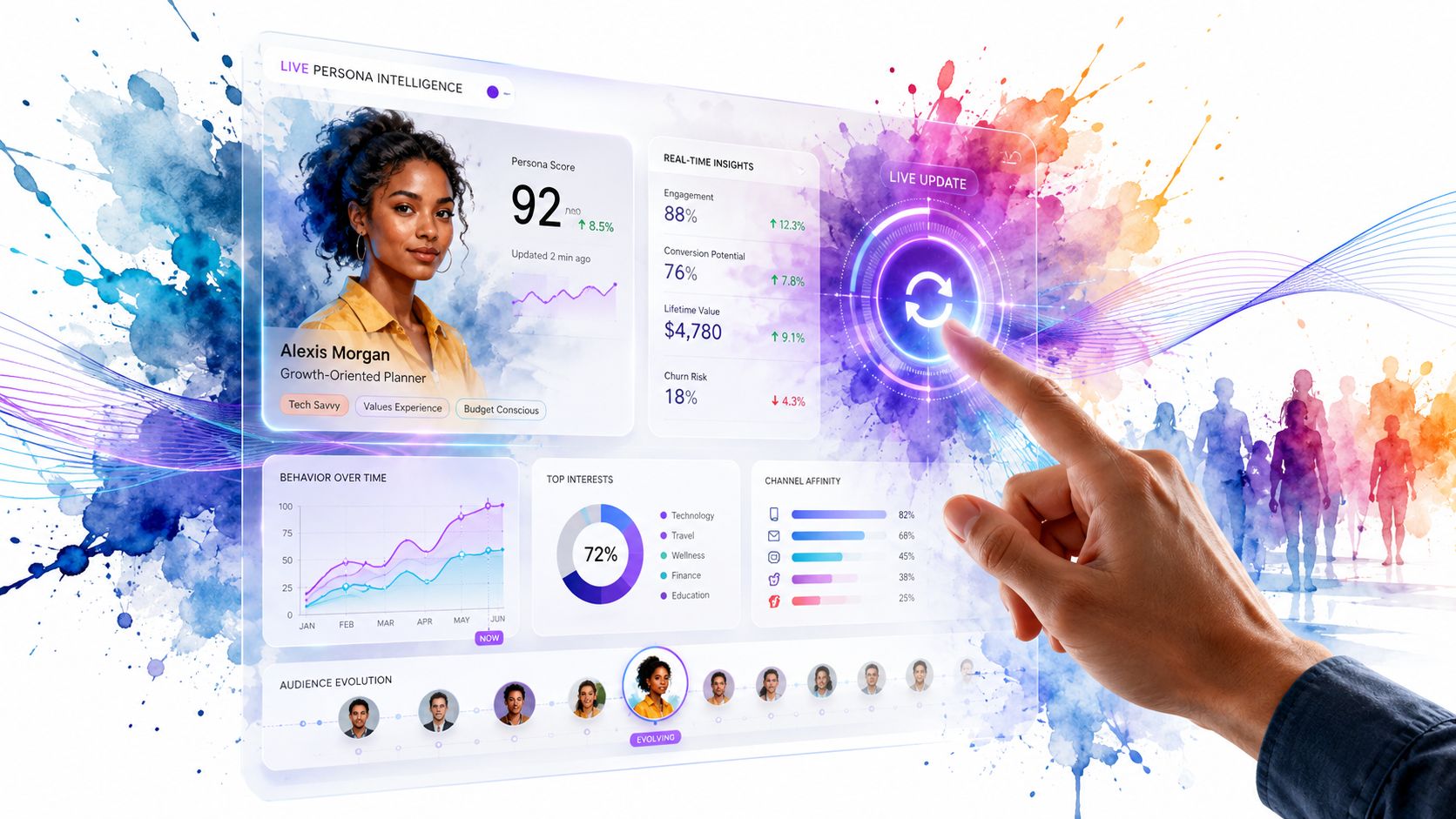
Negative personas protect budget
This is one of the most overlooked parts of persona strategy. According to Forbes coverage on negative buyer personas and wasted acquisition spend, 70% of marketers focus on ideal customer profiles, while businesses that ignore negative personas can waste up to 30% of acquisition budgets on unqualified leads.
That should change how you think about targeting.
A negative persona is a pattern of prospect who looks promising on the surface but drains resources after the click. They often show up as:
- Price-only shoppers who never value outcomes
- Bad-fit use cases that your offer was never built to serve
- Chronic comparison buyers who consume time and never commit
- High-maintenance customers who create support drag and low retention
How to identify your anti-personas
Start with your own customer and lead history. Review deals that felt expensive, slow, frustrating, or short-lived.
Look for signals like:
Low-quality intent
They ask a lot, but not the questions serious buyers ask.Poor economics
They require too much hand-holding relative to the revenue they produce.Mismatched expectations
They want outcomes your service isn't designed to deliver.Fast regret
They buy emotionally, then push back, churn quickly, or create noise.
If a segment consistently lowers efficiency, it belongs in your exclusion strategy.
Use negative personas in execution
A negative persona only helps if it changes action.
That means you should use it to:
Tighten ad targeting
Exclude low-fit interests, industries, or intent signals.Refine lead forms
Add questions that screen for readiness and fit.Sharpen sales qualification
Give reps permission to disqualify quickly.Adjust messaging
Stop writing copy that attracts people who want the wrong thing.
If you want cleaner segmentation before launch, audience segmentation gives you a better foundation for separating profitable demand from expensive noise.
Positive personas help you pursue growth. Negative personas help you keep more of it.
Activating Personas for High-Intent Ad Campaigns
A persona that never reaches your ads, landing pages, and sales scripts is dead weight.
Many organizations frequently stall. They finish the research, approve the document, and then go right back to writing generic copy for generic audiences. If you want personas to pay for themselves, they must shape campaign execution.
Match the persona to channel, message, and proof
You don't choose channels based on habit. You choose them based on where that persona looks for answers and what level of intent exists in that environment.
Then you adapt your offer presentation to the buyer's pressure point.
Organizations that take this seriously perform better. According to HubSpot's buyer persona research on validation and sales enablement, teams that interview 3 to 5 customers per persona and build persona-specific talk tracks and case studies achieve 30% faster sales cycles and 20% higher ROAS.
That result doesn't come from naming the persona. It comes from activating what you learned.
Use the rule of three for ad angles
Take one real pain point from the persona and turn it into three different campaign angles.
If your persona is frustrated by lead inconsistency, your ads might split like this:
Operational angle
Focus on the chaos caused by uneven lead flow and the need for consistency.Financial angle
Focus on wasted spend, poor lead quality, and the cost of guesswork.Growth angle
Focus on building a predictable pipeline that supports hiring and expansion.
Same persona. Same core pain. Three entry points.
That gives you room to test without drifting into random creative.
Build campaign assets around buyer friction
A useful activation framework looks like this:
| Persona insight | Campaign application |
|---|---|
| Main pain point | Headline and opening hook |
| Top objection | FAQ, proof block, or sales script |
| Trigger event | Retargeting timing and offer framing |
| Preferred proof | Testimonial style, case study type, or demo emphasis |
If your persona needs reassurance, lead with proof. If they need speed, remove friction. If they fear switching risk, address onboarding and continuity early.
Your ads shouldn't just describe your offer. They should resolve the buyer's internal argument.
Sales and marketing need the same persona language
Alignment either shows up or falls apart here.
If marketing promises one thing and sales handles objections with different language, trust leaks out of the funnel. The persona should give both teams a shared way to talk about pain, urgency, and proof.
That means your team should create:
- Ad messages tied to real trigger moments
- Landing pages built around objection handling
- Sales talk tracks that mirror the campaign promise
When people ask how to create buyer personas that convert, this is the answer they usually don't want. The research isn't the hard part. The discipline is. You have to use the persona everywhere revenue decisions happen.
Using Your Tech Stack to Keep Personas Profitable
Most personas decay because nobody owns the update cycle.
Markets move. Objections shift. Customer behavior changes. Review feedback exposes new patterns. Sales conversations reveal fresh resistance. If your personas live in a slide deck, they go stale faster than your team admits.
Static documents lose value fast
This isn't a minor flaw. It's a structural problem.
According to Digital Marketing Institute's guidance on dynamic persona updates, 62% of personas go stale within six months, and integrating live analytics can increase persona accuracy by 45%.
That tells you exactly what modern persona work requires. A feedback loop.
Not an annual brainstorm. Not a forgotten worksheet. A live system that captures what buyers are doing now.
What a living persona system should track
Your tech stack should help you update personas from actual behavior, not gut feel.
At minimum, monitor these three inputs:
CRM signals
Which leads convert, stall, ghost, or close fastest? Which source and message combinations produce strong-fit customers?Review patterns
What language do happy customers use? What frustrations show up in weak-fit accounts?Sales and service feedback
Which objections are increasing? Which expectations are changing?
A good persona system doesn't just describe a customer. It surfaces movement in customer quality and buying behavior.
Tie persona changes to action
A lot of teams still drift into theory. Don't just “refresh the persona.” Update the execution layer tied to it.
When patterns shift, change:
Targeting criteria
Remove low-fit audience signals and add stronger ones.Offer framing
Adjust what benefit leads the conversation.Qualification logic
Tighten the way leads enter the pipeline.
For teams building this kind of system, marketing automation workflow becomes part of persona management, not a separate operational tool.
A current persona helps you spend better. A stale one erodes every campaign.
If you're tired of fluffy personas, vanity metrics, and agencies that talk about activity instead of revenue, The Advertising Suite is built for that exact frustration. We're a growth-focused partner with a results-first framework, proprietary CRM and reputation software, and a model designed to turn ad spend into sustainable growth. Businesses in the Ad Suite Membership also receive a 25% discount on services and access to the integrated software ecosystem that keeps strategy tied to execution. Join 10,000+ satisfied customers, request a demo, or explore the membership if you want an extension of your team that cares about the bottom line.