Most advice about audience segmentation is too soft to be useful.
You'll hear that segmentation helps with relevance, engagement, and customer experience. Fine. But if your ad account is expensive, your pipeline is inconsistent, and your sales team keeps asking why “good traffic” isn't turning into revenue, relevance isn't the primary issue. Waste is.
Generic advertising fails for a simple reason. It treats low-intent visitors, repeat buyers, old leads, local prospects, and existing customers like they're the same person. They aren't. When you show one message to everyone, you pay to reach people who were never likely to buy, and you under-serve the people who were already close.
That's why audience segmentation matters. Not as a marketing buzzword, but as a profit-control system. It helps you decide who deserves budget, who needs a different offer, and who should be removed from acquisition campaigns altogether. If you're still judging performance by impressions and cheap clicks, you're staring at symptoms instead of causes.
The fix starts with better audience decisions and better measurement. If you haven't cleaned up how you connect spend to outcomes, start with a sharper view of marketing attribution and revenue tracking. Then build segments that reflect how people buy.
Stop Burning Ad Spend on the Wrong Audience
Most businesses don't have a traffic problem. They have a targeting problem.
You can launch polished creative, write solid copy, and still burn budget because the wrong people are seeing the message. A cold prospect doesn't need the same pitch as a returning customer. A lead who visited your pricing page shouldn't get the same ad as someone who bounced after five seconds. Yet that's exactly how many campaigns run.
Generic campaigns hide expensive mistakes
Untargeted advertising creates three predictable problems:
- You overpay for low-intent attention. Broad campaigns pull in people who are curious, not committed.
- You under-convert high-intent prospects. Buyers close to a decision need specific proof, offers, and timing.
- You confuse your reporting. Blended results make weak audiences look acceptable and strong audiences harder to scale.
That's how founders end up with a bloated ad bill and no clear explanation for why sales didn't move. The platform says the campaign “performed.” The bank account says otherwise.
Practical rule: If a campaign can't tell you which audience produced revenue, it isn't optimized. It's merely active.
Segmentation is the first financial filter
Audience segmentation forces discipline. It makes you separate browsers from buyers, current customers from prospects, and local service areas from irrelevant geography. That sounds basic because it is. Basic discipline beats clever guesswork every time.
Here's the direct recommendation. Start by identifying the audiences most likely to produce near-term revenue:
- High-intent visitors who viewed key pages or returned multiple times
- Warm leads already in your pipeline
- Existing customers who are likely to buy again, upgrade, or refer
- Geographic pockets where serviceability and conversion quality are strongest
Then stop paying to talk to everyone else the same way.
Vanity metrics don't pay payroll
A campaign with lots of reach can still be weak. A campaign with cheap clicks can still be unprofitable. If the audience is wrong, efficiency metrics only help you waste money faster.
Audience segmentation is where revenue-first advertising begins. Not with more spend. Not with more channels. With better decisions about who sees what, when, and why.
Why Segmentation Is About Revenue Not Just Relevance
Audience segmentation gets framed as a personalization tactic. That undersells it.
Used properly, segmentation is a budgeting system. It tells you where to place your money, where to lower pressure, and where a targeted message can move someone from interest to purchase. Relevance matters, but revenue is the reason to care.

Buyers expect you to know where they are in the journey
The market has changed. Customers don't see personalization as a nice extra anymore. A recent study reported that 81% of customers expect a personalized experience from brands, up from 56% two years earlier in 2023. That shift was cited by Matomo in its article on rising expectations for personalized brand experiences.
That jump matters because generic messaging now creates friction. When a first-time visitor gets a loyalty-style message, it misses. When an existing customer gets a beginner-level pitch, it feels lazy. When a ready-to-buy prospect gets broad awareness creative, you delay the sale.
Scattered data kills good segmentation
A lot of businesses think they're segmenting because they have a few saved audiences in ad platforms. That's not enough.
Real segmentation needs connected signals. Your lead source, website behavior, customer status, booking history, and follow-up activity should inform the message. If those live in separate spreadsheets and disconnected tools, your segments become stale guesses.
That's why teams need a better view of customer behavior analytics that connect actions to buying intent. Without that, you're building audiences from fragments.
Revenue-first segmentation changes how you operate
When you treat audience segmentation as a profit center, your decisions sharpen fast:
- Creative gets clearer. You stop writing one ad for everyone.
- Budget gets smarter. You spend more on segments with stronger buying signals.
- Follow-up gets tighter. Sales and marketing stop stepping on each other.
Segmentation isn't about sounding personal. It's about becoming more precise where money changes hands.
That's the difference. Personalization for its own sake is decoration. Segmentation tied to pipeline, purchase behavior, and customer stage is an operating advantage.
The Four Core Types of Audience Segmentation
You don't need a complicated model to start. You need a useful one.
Most profitable segmentation strategies are built from four core types. Each tells you something different about the buyer. On their own, they're helpful. Combined, they become much more actionable.

Demographic segmentation
Demographic segmentation answers who the buyer is.
This includes broad traits such as age range, household profile, income band, or professional role. For many businesses, this is the easiest place to begin because the data is straightforward and often available early.
Use it for revenue, not just labeling:
- Match the offer to spending reality. Premium services need a different pitch than entry-level offers.
- Align messaging to life stage. A new homeowner doesn't buy like a retiree.
- Filter obvious mismatch. If a segment rarely buys, stop funding it heavily.
Demographic data is useful, but it becomes blunt if you use it alone. It tells you who someone might be, not what they're about to do.
Geographic segmentation
Geographic segmentation answers where revenue is most likely to happen.
This matters more than many advertisers admit. If you run a local service business, geography isn't just a targeting option. It's a margin control lever. Distance, neighborhood fit, service density, and regional demand all shape lead quality.
A few practical uses:
- Concentrate spend where operations are strongest
- Adjust messaging by climate, local needs, or service area
- Exclude low-value zones that create poor-fit leads
For multi-location brands and franchises, geographic segmentation often reveals where the business is profitable versus merely visible.
Psychographic segmentation
Psychographic segmentation gets at why people buy.
This covers values, motivations, lifestyle patterns, and priorities. Two prospects can have similar demographics and still respond to completely different messaging. One buys for convenience. Another buys for status. Another buys to reduce risk.
That changes your creative strategy. If you don't understand the driver, your offer may be technically correct and still emotionally flat.
Revenue lens: Psychographics improve conversion when the same product serves different motivations.
Use this carefully. It works best when paired with observed behavior, not guesswork.
Behavioral segmentation
Behavioral segmentation is where a lot of real money gets recovered because it tracks how people behave.
That includes page visits, repeat sessions, abandoned carts, past purchases, and other engagement signals. These actions reveal intent far better than broad assumptions. As noted in ActiveCampaign's article on behavioral triggers like product-page visits and cart abandonment, audience segmentation can isolate contacts based on shared traits, including users who visited a product page or abandoned a cart, which makes personalized follow-up offers far more practical.
Such efforts lead to many high-return campaigns:
- Cart abandoners need a recovery message, not a brand introduction
- Repeat buyers should see upsells, bundles, or loyalty-oriented offers
- High-engagement non-buyers often need trust signals, urgency, or a simpler next step
Behavior beats theory because behavior reflects intent. If you only choose one advanced segmentation type to build seriously, choose this one.
Choosing Your Segmentation Model A Practical Framework
Most businesses choose segmentation models backward. They start with whatever data is easy to grab, then force strategy around it.
Do the opposite. Start with the business goal. Then choose the segmentation model that best supports that goal.
Start with the buying motion
A local service company doesn't need the same segmentation model as an online store. A brand trying to reactivate customers shouldn't prioritize the same signals as a company trying to book first-time appointments.
If your current model doesn't match the way customers buy, it will produce noise.
Here's a practical decision matrix.
Segmentation Model Decision Matrix
| Business Type | Primary Goal | Recommended Starting Model | Key Data Sources |
|---|---|---|---|
| E-commerce brand | Recover lost sales | Behavioral | Product views, cart activity, purchase history |
| Local service business | Generate qualified leads in serviceable areas | Geographic plus demographic | Service area data, lead forms, homeowner or household details |
| Multi-location franchise | Improve local efficiency by market | Geographic plus behavioral | Location-level demand patterns, call or form activity, repeat visits |
| Lead generation SMB | Convert more pipeline into revenue | Lifecycle plus behavioral | CRM stage, inquiry source, consultation activity |
| Subscription or repeat-purchase business | Increase lifetime value | Transactional plus behavioral | Order history, reorder timing, engagement signals |
Combine data types if you want better decisions
Single-variable segmentation is better than nothing, but it won't stay effective for long. Buyers are more complex than one trait.
According to Aerospike's article on integrating behavioral signals with demographic data for stronger prediction, combining signals like page views or cart abandonment with demographic data can improve predictive accuracy for conversion and lifetime value by up to 30 to 40% compared with demographic segmentation alone. The catch is obvious. You need a clean data pipeline.
That means your analytics, customer records, and campaign data can't live in isolation. If you want segmentation to improve budget allocation, build from a solid first-party data strategy instead of rented assumptions and disconnected lists.
A simple way to choose your starting point
Use this sequence:
Define the revenue goal
More first-time customers, more booked appointments, more repeat purchases, or better retention.Identify the strongest buyer signal
Geography, behavior, lifecycle stage, or customer history.Check data reliability
If the data is incomplete or messy, fix that before scaling campaigns around it.Launch with one or two segments
Don't build twelve audiences in week one. Build the few that clearly connect to revenue.
Weak segmentation usually isn't a targeting issue. It's a business logic issue.
The right model is the one that helps you invest in the audiences most likely to buy now, buy again, or buy at higher value.
Audience Segmentation in Action Real-World Examples
Theory is cheap. Revenue behavior isn't.
When businesses apply audience segmentation properly, campaigns stop acting like blunt-force promotion and start behaving like guided sales systems. The examples below show what that looks like in practice.
E-commerce brand recovering revenue from indecision
An online store usually has at least three distinct groups sitting in the same database:
- people who browsed and left
- people who added products and stalled
- people who already bought and may buy again
Treating those groups the same is sloppy. The first group may need education. The second needs a recovery sequence. The third needs cross-sell or replenishment logic.
In email, segmentation demonstrates its financial value. According to DemandGen research cited by Salesgenie's write-up on segmented email performance and click lift, segmented email campaigns achieve 14.31% higher open rates and generate 101% more clicks than non-segmented campaigns.
That doesn't mean every business should obsess over opens and clicks. It means targeted messaging gets more qualified attention, which is the first step toward more recovered sales.
HVAC franchise tightening local lead quality
A multi-location HVAC business doesn't need broad awareness across an entire metro. It needs the right homes in the right zones with the right service relevance.
One practical segmentation setup looks like this:
- Service-area segment for neighborhoods the team can reach profitably
- Homeowner-fit segment for likely decision-makers
- Seasonal-intent segment based on service demand patterns and urgent problem language
That structure changes the campaign from “get more leads” to “get more bookable leads.” It also makes operations happier because the leads align better with actual service capacity.
For businesses trying to improve the handoff after the click, stronger customer experience optimization across the funnel matters just as much as the targeting itself.
Better segmentation doesn't just improve ad performance. It reduces sales friction after the lead arrives.
Scale-ready SMB separating leads from customers
A growth-stage service business often has another problem. It markets to leads and existing customers with the same tone, same cadence, and same offer.
That creates avoidable drag. Leads usually need trust, proof, and a clear next step. Existing customers may need onboarding support, upgrade education, review prompts, or timed reactivation. Those are different jobs.
A cleaner lifecycle structure separates:
- New inquiries who need fast follow-up and confidence-building
- Active opportunities who need objection handling and offer clarity
- Existing customers who need retention, expansion, or referral messaging
When teams set up these audiences inside the CRM and sync them with campaign audiences, follow-up gets more coherent. Sales conversations improve because the prospect doesn't feel like the business forgot who they are.
The common thread
These examples use different segment types, but the same principle drives all of them. The highest return usually comes from matching message, timing, and audience stage.
That's what turns audience segmentation from a marketing concept into an operating advantage.
Your Revenue-First Implementation Checklist
Most businesses don't need a bigger audience first. They need a cleaner system for deciding who gets budget, who gets follow-up, and who gets ignored.
If you want audience segmentation to improve the bottom line, use this checklist.
Audit the inputs before you touch campaigns
Start with the data you already have.
- Review customer records for purchase history, lead stage, location, and engagement status
- Check website behavior signals such as key page visits, repeat sessions, and form activity
- Remove obvious clutter like duplicate contacts, dead leads, and segments no one uses
If your data is messy, your targeting will be messy. There's no workaround for that.
Build only the segments that can affect revenue quickly
Don't over-engineer this. Start with one or two segments that are clearly tied to buying intent.
A strong first round often includes:
- High-intent non-buyers who visited important pages or started an action without finishing
- Existing customers who are ready for repurchase, upsell, or reactivation
- Priority geography where lead quality and fulfillment are strongest
Match a message to each segment
Many teams often become complacent at this point. They build the audience, then reuse the same ad and email for everyone.
Instead:
- Write a different offer or angle for each segment
- Adjust the call to action based on buying stage
- Align follow-up timing with urgency and customer context
If someone abandoned a cart, ask for the sale. If they're a brand-new lead, earn the next step first.
Segmentation fails when the audience changes but the message doesn't.
Measure business outcomes, not platform comfort metrics
Track the metrics that tell you whether the segment deserves more budget:
- Revenue by segment
- Cost per acquisition by segment
- Lifetime value by segment
- Return on ad spend where attribution is reliable
You should also make sure your marketing automation workflow supports segmented follow-up instead of dumping every contact into the same generic sequence.
Keep the system simple enough to manage
Audience segmentation should create clarity, not admin chaos. Review segment performance regularly, remove stale audiences, and tighten definitions when a segment starts attracting the wrong people.
Done right, this becomes a repeatable growth habit. Not a one-time campaign tweak.
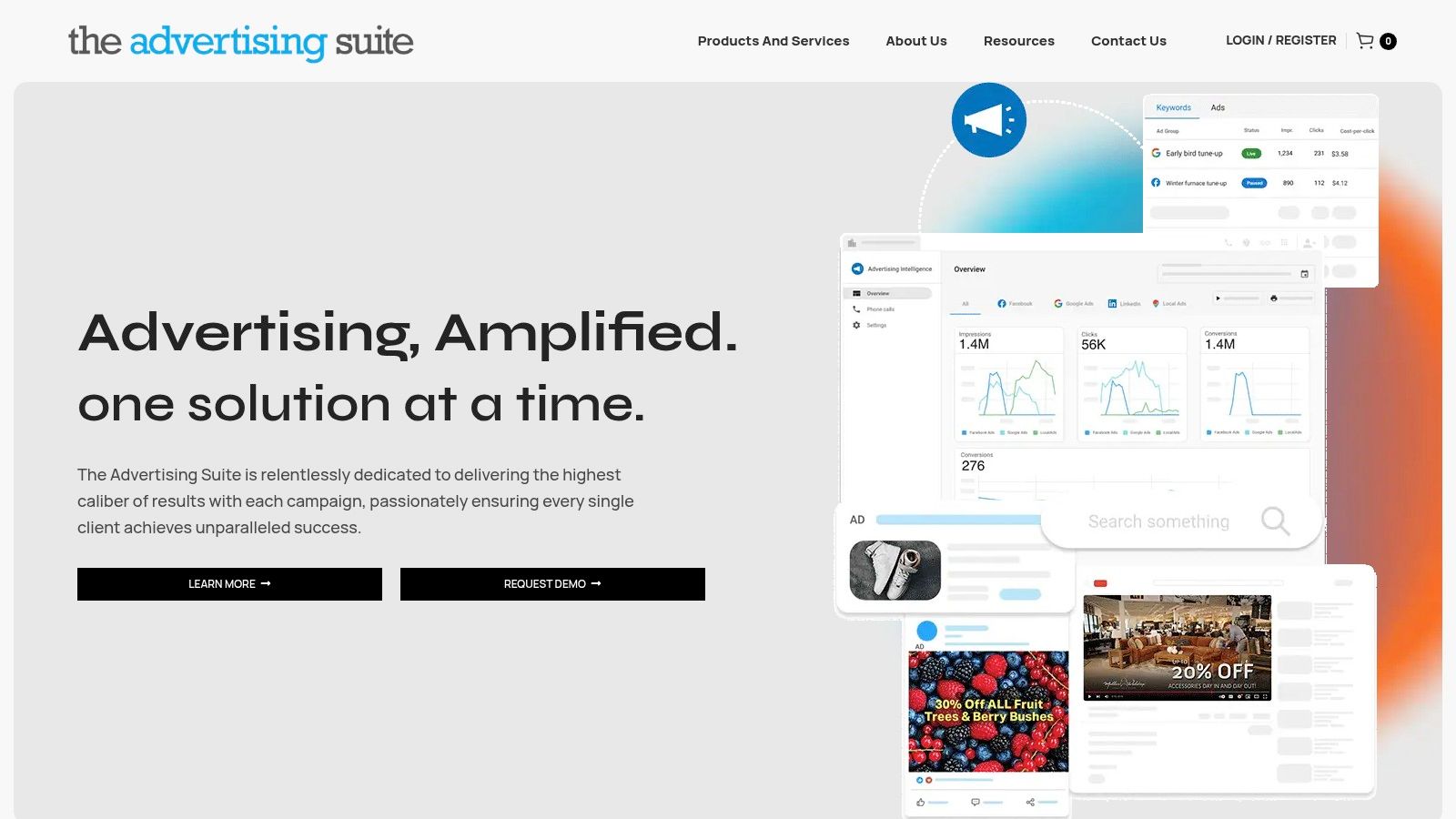
If you're tired of paying for attention that never turns into sales, The Advertising Suite is built for that problem. We help businesses turn advertising into a predictable profit center with a results-first framework, integrated CRM and reputation ecosystem, and execution tied to bottom-line outcomes instead of vanity metrics. For teams that want a deeper system, Book a Growth Consult to map your segmentation strategy to revenue, or Request a Demo to see how it works in practice. You can also Explore the Membership, which includes a 25% discount on all services and access to the proprietary software stack. With 10,000+ satisfied customers, we're not here to act like another agency. We're the growth-focused partner that works like an extension of your team.