Most advice about persuasive advertising is lazy. It treats persuasion like a bag of tricks. Add urgency. Flash a testimonial. Sprinkle in emotion. Hope for clicks.
That mindset is exactly why so many businesses burn budget and call advertising “unpredictable.” Persuasion isn't manipulation when the offer is real. It's the discipline of making value obvious, credible, and urgent enough for a buyer to act.
If your ads generate attention but not revenue, the problem usually isn't reach. It's weak persuasion, weak proof, or both. And in a privacy-first market, weak proof gets ignored fast.
Beyond Tricks The Real Science of Persuasive Advertising
Persuasive advertising is not a bag of hacks. It is buyer risk reduction. Brands that treat it like clever copy usually get cheap clicks, weak lead quality, and sales teams stuck cleaning up bad-fit demand.
The core model is old and still useful. Aristotle's framework of ethos, pathos, and logos remains a practical way to judge whether an ad can convert, not just get noticed.
The three forces behind buyer action
Ethos answers, “Why should I trust you?”
Pathos answers, “Why should I care now?”
Logos answers, “Why does this make financial or practical sense?”
These are not academic labels. They map directly to performance.
A campaign with weak ethos gets ignored because the claim feels slippery. A campaign with weak pathos gets seen but not acted on because there is no consequence to waiting. A campaign with weak logos creates interest, then dies during evaluation because the buyer cannot defend the decision to a boss, spouse, or internal procurement team.
Strong ads combine all three in one argument. Trust gets attention to stick. Emotion gets action started. Logic gets the conversion over the line.
Practical rule: If your ad cannot answer “why you, why now, and why believe this?” it is not persuasive enough to scale profitably.
Why this matters for revenue
A lot of businesses confuse messaging with persuasion, and it costs them. Messaging explains what you sell. Persuasion gives a buyer a reason to choose you, justify the spend, and act before the problem gets worse.
Take a local service business. “High-quality service” is filler. It does nothing for pipeline. A persuasive version does three jobs at once:
- Ethos: show proof people can verify, such as review volume, response times, certifications, or before-and-after results
- Pathos: show the cost of delay or the relief of getting the issue solved fast
- Logos: show the concrete reason the offer makes sense, such as fewer repeat problems, faster turnaround, or clearer pricing
That is how campaigns produce revenue instead of vanity metrics.
If you want to strengthen that argument, customer behavior analytics will do more for performance than another round of internal creative opinions. Buyer patterns show where trust breaks, which objections stall action, and what proof your ads need before budget should increase.
Old principles, modern execution
The principles have not changed. The way you deploy them has.
Static claims used to get more room to work. Now buyers see polished promises everywhere, tracking is weaker, and broad targeting gives you less margin for lazy messaging. That changes the job. Persuasion has to be connected to your full performance stack, including CRM feedback, lead quality signals, and review velocity, or your ad copy turns into empty theater.
Ethos is stronger when review data stays current. Pathos is stronger when your CRM shows the moments buyers convert, not the moments marketers assume matter. Logos is stronger when claims line up with sales outcomes and post-click behavior.
Persuasion still works. Static persuasion does not.
The Six Psychological Triggers That Drive Customer Action
Persuasion gets practical when you stop talking about “branding” and start talking about human behavior. Most buying decisions aren't made from pure logic. They're nudged by predictable triggers.
Modern campaigns regularly use six influence principles documented by Cialdini: Reciprocity, Consistency, Social Proof, Authority, Liking, and Scarcity, as summarized in this overview of persuasive techniques in advertising.
Core persuasive principles and applications
| Principle | Psychological Driver | Modern Ad Application |
|---|---|---|
| Reciprocity | People feel inclined to respond after receiving value first | Free audit, sample, consultation, or useful lead magnet |
| Consistency | Small prior commitments make future action more likely | Sequential ads that ask for a low-friction first step |
| Social Proof | Buyers trust other buyers when evaluating risk | Reviews, ratings, customer stories, and usage signals |
| Authority | Expertise reduces uncertainty | Expert-led messaging, credential-based claims, specialist framing |
| Liking | People buy more easily from brands or people they relate to | Founder videos, relatable creators, authentic voice |
| Scarcity | Limited access increases urgency and perceived value | Time-bound offers, limited spots, application windows |
Reciprocity works because buyers hate one-sided exchanges
Give value before asking for money. Not fluff. Real value.
A checklist, consultation, trial, useful guide, or meaningful diagnostic can lower resistance because the buyer feels they've already received something worthwhile. Reciprocity isn't bribery when the exchange is honest. It's trust-building.
In an ad, this looks like a practical offer with immediate utility, not a vague “learn more” button.
Consistency starts small and compounds
People like acting in ways that match their previous decisions. That's why the first conversion doesn't need to be a sale.
Sometimes the best ad asks for:
- an email
- a quiz completion
- a quote request
- a short form submission
Small commitments create momentum. If your funnel jumps straight from cold traffic to a heavy sales ask, you're skipping buyer psychology.
A lot of brands would improve performance by tightening the sequence between first click and first commitment. Strong headlines for advertising help here because the first promise has to feel easy, specific, and worth acting on.
Buyers rarely resist commitment itself. They resist commitment that arrives before trust.
Social proof reduces perceived risk
This one gets abused constantly. Slapping a testimonial under an ad isn't enough anymore.
Social proof works because prospects use other people's experiences to judge whether a purchase is safe, smart, and likely to pay off. Reviews, endorsements, and visible satisfaction signals make the offer feel less risky.
But the proof has to feel believable. Generic praise sounds manufactured. Specific proof feels earned.
Authority matters when the purchase carries consequences
When buyers think a wrong decision could cost them time, money, or reputation, they look for expertise. That's where authority matters.
Authority in ads can come from:
- specialist language used clearly, not pompously
- visible expertise
- credible process explanation
- professional validation
This is especially important in high-trust categories where people want confidence before they want cleverness.
Liking is underrated because people pretend they're purely rational
They're not. Buyers prefer brands that feel familiar, relatable, and human.
A polished but cold ad often loses to a simpler ad that sounds like a real person. Liking comes from tone, relatability, shared identity, and delivery style. This is why creator-led and founder-led content often outperforms sterile corporate copy.
Scarcity works, but only when it's real
Scarcity taps urgency. If access is limited, buyers assign more value to the opportunity.
Used well, scarcity speeds action. Used badly, it screams desperation.
Fake urgency trains buyers to distrust everything else you say.
The persuasive techniques of advertising work best when these triggers support a solid offer. They don't rescue weak offers. They amplify strong ones.
Why Static Persuasion Fails in a Post-Privacy World
Static persuasion is what underperforming accounts hide behind. A generic five-star badge. A fake countdown. A polished testimonial that says nothing. None of that fixes weak targeting, weak proof, or weak follow-up. It just burns budget more politely.

The underlying issue is simple. Buyers have become better at spotting canned persuasion, and ad platforms give you less behavioral data to rescue bad creative after the click. Privacy changes did not kill persuasion. They forced marketers to stop treating persuasion like a design layer and start treating it like a system tied to audience signals, landing page proof, CRM data, and post-click experience.
Ad fatigue turns old persuasion into background noise
Repeated claims do not automatically build trust. Repeated weak claims train buyers to ignore you.
That is why static assets wear out so quickly now. A review screenshot with no context feels stale. A “limited time” label that keeps showing up every week feels dishonest. A testimonial edited until it sounds corporate loses the one thing persuasion needs to work, credibility.
Three patterns fail fast:
- Generic proof with no timing or relevance
- Urgency with no clear reason behind it
- Brand-safe testimonials that sound approved, not real
Performance teams should treat persuasion like creative inventory. If the message is static, the response will flatten. Low engagement then hurts delivery, which makes your proof look even weaker.
Privacy changes forced better marketing discipline
The old growth shortcut was obvious. Track everything, segment aggressively, and let micro-targeting carry average messaging. That shortcut is weaker now.
You need the ad to do more selling on its own. You need the landing page to confirm the claim with fresh proof. You need follow-up that reflects what the buyer did, not what you guessed they might want. That only happens when your campaign data connects to owned customer data.
A stronger first-party data strategy gives your team current inputs for persuasive messaging. It helps you use real customer actions, recent review themes, lead status, and purchase history instead of generic claims copied into every campaign.
Static proof creates a trust gap
Buyers do not evaluate proof in isolation. They evaluate whether it feels current, specific, and consistent with the rest of the experience.
If your ad promises trust but your reviews are outdated, the claim collapses. If your landing page pushes urgency but inventory signals are vague, the urgency collapses. If your sales team follows up with messaging that ignores the ad promise, the whole persuasion chain breaks.
That is the shift too many brands miss. Timeless principles still work. Static execution does not.
Use social proof that reflects recent customer outcomes. Use authority that shows process, not posture. Use scarcity tied to a real constraint. Then connect those signals across ad creative, on-site experience, CRM workflows, and review collection. In a privacy-first market, persuasion has to stay live. If it does not, it stops producing revenue.
How to Apply Persuasion on Google, Meta, and Display Ads
Channel fit decides whether persuasion produces revenue or burns budget.
Too many advertisers treat persuasion like a universal copy formula. It is not. Search captures demand. Social creates it. Display reinforces it. If you run the same promise, proof, and CTA across all three, you pay for mismatched intent and weaker conversion rates.
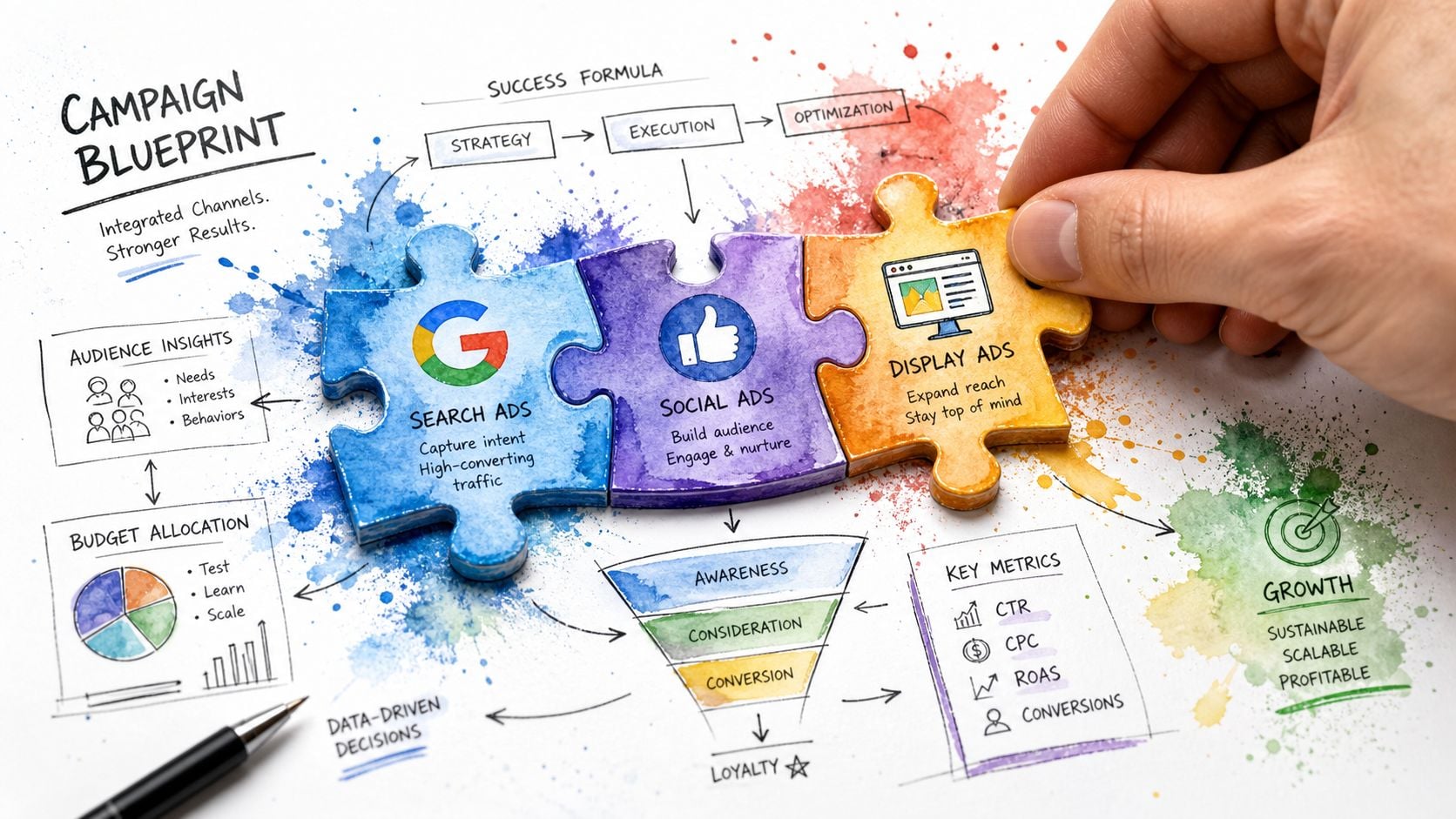
Google Ads reward clarity, proof, and next-step confidence
Search traffic is usually closer to action. The buyer has a problem, a category, or a shortlist in mind. Your job is to remove doubt fast.
Use search copy to make the decision easier:
- Match intent in the first line: say exactly what the buyer is looking for
- Add proof that lowers risk: use ratings, service specifics, guarantees, or concrete outcomes
- Show what happens next: quote request, demo, booking, or purchase
- Use urgency only when it is real: timing claims without an actual constraint weaken trust
Weak search ads chase attention with generic superiority claims. Strong search ads answer the query, prove credibility, and make the next step feel low risk.
If your team needs a model, these ad copy examples for conversion-focused campaigns show the pattern clearly. Intent match first. One sharp proof point second. One direct reason to act now.
Meta Ads need emotional relevance before rational proof
Social traffic did not ask for your ad. You interrupted the feed. Earn attention with a problem the buyer recognizes instantly, then earn the click with evidence.
That changes the persuasion mix. On social, emotion opens the door. Social proof and specificity close the sale.
Use creative that feels native to the platform:
- Start with a lived problem: frustration, wasted time, missed revenue, poor results
- Show the outcome in human terms: what improves for the customer, not just what the product does
- Use real voices: founders, customers, staff, or creators speaking plainly
- Sequence the message: first ad earns attention, retargeting ad adds proof, conversion ad asks for action
A polished brand video can still convert. A polished brand video with no clear claim usually does not. Production value is not persuasion.
Display ads need instant recognition and one simple argument
Display gets less attention than search and less context than social. You have seconds, often less, to make the offer legible.
That means discipline matters more than creativity. One visual. One message. One reason to care.
Choose a single persuasive angle:
- Belonging: people like the buyer already choose this option
- Status: this is a smarter or more selective choice
- Reason: a clear fact, outcome, or operational advantage reduces skepticism
Reason-based display creative works best when trust is the barrier. Use specific claims, short supporting data, or clear operational facts. Skip dense explanations. Static banners cannot carry a full sales argument, especially in a privacy-first market where weak targeting makes relevance harder to fake.
Match the trigger to the buying moment
Persuasion works when the trigger fits the context, not when the copywriter tries to cram every trigger into every ad set.
| Channel | Best-Fit Triggers | What to Avoid |
|---|---|---|
| Search | Authority, logic, practical scarcity | Clever copy that hides intent |
| Social | Emotion, liking, social proof | Stiff brand language and generic lifestyle claims |
| Display | Recognition, status, simple urgency | Small text, layered messages, vague proof |
One rule decides whether the spend turns into pipeline. The landing page has to continue the same persuasion angle with current proof and a friction-free next step. In a privacy-first setup, that consistency matters more because the ad has less room to rely on tracking and more pressure to carry a credible message on its own.
Using Your Tech Stack to Automate Persuasive Campaigns
Manual persuasion does not scale. It breaks the moment ad copy, lead routing, review collection, and follow-up live in separate systems.
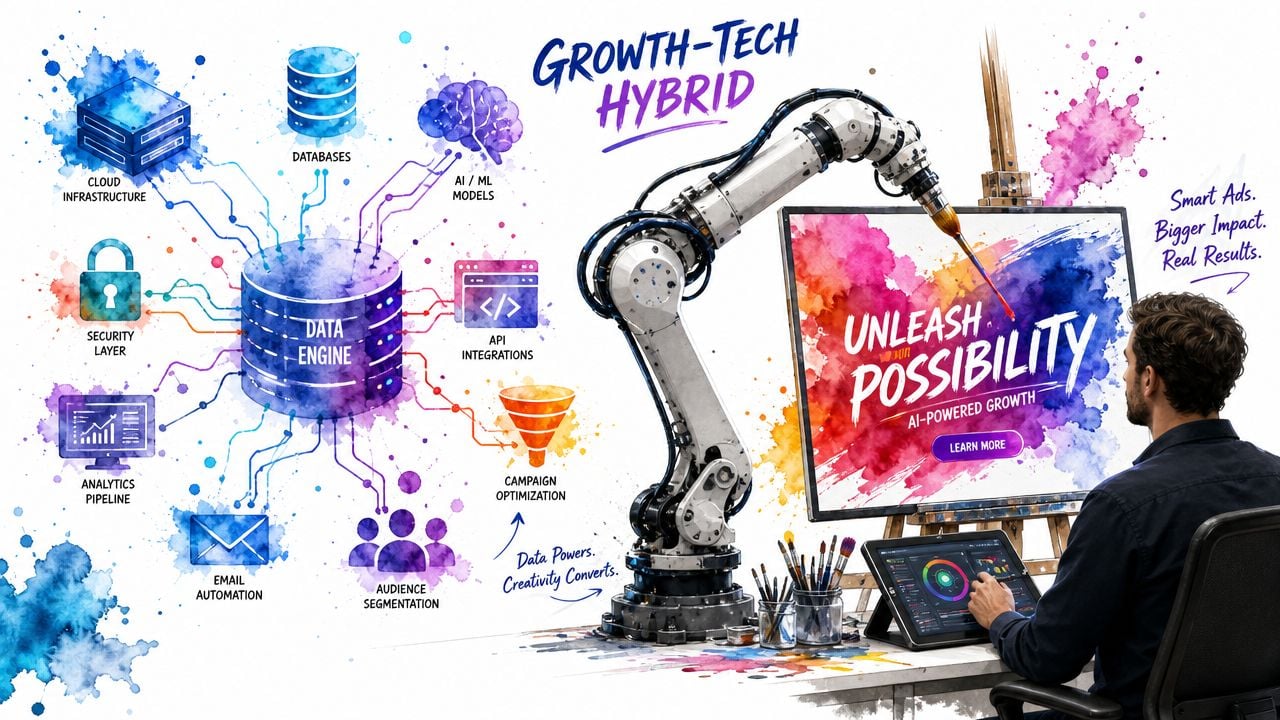
Privacy restrictions made that gap more expensive. You get less tracking, less behavioral detail, and less room to rescue weak messaging after the click. If your stack is disconnected, every persuasive principle you use gets weaker as the buyer moves downstream.
Persuasion needs connected systems
Persuasive campaigns work when proof, audience context, and follow-up stay current across the full buying journey. Static claims fail because they age fast. Buyer objections change. Service issues change. Customer sentiment changes. Your messaging has to keep up.
A connected stack gives you that control:
- Current proof in market: fresh reviews, recent outcomes, and objection-handling language can feed ad creative and landing pages
- Behavior-based follow-up: leads get sequences based on intent, stage, and prior actions instead of generic nurture
- Message continuity: the promise in the ad matches the form experience, sales outreach, and post-conversion communication
That is how timeless persuasion survives in a privacy-first market. You stop depending on perfect targeting and start building credibility through operational consistency.
Review data turns social proof into a revenue asset
Screenshots buried in a shared folder are not a persuasion system. They are creative leftovers.
Review signals should shape what you sell and how you sell it. If recent customers keep praising speed, your campaign should stress speed. If they keep mentioning responsiveness or trust, your messaging should answer those priorities directly. Current proof beats polished proof because it reduces doubt at the exact point of decision.
Field note: The best testimonial is the one that removes the objection blocking the sale.
This matters beyond ad copy. Review trends can inform landing page headlines, sales scripts, retargeting angles, and even which offers deserve more budget.
CRM data makes persuasion consistent
A CRM should do more than store contacts. It should control who sees what next.
A first-time lead should not get the same message as a repeat buyer. A prospect who viewed pricing needs different follow-up than someone who downloaded a guide. A no-show needs reassurance and friction removal, not aggressive urgency. Good persuasion respects context. Bad automation ignores it and burns trust.
A smart marketing automation workflow keeps those paths organized so persuasion stays relevant without forcing your team to rebuild campaigns by hand every week.
Build one persuasion system, not four disconnected functions
Ads, reviews, CRM workflows, and conversion optimization are not separate projects. They are one revenue system. Treat them that way.
When the stack is connected, your business gets stronger acquisition messaging, cleaner lead handling, and follow-up that matches buyer intent. That improves conversion quality, not just response volume.
Clever copy helps. Integrated execution makes it pay.
How to Test and Measure the Revenue Impact of Persuasion
Persuasion that cannot be tied to pipeline and sales is just expensive creative.
A higher click-through rate can still hide a weak campaign if the message attracts low-intent traffic, poor-fit leads, or buyers who stall after the first conversion step. In a privacy-first market, that problem gets worse because platform reporting fills gaps with modeled assumptions. Your job is to judge persuasion inside your own revenue system, where lead status, deal progression, close rate, and repeat purchase behavior are visible.
Test one persuasion variable at a time
Sloppy testing wastes budget and produces fake lessons. If you change the headline, offer, audience, and landing page at once, you do not have a persuasion test. You have a guessing problem.
Keep one variable stable long enough to see whether it changes buyer behavior:
- Headline angle: scarcity vs. social proof
- Proof style: expert framing vs. customer validation
- Emotional direction: relief vs. ambition
- CTA framing: benefit-led vs. urgency-led
That discipline matters even more now because static claims lose power fast. Buyers trust messages that match their stage, objections, and prior actions. Test persuasion in a way your CRM can read back clearly, so you can see which message produced sales-ready leads, booked calls, and closed revenue.
Measure what reaches the bank account
Ad platforms report activity. Your systems should report outcomes.
Track metrics that show whether persuasion improved commercial performance:
- Lead quality
- Sales acceptance rate
- Opportunity creation
- Close rate
- Average order value
- Repeat purchase behavior
- Customer value over time
Use those numbers to judge the message, not just the ad response. A fear-based angle may spike form fills and still hurt deal quality. A stronger proof-led angle may produce fewer leads and more revenue. That is a win.
If your team needs a tighter way to connect campaign inputs to financial return, use a clear marketing ROI calculation framework and review persuasion tests against contribution to revenue, not platform-reported comfort metrics.
A persuasive message that attracts the wrong buyer is not persuasive. It is expensive targeting failure.
Separate short-term response from long-term value
A lot of businesses still reward the ad that gets the fastest reaction. That is how bad messaging survives.
Pressure tactics can create urgency, but urgency without fit usually creates refunds, no-shows, low sales acceptance, and weak retention. Positive value framing often produces better customers because it sets the relationship on the right terms from the start. Use risk and consequence only when the risk is real, the proof is credible, and the offer actually helps the buyer avoid that outcome.
That standard matters more in a post-privacy environment. You cannot rely on cheap retargeting and repetitive frequency to force a conversion. The message has to do real work, and your stack has to capture what happened after the click.
Use holdouts and cohort views, not isolated platform reports
If you want to know whether a persuasion angle changed revenue, compare exposed and unexposed groups where possible. Look at cohorts by message theme, audience stage, or proof type. Then check what happened downstream over time.
A useful review cycle looks like this:
- Compare lead-to-sale rates by persuasion angle
- Check whether one message creates faster pipeline movement
- Review return rate or retention by campaign theme
- Match ad promise against sales-call objections and close outcomes
Integrated execution delivers results. Reviews inform proof. CRM stages inform message timing. Revenue data tells you which emotional trigger sells. Timeless persuasion principles still work, but static copy on its own does not. The modern performance stack makes those principles measurable, adaptable, and harder to fake.
The standard is simple
A persuasive campaign should:
- Attract the right prospect
- Convert with credible proof
- Produce trackable revenue
If it fails on any one of those, fix the message, the targeting, or the follow-up system. Do not celebrate activity that never turns into cash.