

YouTube ads don't have a single price. Typical ranges land around $0.03–$0.30 per view and $4–$10+ per 1,000 impressions, but that's the wrong place to start if you care about revenue.
Most advice about how much YouTube advertising costs is backwards. It trains business owners to obsess over cheap views, lower CPMs, and inflated reach numbers, then wonder why sales didn't move.
That's vanity accounting.
A revenue-focused business should ask a harder question: what does it cost to create profitable customer action? A cheap view that never turns into a lead is still wasted spend. A more expensive campaign that produces qualified calls, booked demos, or purchases is often the better buy.
If you're serious about growth, treat YouTube as an investment channel, not a video slot machine. The platform can be affordable, expensive, efficient, or wasteful. The difference usually comes down to audience strategy, offer quality, conversion tracking, and whether you're measuring business outcomes instead of platform applause.
Why Cost Per View Is the Wrong Question for YouTube Ads

The first question most owners ask is simple: what's a good CPV?
The better question is: what are those views worth after the click, after the form fill, after the sales call, and after the deal closes?
Cheap views can still be expensive
You can buy low-cost attention and still lose money. That happens all the time when campaigns chase broad reach, weak intent, or creative built for “engagement” instead of conversion.
A view is not revenue. An impression is not revenue. Even a click isn't revenue.
Practical rule: Track YouTube with a cost-per-revenue mindset. If a campaign lowers CPV but raises wasted traffic, it got worse, not better.
This matters even more because YouTube is not some fringe ad channel with bargain-bin pricing. It's a large, mature auction market. One industry estimate notes YouTube generated about $36.1 billion in ad revenue in 2024, up 14.6% year over year, and reports average CPC around $1–$4 for highly targeted campaigns plus CPA ranges of $5–$50+ depending on goal and industry.
That tells you two things:
- Demand is real: serious advertisers are already competing for attention.
- Pricing is contextual: your cost changes based on who you target, what you optimize for, and how convincing your ad is.
The metric stack that actually matters
If you run a local service business, e-commerce brand, or B2B offer, your scorecard should look different.
Focus on:
- Qualified lead cost: what you paid for leads your team wants
- Sales efficiency: whether booked calls, purchases, or consultations increased
- Customer value: whether YouTube is attracting buyers worth keeping
- Revenue attribution: whether you can connect ad spend to closed business
If you need a cleaner operating model, use these YouTube ads best practices as the baseline. The point isn't to win the cheapest traffic. The point is to buy profitable attention and convert it.
Here's my opinion after managing large ad budgets: CPV is a diagnostic metric, not a business goal. It helps you understand media efficiency. It should never lead strategy.
Decoding YouTube Ad Pricing How the Auction Really Works

YouTube pricing works like a rolling auction for limited attention. You're not buying a fixed shelf price. You're bidding for access to a specific audience, in a specific format, under specific competitive conditions.
That's why two businesses can spend the same budget and get completely different outcomes.
What you're actually paying for
Different campaign types charge you for different events.
- CPV campaigns: common when you want video views or engagement
- CPM campaigns: common when you want reach and visibility
- CPA-oriented setups: common when you want platform optimization around conversion actions
- CPC pressure: still relevant when traffic quality matters and the audience is highly targeted
Industry pricing reflects that range. Current guides report typical CPV around $0.03–$0.10 and CPM around $4–$10+, with premium Masthead placements reaching $30–$300+ CPM. The same source says small businesses often spend $500–$5,000 monthly, scaling brands $5,000–$25,000, and national campaigns $50,000+.
That spread isn't random. It comes from format choice and business objective.
Match the pricing model to the job
A lot of wasted spend starts with the wrong campaign structure. Businesses choose the ad type they've heard about most, not the one tied to their actual goal.
Use this decision lens:
| Pricing model | Best fit | What you should expect |
|---|---|---|
| CPV | Demand generation, message testing, video engagement | Lower-friction exposure, weaker direct buying intent unless the funnel is tight |
| CPM | Brand awareness, broad reach, launch campaigns | Strong visibility, but you need downstream measurement or it becomes a vanity trap |
| CPA | Lead generation and direct response | Better when conversion tracking is clean and sales feedback is real |
| CPC-sensitive campaigns | High-intent audience capture | Traffic can be valuable, but poor landing pages make it expensive fast |
If your priority is pipeline and sales, start by defining the acceptable acquisition cost. Then work backward through your campaign architecture. That's why target cost per acquisition planning matters more than chasing the lowest media metric.
Buy the outcome first, then choose the bid model that supports it.
The auction rewards relevance, not just budget
A bigger budget helps. It doesn't fix weak messaging.
YouTube tends to favor ads that hold attention and match audience intent. If your creative is off, your audience is sloppy, or your offer is generic, you'll pay more to force distribution. If your message fits the viewer, your money usually travels further.
That's the part many businesses miss. They think they have a budget problem. Often they have a relevance problem.
The 4 Factors That Actually Drive Your YouTube Ad Costs
If you want to control cost, stop treating ad spend like weather. There are real levers here. Four of them decide most of what you'll pay.
Targeting and audience density
This is the biggest cost driver in many accounts.
Broad audiences can bring cheaper views. Narrow audiences, especially high-intent or competitive ones, usually cost more because more advertisers want the same people. Practitioner benchmarks note that broader audiences can push CPV into the low cents, while narrow or competitive segments often move CPV into the double-cent range or higher. The same source uses about $0.08–$0.10 CPV and about $4–$8 CPM as conservative planning assumptions.
That doesn't mean broad is better. It means you should be honest about tradeoffs.
- Broad targeting: cheaper attention, weaker intent
- Narrow targeting: pricier traffic, stronger buying signals
- Layered targeting: often the sweet spot when you know your buyer well
If your business has useful customer history, build around it. Strong first-party data strategy usually improves targeting quality because you're not guessing who matters.
Creative quality and message fit
Creative is a cost lever. Not a branding accessory.
A weak ad burns budget because the platform has to work harder to get results from it. A sharp ad that gets to the point, filters the wrong audience, and presents a real offer can improve efficiency without touching your bid settings.
Ask yourself:
- Does the opening hook qualify the viewer quickly?
- Does the message speak to pain, urgency, or buying intent?
- Does the call to action match the viewer's level of awareness?
A polished video that says nothing useful is still a bad ad.
Competition and timing
Some audiences cost more because too many advertisers are trying to win them. Costs also change when market demand spikes.
That doesn't mean you should disappear when competition rises. It means you should tighten targeting, sharpen creative, and defend profit margins instead of blindly increasing spend.
The wrong response to a tougher auction is panic scaling. The right response is cleaner economics.
Bidding strategy and account discipline
Automation can help. Blind automation can also waste money.
If the account has poor conversion signals, weak exclusions, or bad creative, automated bidding will optimize the wrong behavior faster. Manual oversight still matters. You need clean goals, reliable tracking, and enough discipline to shut off what doesn't produce.
The point is simple. Your YouTube ad costs are not just set by the market. They're shaped by your decisions.
Real-World Budgets How SMBs Invest in YouTube for Revenue
Abstract ranges help. Operating plans help more.
Most SMBs don't need a massive launch budget. They need a budget that matches the sales model, the margin profile, and the speed of feedback. The wrong approach is copying a national brand's media plan. The right approach is funding the shortest path to verified revenue.
Three practical budget scenarios
Here's a simple planning view for different business types.
| Business Type | Monthly Budget | Primary Goal | Key Metric (KPI) | Recommended Ad Format |
|---|---|---|---|---|
| Local service business | $1,500 | Generate qualified local leads | Qualified lead cost | Skippable in-stream focused on direct response |
| Scaling e-commerce brand | $10,000 | Drive purchases from high-intent audiences | Cost per acquisition | Mix of skippable in-stream and retargeting-focused video |
| B2B company | $5,000 | Generate demo requests | Sales-qualified demo volume | Skippable in-stream with problem-solution messaging |
Scenario one: local service business
A local service company usually doesn't need millions of impressions. It needs the phone to ring with the right people.
At a $1,500 monthly budget, I'd focus on a tight service area, problem-aware messaging, and a call to action built around immediate contact. The ad should qualify hard. Mention the service category, local relevance, and urgency early so unqualified viewers self-select out.
What should this business care about?
- Lead quality: not raw form count
- Speed to contact: because wasted follow-up kills ad efficiency
- Booked jobs: because leads don't pay invoices
Often, agency-burned founders get frustrated. They were sold impressions, clicks, and “awareness,” when what they needed was revenue-producing demand.
Scenario two: scaling e-commerce brand
An e-commerce brand with $10,000 to deploy can use YouTube more aggressively, but only if the creative and offer are built for conversion. Product videos that educate, objection-handle, and create urgency tend to outperform vague lifestyle fluff.
This kind of brand should run with a sharper scorecard:
- Purchase-driving traffic quality
- Acquisition cost by audience segment
- Revenue tied to repeatable creative themes
The mistake here is treating YouTube like passive top-of-funnel inventory. That's lazy media buying. A serious operator uses YouTube to influence buying intent and then tracks whether those viewers convert downstream.
If your product economics are healthy, YouTube can be a scaling channel. If your site and offer are weak, YouTube just reveals the problem faster.
Scenario three: B2B demo generation
A B2B company with a $5,000 test budget should not judge success by volume alone. B2B revenue usually depends on fit, urgency, and sales-readiness.
That means the ad needs to repel the wrong viewers while attracting serious prospects. Speak to the business problem plainly. Use the video to pre-qualify. Ask for the next logical step, not a giant commitment.
The KPI stack should stay tight:
- Demo requests that match the ideal customer
- Sales acceptance of those demo requests
- Pipeline quality from YouTube-sourced opportunities
For all three scenarios, the same rule applies: fund YouTube at the level your business can measure responsibly. Spend should expand when the numbers tie back to income, not when the dashboard looks busy.
Strategies to Control Spend and Maximize Advertising ROI
The fastest way to waste money on YouTube is to “launch and learn” without guardrails. That's not strategy. That's paying tuition to the platform.
Profitable accounts usually have the same habits. They control inputs, tighten measurement, and remove waste early.
Build for filtering, not for applause
Your ad should qualify viewers fast. Don't try to make everyone like it. Try to make the right buyer act.
That means your message should do three jobs:
- Call out the right audience: say who the offer is for
- Surface the pain clearly: make the problem expensive to ignore
- Create a logical next step: give the viewer one action to take
A broad, feel-good video often produces soft engagement and weak pipeline. A direct ad may get fewer vanity interactions while producing stronger buyers. That's a trade worth taking every time.
To keep the math honest, use a real marketing ROI calculation framework instead of judging performance by views and watch time alone.
Tighten audience layers and exclusions
A lot of wasted spend comes from sloppy audience design. Businesses either target too broadly and invite junk traffic, or they target so narrowly that they choke delivery without enough commercial upside.
The practical move is controlled layering.
- Use intent signals: build around buyers who are actively problem-aware
- Add demographic relevance: avoid paying for obvious mismatches
- Exclude bad-fit viewers: cut segments that consume budget without converting
- Protect remarketing pools: separate warmer audiences from cold traffic so you can bid and message differently
This isn't a minor optimization. It's one of the clearest ways to defend margin.
Let automation help, but don't hand it the keys
Automated bidding can work well when your account has clean conversion data. If your tracking is messy, your sales team ignores leads, or your landing page leaks intent, automation learns from broken signals.
That's why account discipline still wins.
Keep this operating sequence:
- Define the conversion that matters
- Verify lead quality with sales feedback
- Pause waste quickly
- Scale only what produces revenue evidence
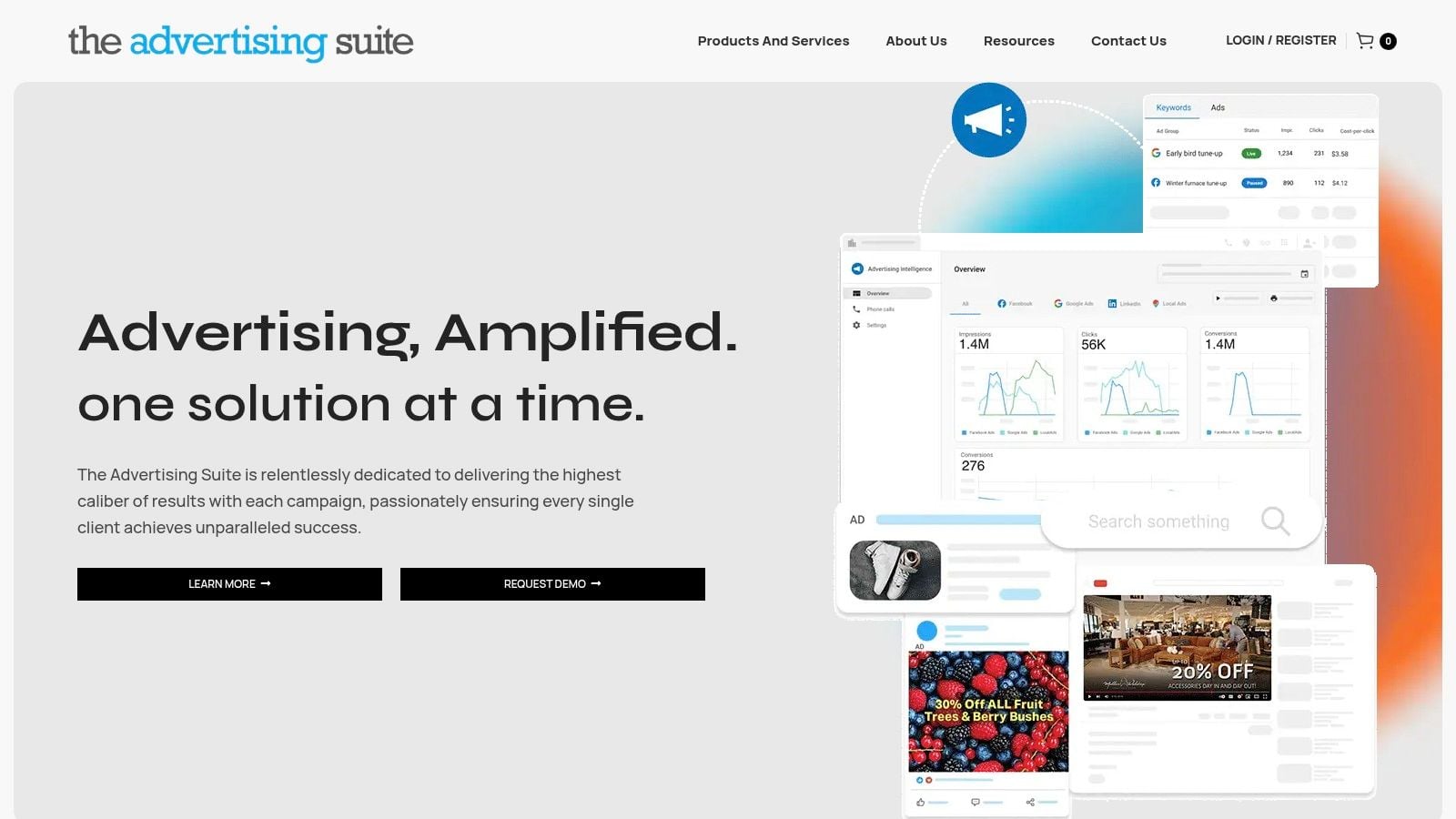
When teams need tighter closed-loop tracking, one option is a setup like The Advertising Suite, which combines campaign execution with CRM and review management so ad data can be tied back to customer outcomes. That matters because media metrics without downstream visibility create false confidence.
Good media buying doesn't just lower spend. It raises the percentage of spend that has a real chance to convert.
From Impressions to Income The Ad Suite Measurement Loop
Most businesses can launch YouTube ads. Very few can prove what those ads did for revenue.
That's the line between activity and accountability.
Closed-loop measurement changes the game
If you can't connect the ad view to the lead, the lead to the sales process, and the sales process to closed revenue, you're still guessing. Better-looking dashboards don't fix that.
A proper measurement loop tracks:
- Who engaged with the ad
- Who became a lead
- Which leads turned into sales opportunities
- Which opportunities produced revenue
That's where marketing attribution stops being theory and becomes operational. Without attribution, YouTube often gets judged too early or credited too generously.
The real advantage is operational, not cosmetic
The strongest YouTube strategy usually isn't just better bidding. It's better business alignment.
When your ad account, CRM, follow-up process, and reputation signals work together, you can answer the only questions that matter:
- Which audiences create real customers?
- Which creative themes attract buyers instead of browsers?
- Which campaigns deserve more budget because they improve profit?
That's the practical value of a growth-tech hybrid model. It closes the gap between ad delivery and customer value. It also prevents the classic SMB mistake of scaling media before fixing sales process leakage.
If you've been burned by agencies before, this is usually why. They reported platform metrics. They didn't own the revenue conversation.
The better model is simple. Use YouTube to create demand. Use systems to capture and convert it. Use measurement to decide what gets scaled.
If you want a clearer answer to how much YouTube advertising costs for your business, tie the budget to your sales model, not to generic media benchmarks. The Advertising Suite helps businesses build that revenue-first system with strategy, CRM visibility, and reputation infrastructure that supports actual growth. If you want a team that operates like an extension of your business, request a demo or book a growth consult, and explore the Membership for the built-in CRM plus the 25% discount on services.
