

Most advice on how to collaborate on Instagram starts with buttons, taps, and interface screenshots. That's backwards. If you don't know what business outcome the collaboration needs to produce, you've just organized a prettier way to waste time.
A collab post is not a strategy. It's a distribution feature. Treat it like a growth lever only when it helps you reach buyers you couldn't reach efficiently on your own, and when you can track what happened after the post went live.
Stop Chasing Likes and Start Planning for Revenue
The most popular advice about Instagram collaborations is also the weakest. It tells you collabs are a smart way to get more visibility, swap followers, and create buzz. Fine. Buzz doesn't pay payroll.
The more useful question is whether a collaboration solves a business problem. That could mean generating leads, booking consults, moving product, filling an event, or shortening the path from awareness to inquiry. If it doesn't support one of those outcomes, it's content theater.
Ask the only question that matters
Instagram Collabs are built for co-authored reach-sharing, but they're not automatically a discovery win. Their value depends on audience mismatch and campaign objective, not on the feature existing in the app, as noted in Adobe's guidance on Instagram collaboration.
That means a local med spa partnering with a wedding planner might make sense if each reaches people likely to buy from the other. A home service company partnering with a meme page probably doesn't. One creates buyer adjacency. The other creates cheap attention.
Use this simple revenue screen before you say yes to any collab:
| Question | Good answer | Bad answer |
|---|---|---|
| Does their audience contain likely buyers? | Yes, with clear fit | "They have a lot of followers" |
| Is the offer relevant right now? | Timely, specific, easy to act on | Broad, vague, hard to redeem |
| Can you track lead or sale activity? | Yes, through links, codes, CRM, intake | "We'll watch engagement" |
Pick partners with intent, not popularity
A growth partner is different from an influencer. An influencer rents you attention. A growth partner helps you reach demand with context and trust already attached.
Prioritize collaborators who can do one of three things:
- Reach high-intent buyers: Their audience already needs what you sell.
- Add proof: Their association reduces skepticism and speeds decision-making.
- Create action: They can move people to book, buy, call, or inquire.
Practical rule: If you can't explain why their audience would buy from you within one sentence, don't run the collab.
Follower count is a terrible screening tool by itself. Audience relevance, offer fit, and conversion path matter more. If you're serious about return, define success before the post exists. Tie the campaign to a consult form, product page, booking page, event registration, or qualified DM flow.
Vanity metrics can still be useful, but only as supporting indicators. They're not the scorecard. If you need a sharper framework for judging whether a campaign is efficient, use a return on ad spend mindset even for organic and creator-driven partnerships. It forces better decisions.
Set a collaboration goal that finance would respect
Before content production starts, lock one primary objective:
- Lead generation for service businesses
- Direct sales for product-based offers
- Pipeline creation for higher-ticket sales cycles
Then set the operational conditions around that goal. What offer will be promoted? Where will traffic go? Who handles inbound messages? How fast will your team respond? Businesses lose more money in the handoff than they do in the content.
A collab should sit inside a conversion system, not float around as a branded moment. If your backend is weak, the post can perform and the campaign can still fail.
The Collaboration Playbook for Outreach and Agreements
Most Instagram collaboration problems aren't creative problems. They're expectation problems. Someone thought the other side would write the caption, approve the edit, post on Tuesday, answer DMs, send usage rights, or include the offer naturally. No one wrote it down. Now you're in revision hell.
Professional outreach and a one-page agreement solve most of this.
Outreach that doesn't sound desperate
Your first message should sound like a business operator, not a fan with a Canva addiction. Keep it short. Be specific. Show the fit. State the action.
A clean outreach message usually includes:
- Why them: Mention the audience fit or content alignment.
- What you want: State whether this is a Collab post, Reel, Live, or a small campaign.
- What the audience gets: Lead with value, not exposure.
- What happens next: Ask for a quick call or permission to send a brief.
Example structure:
We work with customers who overlap with your audience. We have a specific offer that fits the content you already publish. We'd like to build a co-authored Instagram piece that drives people to a clear next step, not just engagement. If that aligns, we'll send a one-page brief with deliverables, timing, and approval terms.
That's enough. Don't write an essay. Don't open with praise and no plan. Don't promise "amazing synergy." Serious partners can smell fluff immediately.
Lock the brief before anyone creates content
An Instagram Collab post can include up to five collaborators, so one post can appear across six profiles if all invites are accepted. That scale is useful, but it also creates operational mess fast. That's why guidance recommends aligning on goals, deadlines, captions, and hashtags before publishing, as explained in this overview of Instagram Collab posts.
Use a one-page source of truth. Not a sprawling deck. Not a chaotic message thread.
Include these essential elements:
Campaign objective
Spell out the business goal in plain language. Example: drive bookings for a seasonal service, not "raise awareness."Primary offer
Define the product, service, or CTA. If the offer is muddy, the content will be muddy.Deliverables
List what gets produced. One Reel, one Story sequence, one Live appearance, one shared caption, or another agreed format.Ownership and publishing
Name the original publishing account. This matters for workflow and later reporting.Deadlines
Include concept approval, draft review, final approval, and publish date.Caption and hashtag rules
Agree on language early so nobody rewrites the message at the last minute.Usage rights
Clarify whether the content can be reused on your own channels, sales pages, or future paid campaigns.Inbound handling
Decide who responds to comments and DMs, and how fast.Success criteria
Name the KPI. Leads, purchases, consult requests, registrations, or qualified conversations.
If your operation depends on consistency after the post goes live, a defined marketing automation workflow keeps your team from dropping warm leads while everyone celebrates the comment count.
Red flags that should kill the deal
You don't need a legal thriller to know when a partnership will become a headache. Walk away if you see these:
- No deadline discipline: They answer slowly before the deal. They won't move faster after it.
- No clarity on usage: If they get vague about where the content can be reused, protect your brand and pause.
- No buyer fit: Nice content doesn't fix the wrong audience.
- No approval process: This creates brand risk and needless rework.
A solid collaboration should feel boring on the operational side. That's a compliment. Boring process makes profitable campaigns possible.
How to Execute Collabs for Posts Reels and Live
Once the strategy and agreement are set, the technical part is simple. That's good news, because Instagram doesn't reward overcomplication. It rewards clean execution.
The exact workflow for posts and Reels
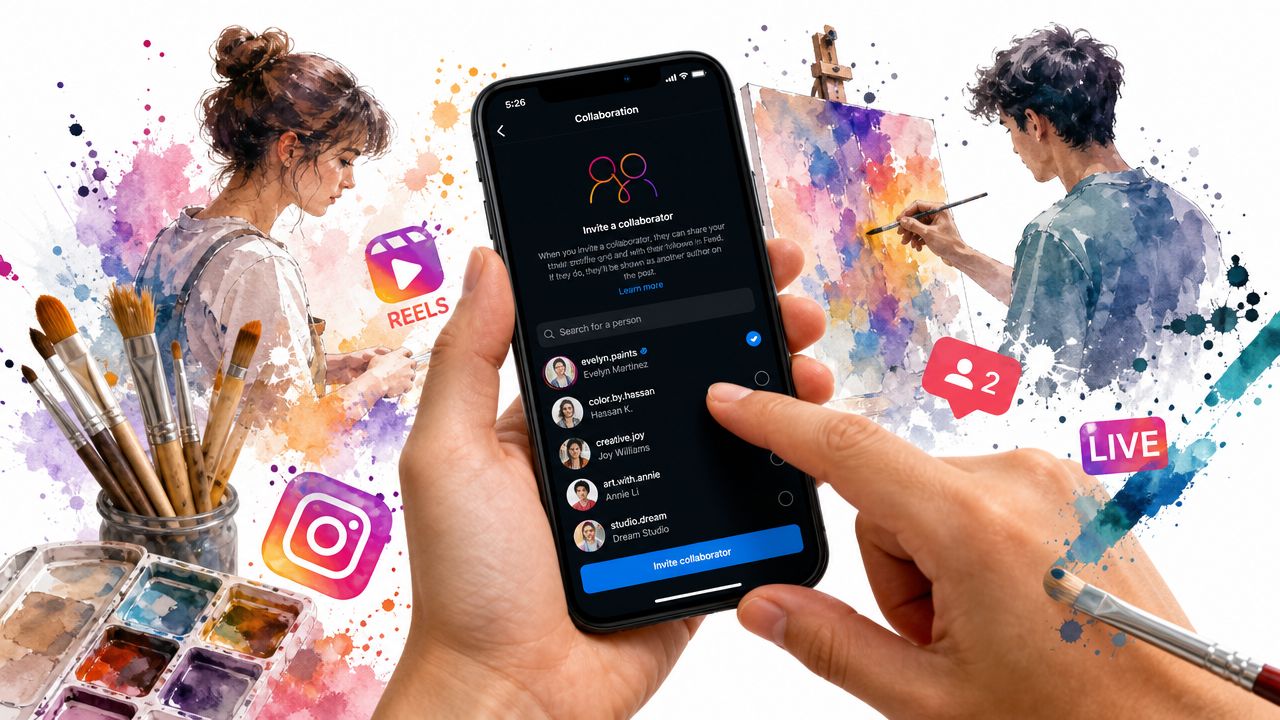
The correct process is straightforward. Create the post or Reel, open Tag people, choose Invite collaborators, select the partner's handle, and publish. The collaborator must accept the invite through DM before the post appears on both profiles, according to this technical walkthrough of Instagram collaboration steps.
Use this checklist every time:
Create the content normally
Upload your photo, carousel, or Reel and finalize the creative first.Open Tag people
Don't skip this. The collaboration function lives here.Select Invite collaborators
Search for the exact account handle and add the right partner.Publish only when timing is aligned
If your campaign depends on both audiences seeing it quickly, coordinate acceptance timing before the post goes live.Confirm acceptance
Until they accept the DM invite, it isn't functioning as a true collab.
One more operational detail matters. If an account is private, reach can be restricted for non-mutual followers. That can undermine the whole point of a shared post.
How to handle Live collaborations without chaos
Instagram Live can work well for launches, Q&A sessions, product demos, service education, or event promotion. But Live isn't magic. If the topic wanders, viewers leave. If the CTA is weak, no one acts.
Run Live with a simple structure:
- Open with the promise: State what viewers will learn or get.
- Keep roles clear: One host leads, one guest expands, both know the CTA.
- Close with action: Tell viewers exactly where to go next.
Don't go Live because it feels interactive. Go Live when real-time trust-building helps move someone closer to a decision.
If you need content prompts before producing a collab Reel or live segment, these advertisement ideas for small business can help you frame stronger hooks and offers.
Common execution mistakes
Most failures happen in the last mile:
- The partner never accepts the invite
- The wrong account publishes first
- The CTA lives nowhere useful
- The audience gets content with no next step
Instagram collaboration is easy to do and easy to mess up. A ten-minute preflight check beats a week of post-launch excuses.
Using Instagrams Branded Content Tools Correctly
A lot of businesses confuse Collab with Branded Content. They aren't the same tool, and mixing them up creates compliance problems and campaign confusion.
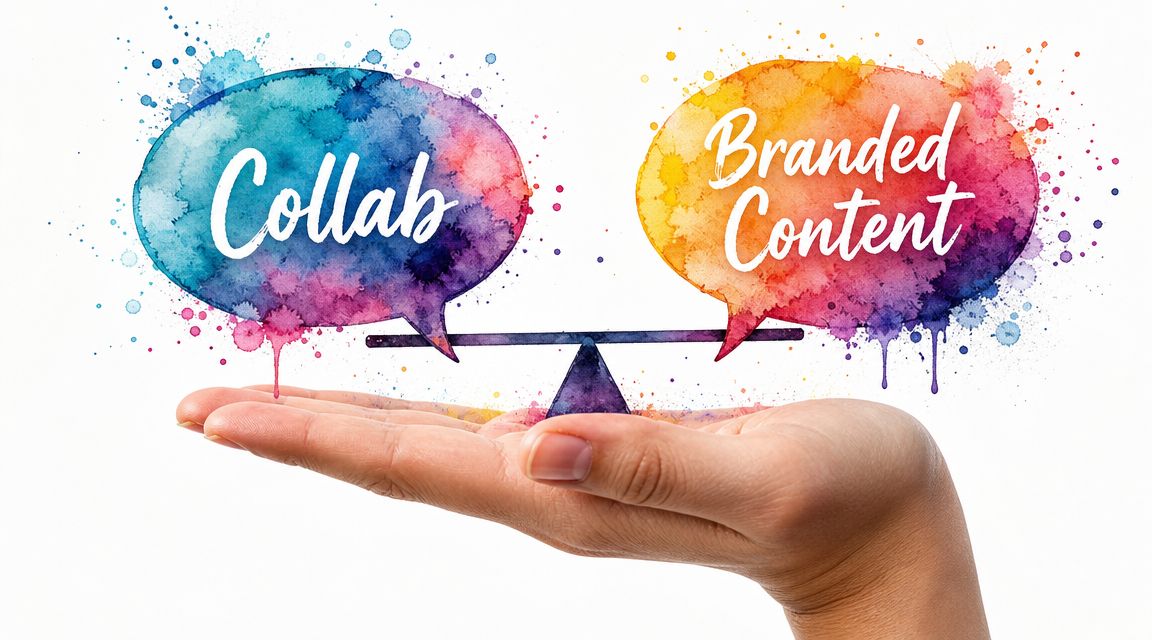
A Collab post is about co-authorship. Branded Content is about disclosure when a commercial relationship exists. If money, product, or another material exchange is involved, you need to treat transparency seriously.
Know the difference before you publish
Use this simple comparison:
| Tool | Main purpose | Best use case |
|---|---|---|
| Collab | Shared authorship and shared engagement | Joint posts meant to appear on multiple profiles |
| Branded Content | Commercial disclosure | Sponsored relationships that require clear labeling |
Collab helps content show up across participating profiles. Branded Content tells the audience the relationship is commercial. One controls distribution format. The other handles transparency.
When to use both
If you're learning how to collaborate on Instagram for business, this is the insider move most brands miss. A post can be strategically valuable because it's co-authored and because it's properly disclosed.
Use both when:
- There is compensation or a formal commercial arrangement
- The partner is promoting your business as part of a paid agreement
- You may want to extend the life of the content beyond the initial organic push
That last point matters. A good collaboration asset shouldn't die after one feed cycle. If the content communicates a strong offer, demonstrates credibility, and earns response, it can become a reusable performance asset inside a wider campaign.
The practical standard
You don't need a complicated doctrine here. Use this operating rule:
If the post is shared between brands or creators for joint reach, use Collab. If the relationship is commercial, apply the proper branded content disclosure too.
That protects trust. It also forces better internal discipline. Teams that handle disclosure correctly usually handle approvals, messaging, and usage terms better too.
Branded content tools also create cleaner expectations with partners. Everyone knows the relationship isn't casual, the content isn't random, and the business behind the campaign intends to use it professionally.
What businesses get wrong
Three mistakes show up over and over:
They use Collab and ignore disclosure
That's sloppy and risky.They disclose but never align the CTA
Transparency doesn't fix weak strategy.They treat creator content like a one-time post
If the content works, build it into your broader sales process.
Disciplined operators separate themselves from businesses chasing novelty. The format is not the win. The system around the format is the win.
How to Measure Collaboration ROI Beyond Vanity Metrics
If you can't trace a collaboration to pipeline or sales activity, you didn't run a marketing investment. You ran a social event.
Likes, comments, saves, and shares can tell you whether the creative earned attention. They cannot tell you enough about revenue on their own. That's especially true with Collab posts because the engagement is shared while deeper reporting often isn't.

Native analytics won't save you
Instagram's Collab feature shares engagement, but deeper analytics are often siloed. The original publisher usually sees the strongest performance data, while collaborators and outside reporting setups may have incomplete visibility unless accounts are connected correctly, as explained in this review of Instagram collaboration analytics limitations.
That limitation changes how you should measure performance. If you rely only on platform reporting, you'll end up arguing about engagement while nobody can prove revenue contribution with confidence.
Track outcomes that finance can use
Here are the signals that matter more than applause:
Qualified leads
Count consult requests, form submissions, booked calls, and service inquiries tied to the campaign.Sales activity
Track purchases, redemptions, or deal creation that followed the collaboration touchpoint.Conversion path behavior
Watch where people landed, what they clicked, and whether they completed the next step.Response speed
If inquiries came in but your team responded late, the campaign may have worked while your operation failed.
A practical setup usually includes a distinct offer, a trackable landing path, and a CRM that captures source context. If you're still trying to justify partnership spend with screenshots of comments, you're measuring the wrong layer of performance.
A simple ROI framework for collabs
Use this three-part scorecard:
| Category | What to review | Why it matters |
|---|---|---|
| Audience quality | Did the campaign attract the right people? | Bad-fit traffic inflates activity and kills efficiency |
| Action rate | Did people click, inquire, book, or buy? | Attention without action is noise |
| Revenue follow-through | Did leads convert after entry? | The post is only the first touch |
For businesses with longer sales cycles, attribution gets messy fast. That's why you need a centralized system, not a pile of disconnected observations. A proper view of marketing attribution helps you connect Instagram touches to later pipeline movement and closed revenue.
Reality check: Shared engagement can make a campaign look bigger than it was. Revenue tracking tells you whether it was actually better.
What to keep and what to ignore
Keep these metrics in context:
- Comments and saves if they reveal intent
- Profile visits if they lead to action
- DM volume if your team logs and qualifies those conversations
Ignore the temptation to celebrate reach by itself. Reach is only useful if it reaches the right people and moves them toward a business result.
The strongest Instagram operators don't ask whether a post "did well." They ask whether it produced qualified demand, improved cost efficiency, or supported sales. That's the standard.
Turn Your Collaborations into a Predictable Profit Center
Instagram collaborations can absolutely help a business grow. They can also become another shiny object that burns time, drains budget, and gives the team one more excuse to avoid hard measurement.
The difference is discipline.
By 2026, projected benchmark data cited by Sprout Social's Instagram stats roundup shows average brand engagement at 0.50% and influencer posts at 1.36%. That gap explains why businesses are tempted to lean on partnerships and creator-style distribution. But the feature itself doesn't create profit. Strategy does.
The businesses that win do three things well
They don't just learn how to collaborate on Instagram. They operationalize it.
They choose partners based on buyer fit
Audience overlap with paying customers matters more than social clout.They build campaigns around an offer
Every collab points somewhere concrete, not vaguely toward "awareness."They measure what happens after engagement
They care about booked calls, qualified leads, sales conversations, and closed revenue.
Stop treating content like an isolated task
A profitable collaboration sits inside a bigger system. Content drives attention. The offer creates movement. The funnel captures intent. Sales follow-up closes the gap between interest and revenue.
If one of those pieces is weak, the whole campaign underperforms.
This is why so many businesses think Instagram doesn't work when the problem is operational. The post wasn't the issue. The offer was weak, the routing was sloppy, or the team had no way to track what happened after the click.
If you want more disciplined acquisition goals, set collaboration targets the same way you would manage a target cost per acquisition. That mindset forces you to stop approving partnerships that look exciting but don't make financial sense.
Build a repeatable system
The goal isn't to land one decent collab. The goal is to build a repeatable motion:
- Identify partners with real buyer adjacency.
- Define the offer and ownership upfront.
- Publish with clear execution rules.
- Track lead flow and sales outcomes.
- Repeat only what produces revenue.
That's how a social tactic becomes a growth channel.
If you're done wasting money on vanity metrics, The Advertising Suite is built for that mindset. We combine human-led strategy with an integrated CRM and reputation ecosystem so your campaigns don't stop at engagement. They move through the funnel and toward revenue. If you want an extension of your team that treats Instagram collaborations like a profit lever instead of a popularity contest, book a growth consult or request a demo.
