Most advice on marketing automation for e commerce is backwards.
It starts with software. Pick a platform. Build a few emails. Turn on a pop-up. Add SMS. Maybe schedule some campaigns and call it “automation.” That's how brands end up with five disconnected systems, messy customer data, and reports full of activity that never turns into clean profit.
That approach is expensive because it confuses motion with growth.
Marketing automation for e commerce should be treated as a revenue operating system. The point isn't to send more messages. The point is to coordinate customer data, buying signals, retention campaigns, ad feedback loops, and post-purchase experience so every touchpoint helps produce margin, not noise. If your automations don't support revenue recovery, repeat purchase behavior, better conversion efficiency, or stronger customer experience, they're not assets. They're overhead.
Rethinking Marketing Automation From a Cost to a Profit Center
Founders do not have an automation problem. They have a systems problem.
Revenue gets choked when customer data lives in separate apps, every team reports from a different dashboard, and each channel claims credit for the same order. The result is familiar. More messages go out, more subscriptions get paid, and profit barely moves.
That is why treating marketing automation for e commerce as a software purchase is a mistake. It is a revenue strategy first. The job is to connect customer records, buying behavior, reviews, ad signals, and retention triggers into one operating system that improves margin.
Why the tool-first approach keeps failing
The pattern is easy to spot because it happens all the time.
A brand buys an email platform, adds SMS later, bolts on a reviews app, uses separate reporting for paid traffic, and leaves support data in its own silo. Then the automations start firing on partial information. Recent buyers get win-back offers. High-value customers get the same discounts as bargain hunters. Paid campaigns keep chasing customers who already converted.
That waste comes from three bad decisions:
- Channel-first buying: Teams buy software by function before deciding where the customer record lives.
- Campaign-first execution: They launch flows before cleaning event tracking, identity resolution, and purchase history.
- Activity-first reporting: They celebrate opens, clicks, and attributed revenue while contribution margin stays flat.
Use a tougher standard. Tie every automation to a profitable customer action and the signal that should trigger it.
That means asking questions like these:
- Which behaviors predict a first purchase?
- Which products have a clear second-order window?
- Which support or review signals indicate high satisfaction and referral potential?
- Which inactivity pattern suggests churn before the customer is gone?
If your team cannot answer those questions, automation is operating blind.
Rule: Buy and build automation to increase profitable actions, not to reduce busywork.
Profit comes from integration, not message volume
A bigger flow library does not make a stronger business. Integration does.
Your CRM, storefront, checkout, reviews, support interactions, and paid media inputs should feed the same customer view. That is how you stop wasting spend on reacquisition, stop training good customers to wait for discounts, and stop measuring success with inflated channel reports.
Analysts at Grand View Research project continued growth in the marketing automation market, as summarized in this market outlook. The useful takeaway is not that software demand is rising. It is that operators are shifting from manual campaign management to connected lifecycle systems that shape revenue across acquisition, conversion, and retention.
That shift matters because disconnected automation hides weak economics. A brand can show strong attributed revenue inside one channel and still lose money once ad costs, discounts, and repeat purchase behavior are factored in. Before adding more flows, pressure-test your acquisition math with a disciplined target cost per acquisition framework. Automation should improve payback, not cover up poor spend decisions.
What a revenue-focused ecosystem looks like
A profit-focused setup has three traits:
| Element | Weak setup | Strong setup |
|---|---|---|
| Customer data | Scattered across apps | Unified in one core system |
| Triggers | Based on guesses | Based on behavior and purchase signals |
| Reporting | Channel credit games | Revenue and efficiency accountability |
Keep the standard high. Fewer automations with better data beat a bloated stack every time.
Ask one hard question before any workflow goes live: what buying behavior are we influencing, and did it produce profit? If you cannot answer that in plain English, do not automate it.
The Revenue-First Automation Strategy Playbook
A good automation strategy isn't built in your email editor. It's built in your data model.
The right order matters. Skip steps and you'll automate bad assumptions at scale. That's how brands send recovery offers to recent buyers, miss lifecycle windows, and train customers to wait for discounts.
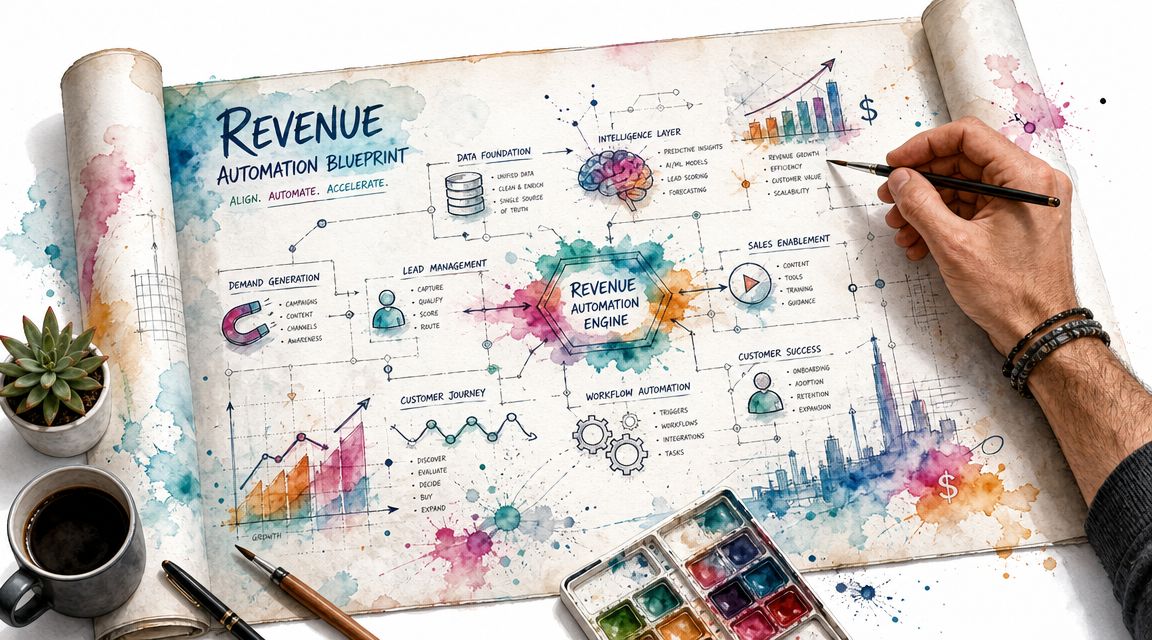
A practical workflow should be built in this sequence: customer data unification → segmentation → behavioral analytics → journey mapping → implementation → analysis/optimization, as outlined in this strategy guide on e-commerce marketing automation workflow.
Start with customer data unification
Before you write a single automated message, audit every customer data source you have.
That means your storefront, checkout, CRM, support records, ad platform inputs, review collection flow, and any offline sales touchpoints that affect customer history. If those systems disagree on who the customer is, every automation built on top of them becomes less reliable.
Use this basic audit checklist:
- Identify your source of truth: One system must own the customer profile.
- Map critical events: Product viewed, cart started, checkout abandoned, purchased, refunded, reviewed, re-ordered.
- Check sync logic: Make sure suppression rules and segment updates happen fast enough to prevent obvious mistakes.
A lot of teams skip this because it feels operational. That's exactly why they pay for it later.
Segment by behavior, not demographics alone
Demographics can help with creative tone. They rarely drive the best automation logic.
Behavior does. Buyers signal intent through actions. Repeat purchase patterns, cart depth, review activity, and product-category interest tell you what to send and when to send it. Segment around what people do, not just who they are.
The best automation starts after the click. It reads behavior, then responds with context.
Useful segment ideas include:
- New subscriber with no purchase
- High-intent shopper with cart activity
- Recent first-time buyer
- Repeat customer
- Customer with positive post-purchase engagement
- Dormant past buyer
Each segment should have one job. Don't build giant “master flows” that try to do everything.
Map real customer journeys
Journey mapping sounds fancy. In practice, it means writing down what happens between discovery and repeat purchase.
Here's a clean way to do it:
| Stage | Customer behavior | Automation goal |
|---|---|---|
| Discovery | Visits, subscribes, browses | Capture intent and reduce drop-off |
| Consideration | Views products, starts cart | Address friction and move to checkout |
| Purchase | Completes order | Confirm, reassure, and set up next action |
| Post-purchase | Receives product, engages | Drive review, repeat purchase, loyalty |
| Re-engagement | Goes inactive | Bring back qualified demand |
Then implement in phases. Don't launch everything at once. Start with one segment, one trigger, one success metric, and one quality-control process.
That's how you avoid expensive mistakes. It's also how you build a system your team can manage.
For a more operational view of sequencing and execution, this marketing automation workflow breakdown is a useful companion.
Priority Automation Flows That Drive High-Intent Revenue
Most brands don't need more ideas. They need a sharper order of operations.
Start with flows closest to buying intent. Leave the “nice to have” nurture sequences for later. When revenue is the goal, three flows deserve priority: abandoned cart, welcome series, and post-purchase review plus repeat purchase follow-up.
That isn't guesswork. According to a 2025 e-commerce report summarized by Zoko's automation statistics roundup, automated emails delivered 52% higher open rates, 332% higher click rates, and 2,361% better conversion rate than non-automated sends. The same source notes that automated cart-recovery messages can reclaim up to 5.4% of lost revenue.
Abandoned cart flow
A shopper adds products, reaches checkout, then leaves. That's not a branding problem. That's recoverable demand.
A strong cart flow should do three things in sequence:
- Remind: Show the exact product context they left behind.
- Reduce friction: Answer the likely objection, such as shipping clarity, product fit, or checkout confidence.
- Escalate carefully: If needed, introduce an incentive later, not immediately.
A weak cart flow jumps straight to a discount. That teaches shoppers to wait.
A better structure looks like this:
| Message | Purpose |
|---|---|
| First reminder | Bring them back while intent is fresh |
| Second follow-up | Resolve hesitation with clarity |
| Final recovery push | Add urgency or a limited offer if margin allows |
Welcome series
At this stage, most brands waste their first impression.
They send a generic “thanks for subscribing” note, maybe a coupon, then disappear. That doesn't build trust or buying momentum. A welcome flow should move a new contact toward first purchase with a clear sequence of belief-building messages.
For example:
- Email one: Brand promise and best next step
- Email two: Product fit, use case, or category guidance
- Email three: Social proof, top sellers, or common objections answered
Keep it practical. New subscribers don't need your life story. They need a reason to buy with confidence.
Send welcome messages like a salesperson who understands timing. Early messages should reduce uncertainty, not dump your whole brand deck into the inbox.
Post-purchase and review flow
A customer buys. Most brands go quiet except for shipping updates. That's a missed opportunity.
Post-purchase automation should confirm the decision, improve the product experience, request a review at the right moment, and guide the customer toward the next action. In many stores, these actions see retention and reputation start pulling together.
That review component matters because reviews influence trust, conversion quality, and future paid traffic efficiency. If your brand isn't consistently asking happy customers to speak up, you're leaving proof on the table. This guide on how to get more Google reviews is relevant if you also sell through channels where reputation affects buyer confidence.
The priority is simple:
- Recover revenue already in motion.
- Convert new interest into first purchase.
- Turn first-time buyers into stronger future buyers.
That's the short list that usually pays first.
Building Your Integrated Tech Stack The Right Way
Disconnected tools don't create automation. They create expensive confusion.
A lot of e-commerce brands buy software one problem at a time. One system for email. Another for ads. Another for reviews. Another for support. Another for reporting. Then they wonder why attribution is messy, customer experience is inconsistent, and retention campaigns keep firing at the wrong people.
That setup turns automation into overhead.
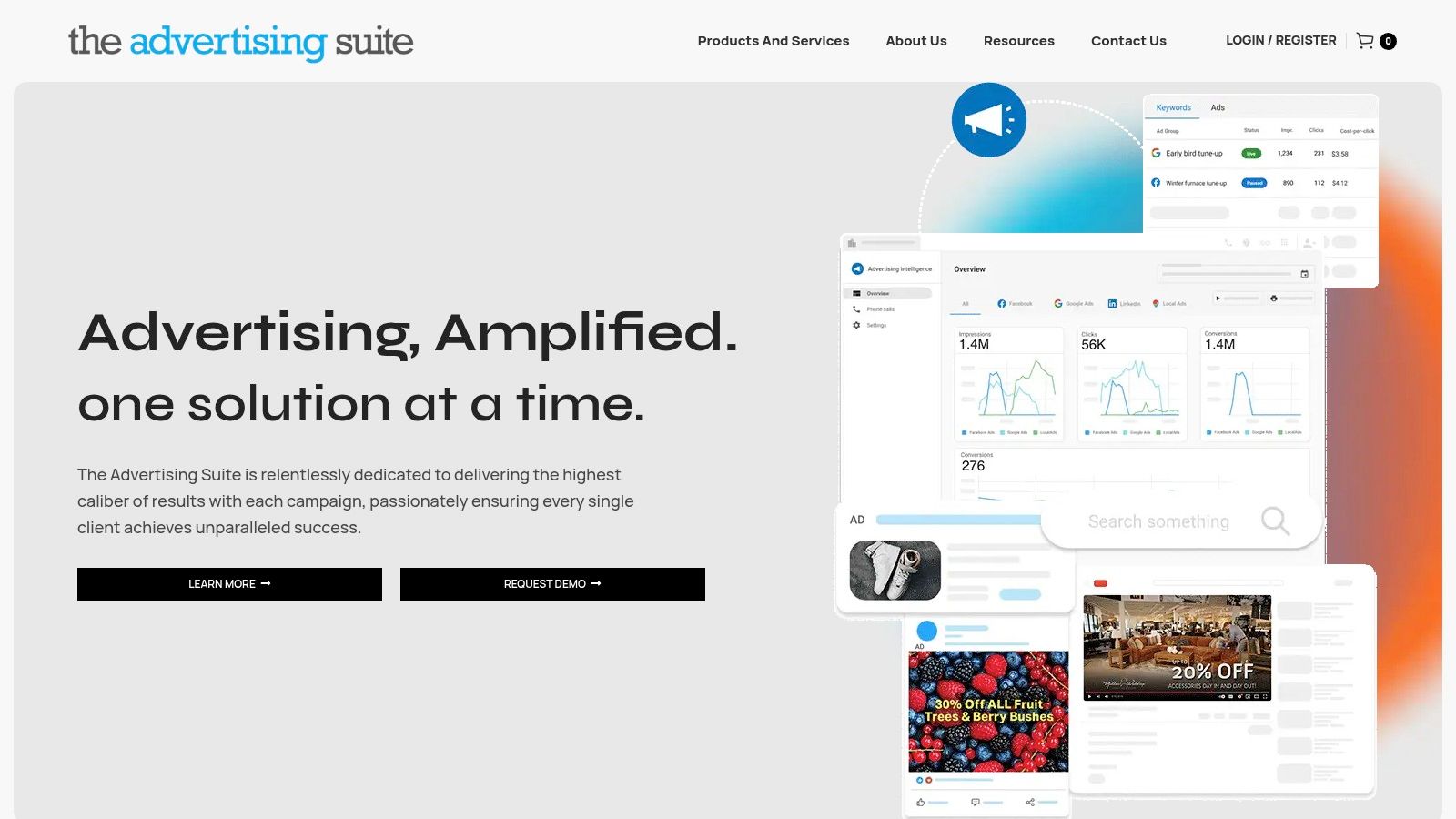
If you want automation to produce profit, your stack has to behave like a revenue system. The core decision is simple. Build around the customer record, not the channel tool. Your CRM should hold the truth about who the buyer is, what they bought, what they returned, what they said in a review, how they were acquired, and what they should see next.
The category keeps growing because brands are tired of disconnected execution. As noted earlier, more operators are treating automation as infrastructure for revenue, not just a way to send campaigns.
Your CRM is the control center
Your CRM should decide targeting, suppression, sequencing, and follow-up. If it cannot do that, you do not have a real automation system. You have a pile of disconnected triggers.
Revenue decisions, by their nature, depend on context. A customer who just bought should not get a hard sell for the same product. A customer who returned an order should not enter a loyalty pitch. A buyer acquired at a high cost should be measured against margin and payback expectations, not vanity revenue. If your team cannot connect lifecycle messaging to return on ad spend and acquisition efficiency, you are optimizing channels in isolation and calling it strategy.
Your stack should answer four questions fast:
- Who is this customer right now?
- What have they done recently?
- What should they not receive?
- What next action is most likely to drive profitable revenue?
If those answers live in five different tools, your automation is guessing.
The four connections that actually matter
You do not need more apps. You need cleaner data flow between the systems that affect revenue.
Storefront and checkout
Product views, cart activity, purchases, cancellations, returns, and refunds need to hit the customer record quickly. Delayed order data breaks timing. Missing refund data creates bad follow-up. Both cost you money.
Ad channels
Acquisition source has to flow into lifecycle marketing. Customers acquired through expensive campaigns need different retention logic than repeat buyers or direct traffic customers. If paid media data never reaches your CRM, you cannot judge customer quality accurately.
Review management
Reviews belong inside the customer journey, not off to the side. Positive feedback can identify strong repeat-purchase candidates. Negative feedback can trigger service recovery before the next campaign goes out. That connection improves retention and protects conversion.
Reporting layer
Reporting should sit above channel metrics and tie actions to business outcomes. If each system reports success on its own terms, you will overstate performance and miss critical leaks in the funnel.
What to avoid when assembling the stack
| Mistake | Why it hurts |
|---|---|
| Choosing tools before process | You automate confusion and scale bad decisions |
| Multiple customer databases | Segments drift, suppression fails, and attribution gets distorted |
| Review management isolated from CRM | Customer sentiment never informs retention or recovery logic |
| Paid media disconnected from lifecycle data | You cannot judge acquisition quality or true downstream value |
The right stack is boring in the best way. Data moves cleanly. Teams work from the same customer record. Automation responds to profit signals instead of channel activity. That is how marketing automation for e commerce stops being a software expense and starts acting like a growth engine.
Measuring What Matters and Optimizing for Profit
Open rates are not a business model.
Clicks aren't one either. They can be useful directional signals, but they don't answer the key question: did the automation improve efficiency and produce profitable revenue that wouldn't have happened otherwise?
That's the standard. Anything softer is marketing theater.
For measurement, focus on time saved, cost per lead, conversion rate, and revenue attribution, as recommended in this guide to measuring marketing automation performance. The same guidance warns that launching without governance or baseline measurement makes optimization and ROI proof nearly impossible.

Start with a baseline or don't bother
Before a flow goes live, record what happens without it.
If you don't know current conversion behavior, recovery behavior, repeat purchase behavior, or response times, you won't know whether the automation improved anything. You'll just know messages were sent.
A strong measurement setup includes:
- UTM discipline: So traffic and campaign origin stay traceable
- Custom events: So key behaviors are captured beyond simple page views
- Conversion tracking: So downstream actions tie back to the flow
- QA and governance: So broken logic doesn't poison your data
That baseline matters just as much as the automation itself.
Use a profit lens, not a dashboard vanity lens
Some teams still report automation success like this: higher opens, more clicks, bigger send volume. That misses the point.
A profit lens asks tougher questions:
| Question | Better KPI |
|---|---|
| Did the process get more efficient? | Time saved |
| Did lead economics improve? | Cost per lead |
| Did customer action improve? | Conversion rate |
| Did the flow drive attributable revenue? | Revenue attribution |
If you need a sharper view on financial accountability, this explanation of what return on ad spend means in practice helps frame automation inside broader growth economics.
Good automation should lower wasted effort and improve revenue quality. If it only improves dashboard activity, it isn't finished.
The hard question most brands avoid
Attribution is not the same as incrementality.
An automation flow can claim credit for an order that would have happened anyway. That's common in e-commerce, especially when email, SMS, retargeting, and on-site personalization all touch the same buyer. If you don't challenge the attribution, you'll overspend on automations that harvest existing intent instead of creating new demand.
Use holdout logic where possible. Compare exposed versus non-exposed groups. Check whether margin holds after discounts, ad support, and fulfillment realities are included. A flow that produces orders but compresses profit is not a win.
That's where mature teams separate “it converted” from “it was worth it.”
From Plan to Partner Activating Your Growth Engine
Most e-commerce brands don't have an automation problem. They have an execution problem.
They know they need cleaner customer data, sharper segmentation, stronger cart recovery, better post-purchase follow-up, and tighter reporting. What they don't have is a unified operating model that gets all of it working together without creating more tool sprawl.
That's why so many brands stall in the middle. They launch flows, but the CRM is incomplete. They collect reviews, but those signals never shape lifecycle campaigns. They run retention messages, but nobody can tell whether the lift was real or just attributed noise.
Why coordination is the real advantage
A key challenge for e-commerce brands is measuring the true profit impact and incrementality of automation, not just the conversions it gets credit for. The core value comes from coordinating touchpoints across channels, which requires a unified data and measurement framework, as discussed in this analysis of how e-commerce automation drives retail growth.
That's the part most playbooks skip.
The brands that win don't just automate messages. They connect acquisition, conversion, post-purchase experience, and reputation into one growth system. They know when a customer should be suppressed, when a review request should fire, when a repeat-purchase prompt makes sense, and when paid traffic should back off because lifecycle marketing is already doing the work.
What smart execution looks like
If you're serious about marketing automation for e commerce, your next move should look something like this:
- Clean the data layer: Fix identity, event tracking, and source-of-truth issues first.
- Prioritize the highest-intent flows: Cart, welcome, post-purchase, and review logic come before lower-value campaigns.
- Tie reporting to profit: Measure efficiency, conversion, attribution, and incremental value, not just activity.
That's the difference between a stack that drains budget and a system that compounds returns.
A strong reputation system also belongs in that picture because customer trust and post-purchase experience affect conversion quality more than is often acknowledged. If you're thinking about that layer strategically, this reputation management strategy guide is worth reviewing.
You don't need another vendor pitching disconnected features. You need a partner that can act like part of your team, align execution with economics, and build the infrastructure behind the campaigns.
If you're done chasing vanity metrics and ready to turn marketing into a predictable profit center, The Advertising Suite is built for that job. We combine strategy, execution, CRM infrastructure, and reputation management into one growth-focused system so your ad spend, customer data, and follow-up work together. With 10,000+ satisfied customers and an Ad Suite Membership that includes a 25% discount on services plus access to our proprietary CRM and review ecosystem, we're not another outside agency. We're the extension of your team that helps you build a cleaner revenue engine. Request a Demo or Book a Growth Consult to see what that looks like in practice.