Most advice on how to get more Google reviews is lazy. It tells you to “just ask more.” That's not a strategy. That's a hope-and-pray routine dressed up as marketing.
If you're serious about growth, reviews aren't a side task for your front desk, service tech, or account manager. They're a reputation asset. They influence whether a prospect trusts you, contacts you, and buys from you. When handled well, reviews become part of your conversion system. When handled poorly, they become another inconsistent chore that gets ignored the moment the team gets busy.
That's the problem. Businesses don't struggle because they don't know reviews matter. They struggle because they treat review generation as a disconnected manual activity instead of an operational process tied to service delivery, follow-up, and customer experience.
If you want a practical reputation system instead of random bursts of review requests, start with a stronger reputation management strategy for local growth. The businesses that win don't ask louder. They build a cleaner path, at the right moment, with the right follow-up.
Stop Asking for Reviews and Start Building a System
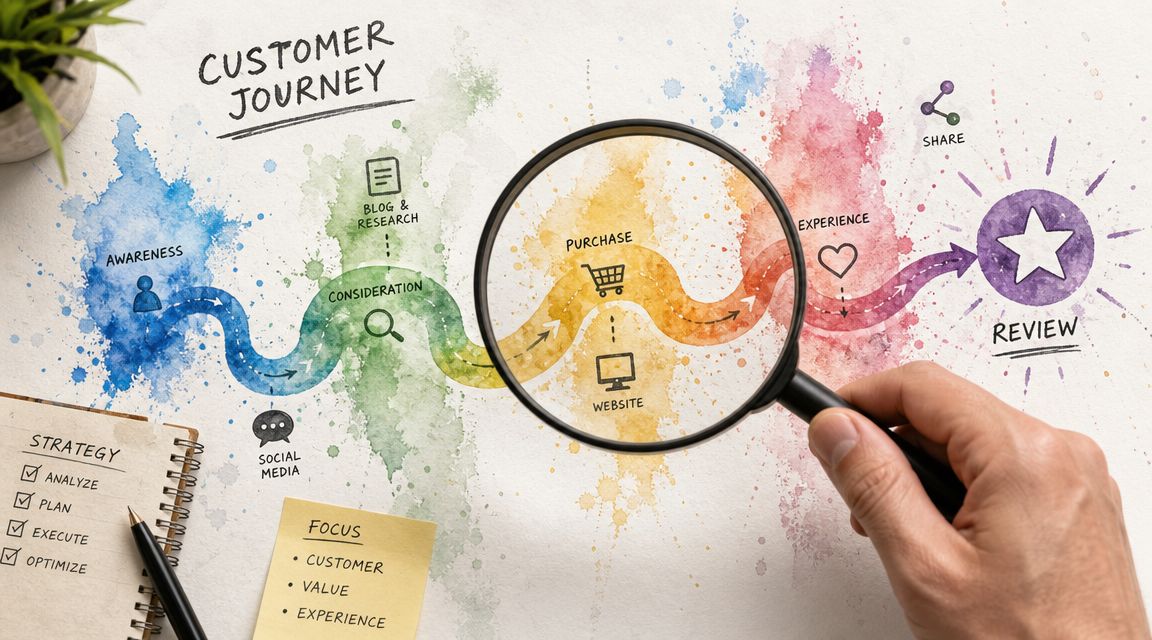
A review is not the first conversion. It's the last conversion in a successful customer journey.
That distinction matters. If you think reviews are a volume game, you'll chase more requests. If you think reviews are a revenue lever, you'll engineer the process that produces them consistently.
Why manual asking breaks down
Manual review asking fails for one simple reason. People forget.
Your best employee remembers to ask for reviews when they've had a good day. Your average employee remembers when they're not slammed. Your busiest employee skips it entirely. That creates a reputation profile that reflects your team's inconsistency, not your customer experience.
Here's the blunt truth:
- Random requests create random results
- Generic requests create friction
- Friction kills action
A customer who just had a great experience might happily leave a review. But if they have to search for your business, find the correct profile, log in, and decide to finish it later, most won't bother. Intent fades fast.
Reviews should never depend on memory, mood, or luck.
What a real review system looks like
A real system does three things well:
- It identifies the right moment after the customer experience.
- It removes friction so leaving a review feels easy.
- It creates accountability so requests and responses happen.
That's why the best operators don't obsess over “getting more reviews” as an isolated goal. They build a repeatable workflow that turns completed jobs, fulfilled orders, closed tickets, and happy client interactions into public trust signals.
This is the only version of how to get more Google reviews that scales. Not because it sounds better, but because it survives the world.
Map Your Review Funnel Before You Ask
Asking for reviews at the wrong time, in the wrong way, or with the wrong path undermines the effort.
If you want more Google reviews that help revenue, map the funnel first. A review request is not a random follow-up task. It is a conversion event inside your customer journey, and it should be built with the same discipline you use for leads, appointments, and sales.
Start with the handoff moment
Every business has a point where the customer says, “Yes, that solved my problem.” That is your trigger.
For home services, it is often right after the work is finished and the customer sees the result. For medical, legal, financial, or other professional services, the better moment is usually after the follow-up, once the client has had a minute to process the experience. For retail and e-commerce, the trigger often comes after delivery or after enough time has passed for the customer to use the product.
Your job is to identify the moment when satisfaction is high and action is easy. Then standardize it.
Do not leave that decision to staff memory.
Claim your Google Business Profile first
If your Google Business Profile is not claimed and verified, fix that before you build anything else.
Your review funnel depends on a direct destination. Once the profile is set up correctly, Google gives you a built-in way to generate a shareable review link. Use it. Customers should land on the review action immediately, not waste time searching for your business, checking the address, and wondering if they found the right listing.
A short path gets more completions. A confused path gets abandoned.
Build the funnel inside your operating process
Many businesses often get stuck at this point. They treat reviews like a favor they ask for after the primary work is done.
That is backward.
Reviews are part of the fulfillment process because reputation affects close rates, response rates, and trust at the point of sale. If your CRM marks a job complete, that status should trigger the next step. If your support system closes a ticket with a satisfied customer, that should create the review ask. If your team finishes a milestone, there should be a defined follow-up path tied to that event.
That turns reviews from a manual chore into a reputation asset that compounds over time.
Build your review funnel like a conversion path
Every extra click lowers completion. Every unclear step creates drop-off.
Use this checklist:
- Define the trigger: job complete, order delivered, appointment closed, ticket resolved, or milestone finished
- Choose the channel: SMS, email, in-person follow-up, printed QR code, or the right combination for that customer type
- Use the direct review link: send people straight to the action
- Match the ask to the experience: quick transactions need short requests, high-trust relationships can support a more personal follow-up
- Assign ownership: one person or one system should be responsible for making sure the ask happens every time
If you already understand how friction lowers response rates, the same principle applies here. The same logic behind stronger conversion rate optimization for customer actions applies to reviews because a review request is still a conversion prompt.
Reviews do not grow because you asked more often. They grow because the path was clear, timely, and built into the system.
The Compliant Outreach Playbook for Every Channel
Businesses do not need better intentions here. They need better asks.
A weak review request creates friction at the exact moment you should be capturing goodwill. “Can you leave us a review?” puts the burden on the customer to figure out where to go, why it matters, and whether now is the right time. A stronger request does that work for them. It is clear, short, mobile-friendly, and tied to the experience they just had.
Use timing that matches customer behavior
Timing decides whether your request feels natural or annoying.
Send the ask soon after the job, delivery, visit, or resolved issue, while the experience is still easy to recall. Give the customer a direct path from message to review page. If you use a QR code in person, make sure it goes straight to the review screen, not your homepage. If you use text or email, keep the action obvious and quick.
Use this structure every time:
- Thank them
- Reference the completed service or purchase
- Ask for honest feedback
- Link directly to the Google review page
- Keep the ask short enough to read in seconds
What compliant asking looks like
Google wants authentic feedback. Your business should want the same thing.
Ask for an honest review, never a positive one. Do not offer gifts, discounts, or other incentives in exchange for feedback. Do not screen customers publicly by only inviting happy people to leave reviews. If you want to build a revenue-producing reputation asset, the process has to stay clean. Trust compounds. Manipulation backfires.
In-person ask
Use this when the customer is clearly satisfied and the interaction is ending on a high note.
Say:
“Thanks again for choosing us. If you'd like, I can text or email you our Google review link. Honest feedback helps future customers know what to expect.”
Short. Direct. No pressure.
SMS ask
SMS gets fast action because the customer is already on their phone. Keep it tight and make the link the focus.
Email ask
Email works well when the service involved more context, a higher-ticket purchase, or multiple decision-makers. Give a little more detail, but keep the request lean.
Compliant Review Request Templates
| Channel | Template |
|---|---|
| SMS | Hi [First Name], thanks again for choosing [Business Name]. If you're open to sharing honest feedback, here's our Google review link: [Review Link]. We appreciate it. |
| Subject: Quick follow-up on your experience with [Business Name] nnHi [First Name], thank you for trusting us with [service or purchase]. If you have a minute, we'd appreciate an honest Google review. Here's the direct link: [Review Link]. Your feedback helps our team and helps future customers make a decision. | |
| In person follow-up text | Thanks for having us out today. We just sent over our review link. If you'd like to share honest feedback on Google, we'd appreciate it. |
| Receipt or printed handout | Happy with your experience? Scan this code to leave an honest Google review. |
| Post-service email signature | Enjoyed working with us? Share your honest feedback on Google: [Review Link] |
Use the channels you already own
Review requests often underperform because businesses treat outreach like a one-channel task instead of part of the customer journey.
Your best channels are usually the ones already built into your operation:
- Text follow-up: Best for immediate action after a completed service
- Email follow-up: Better for considered purchases or multi-step engagements
- QR code at checkout or on-site: Useful when customers can act before they leave
- Invoice or receipt reminder: A passive nudge tied to the transaction
- Email signature placement: A low-friction prompt that keeps collecting reviews over time
This matters beyond reputation. The same friction rules apply across conversion points, which is why strong lead generation for local businesses depends on clear next steps, low effort, and consistent follow-up.
Write like a human, not a campaign
Overwritten review requests fail because they sound automated, even when they are technically personalized.
Use plain language. Mention the actual service. Thank the customer. Ask for honest feedback. Include one direct link. Then stop.
The goal is not to sound polished. The goal is to make the next action obvious.
Customers respond to review requests that feel like a real follow-up from a real business, not a marketing script pasted into their inbox.
Automate Your Reputation with an Integrated Tech Stack
If your review process depends on staff memory, you do not have a strategy. You have a gap in operations.
That gap gets expensive as soon as volume rises. More jobs, more handoffs, more locations, and more chances for follow-up to get missed. Reviews dry up, your profile looks stale, and revenue takes the hit because prospects trust businesses with visible, current proof.

Build review collection into the systems you already use
Reviews should come from operational triggers, not good intentions.
Connect your CRM and reputation management process so outreach starts when a real customer milestone happens. A completed job, closed ticket, delivered order, finished appointment, or successful onboarding step should trigger the next action automatically. That turns review generation from a staff-dependent task into a repeatable revenue asset.
The difference is simple. Manual follow-up gets skipped when the day gets busy. Triggered follow-up keeps running.
Set up the workflow once, then let it run
A strong automation flow is disciplined.
Start with the event trigger. Then send a short satisfaction check. Route positive responses to your Google review request. Send unhappy responses to the right person on your team for recovery. Keep response ownership clear so nothing sits untouched.
That structure gives you three advantages at once:
- More consistent review volume
- Better review quality
- Faster issue recovery before complaints spread publicly
It also gives you cleaner reporting. You can tie reviews back to a location, service line, team member, or customer stage instead of treating every review like random luck.
One connected stack beats disconnected tools
Businesses lose momentum when customer records sit in one system, messaging lives in another, and review reporting gets patched together manually.
Use one connected process that handles:
- Customer data
- Status changes and service milestones
- Automated outreach
- Internal alerts
- Reply workflows
- Reputation reporting
That setup makes review growth measurable. You can see which jobs create positive sentiment, which teams need coaching, and whether your reputation is improving local conversion, not just vanity metrics.
If your goal is visibility and sales, reviews belong inside your broader local search marketing strategy, not in a side folder someone checks once a month.
Businesses that win more local revenue do not chase reviews one by one. They build a system that collects trust at the same pace they deliver service.
Automation needs standards
Automation without standards creates mediocre output faster.
Write short messages that sound human. Make sure every trigger fires at the right moment. Assign one person to own replies. Set escalation rules for poor feedback. Audit the workflow often enough to catch broken links, bad timing, or requests going out after a weak customer experience.
The goal is not to send more messages. The goal is to build a reputation asset that compounds trust, supports conversions, and keeps producing value without constant manual effort.
Turn Negative Reviews into Your Best Marketing Asset
Most businesses are scared of negative reviews for the wrong reason.
They think the problem is the bad review itself. Usually, the bigger problem is the bad response, or no response at all. Prospects don't expect perfection. They expect professionalism.

Google's own guidance stresses quality and trust signals. Businesses should encourage honest, balanced reviews, reply to reviews, and use responses to show perspective. A mix of positive and negative feedback can feel more trustworthy to potential customers, according to this Google guidance on review quality and responses.
Why a perfect profile can look suspicious
A spotless wall of praise often feels less credible than a profile with a few imperfect moments handled well.
People read negative reviews differently than business owners do. Owners see threat. Buyers see context. They want to know whether you're responsive, accountable, and sane under pressure.
That means a thoughtful response can do more selling than another generic five-star comment.
You are not writing the response for the angry reviewer. You are writing it for the next prospect who is deciding whether to trust you.
Use a simple three-step response framework
Don't improvise when emotions are high. Use structure.
Acknowledge the frustration
Start by recognizing the customer's experience without getting defensive.
Example:
“We're sorry to hear this was frustrating and appreciate you sharing the feedback.”
That shows composure. Not weakness.
Restate your standard
Briefly explain what your team aims to deliver. Keep it short. Don't write a courtroom defense.
Example:
“This isn't the standard we aim to provide, and we take concerns like this seriously.”
Move the conversation offline
The goal is resolution, not public argument.
Example:
“Please contact us directly so we can review what happened and work toward a resolution.”
What not to do
Bad review responses usually fail in predictable ways:
- Defensiveness: Arguing with the customer in public makes you look unstable.
- Copy-paste replies: Generic responses signal that nobody cares.
- Silence: No response leaves the review standing alone as the final word.
Negative reviews also give you operational intelligence. If the same complaint keeps appearing, that's not a reputation issue. That's a business issue exposing itself in public.
Measure and Scale Your Review Strategy for Growth
Counting total reviews is lazy reporting.
If you want reviews to drive revenue, measure them like an operating system tied to your CRM, follow-up workflows, and closed business. A high review count means very little if review volume is flat, response times are slow, or your best customer experiences never turn into public proof.
Track the metrics that affect growth
Watch the numbers that show whether your review engine is healthy and getting stronger over time.
Focus on:
- Review velocity: Are new reviews coming in consistently each month?
- Average rating trend: Is customer sentiment improving, slipping, or staying flat?
- Written-review share: Are customers leaving useful context or only stars?
- Response time: Is your team replying fast enough to show customers you pay attention?
- Theme quality: Do reviews mention the words and experiences that influence buying decisions, such as speed, communication, professionalism, or staff names?
These metrics matter because they show process quality, not just output. A business with steady review velocity, strong written feedback, and fast responses usually has a better system behind the scenes. That system is what scales.
Use review data to improve operations
Businesses often leave money on the table by failing to analyze review data for operational insights.
Reviews give you direct customer language. They show what people noticed, what reassured them, and what almost cost you the sale. If customers keep praising fast turnaround, clear communication, or a specific employee, those patterns should shape your sales messaging, training, and follow-up sequence.
The same standard should apply to reviews as it does to lead tracking and closed-revenue reporting. If you care about marketing attribution and revenue tracking, you should care about which customer experiences create five-star language that helps the next buyer say yes.
Multi-location teams need one source of truth
Multi-location growth breaks down fast when every team handles reviews differently.
You need central visibility into:
- Which locations generate reviews consistently
- Which teams earn stronger written feedback
- Which managers respond quickly
- Which complaints or praise themes repeat across markets
That is how review strategy becomes a reputation asset instead of a scattered task. One location finds the right timing, ask, or follow-up message. The rest of the organization adopts it through the CRM and reputation workflow.
The strongest review strategy produces trust on purpose, then ties that trust back to pipeline, close rate, and revenue.
Businesses looking for more Google reviews usually chase volume. The smarter move is to build a system that turns customer satisfaction into public proof, public proof into conversion lift, and conversion lift into measurable growth.
If you want that system built the right way, The Advertising Suite is the growth-focused partner to call. We combine strategy, CRM, and automated reputation management into one revenue-first framework, so reviews stop being a manual chore and start acting like a real business asset. If you're ready to tighten your customer journey, improve follow-up, and scale trust across every location or service line, request a demo, book a growth consult, or explore the Membership for access to the integrated software ecosystem and the built-in 25% discount on all services. We're built to function as an extension of your team, not another vendor adding noise.