Most advice about customer behavior analytics starts in the wrong place. It starts with tracking.
That's backwards.
If your dashboard is packed with clicks, impressions, page views, and traffic spikes, but you still can't answer which campaigns produce better customers, which touchpoints create drop-off, or which behaviors predict repeat revenue, you don't have insight. You have expensive noise.
For founders who've been burned by agencies, this is the familiar pattern. Reports look busy. The business doesn't move. Revenue feels disconnected from the analytics stack, and customer lifetime value stays stuck in the realm of “we should probably look at that.”
Customer behavior analytics matters because it lets teams measure actual actions across web and app journeys, then connect those actions to outcomes like conversion, retention, and churn. Good guidance on the topic consistently points to the same shift: combining quantitative behavior data with qualitative context so you can see where customers discover you, where they stall, and which interactions correlate with loyalty or purchase behavior, as outlined in this overview of customer behavior analysis.
That's the difference between reporting and operating. One tells you what happened. The other helps you decide what to do next.
Why Most Customer Data Is Useless Noise
Most customer data is useless because many organizations collect it without a decision in mind.
They track whatever a platform makes easy to count, then mistake visibility for control. More charts. More campaign breakdowns. More “engagement.” Meanwhile, sales asks why lead quality is soft, support sees the same complaints repeating, and retention slips without a clear reason.

Vanity metrics hide the real leak
A lot of marketing dashboards reward motion, not progress.
A campaign can generate traffic and still attract the wrong audience. A landing page can earn clicks and still fail to move people toward a booked call, purchase, or repeat order. An email can get opened and still do nothing for revenue. If the metric doesn't help you improve acquisition quality, conversion, or retention, it's background noise.
That's why we push founders to ask sharper questions:
- Not “How much traffic did we get?” Ask which traffic source produces customers who stay, buy again, or refer.
- Not “What's our click-through rate?” Ask which message attracts high-intent visitors instead of low-intent curiosity.
- Not “How many leads came in?” Ask which lead paths produce closed revenue and fewer cancellations.
If you're still optimizing top-of-funnel volume without examining post-click behavior, you're guessing. A cleaner workflow starts by connecting behavior signals to what happens after the form fill or purchase, especially if your team is already investing in marketing automation for e-commerce.
Practical rule: If a metric can't influence a business decision, stop giving it dashboard priority.
Useful analytics answers why people act
Customer behavior analytics becomes valuable when it explains behavior, not just activity.
That means looking at patterns like abandonment, hesitation, repeat visits, support interactions, review behavior, and return purchases in context. It also means pairing hard signals with qualitative feedback so you know whether a drop-off came from weak intent, poor messaging, friction in the journey, or a broken handoff.
Founders usually don't need more data. They need fewer blind spots.
The right question isn't whether you can measure more. It's whether your measurement helps you recover lost revenue, improve customer quality, and protect lifetime value. If it doesn't, cut it.
From Clicks to Cohorts Core Analytics Concepts
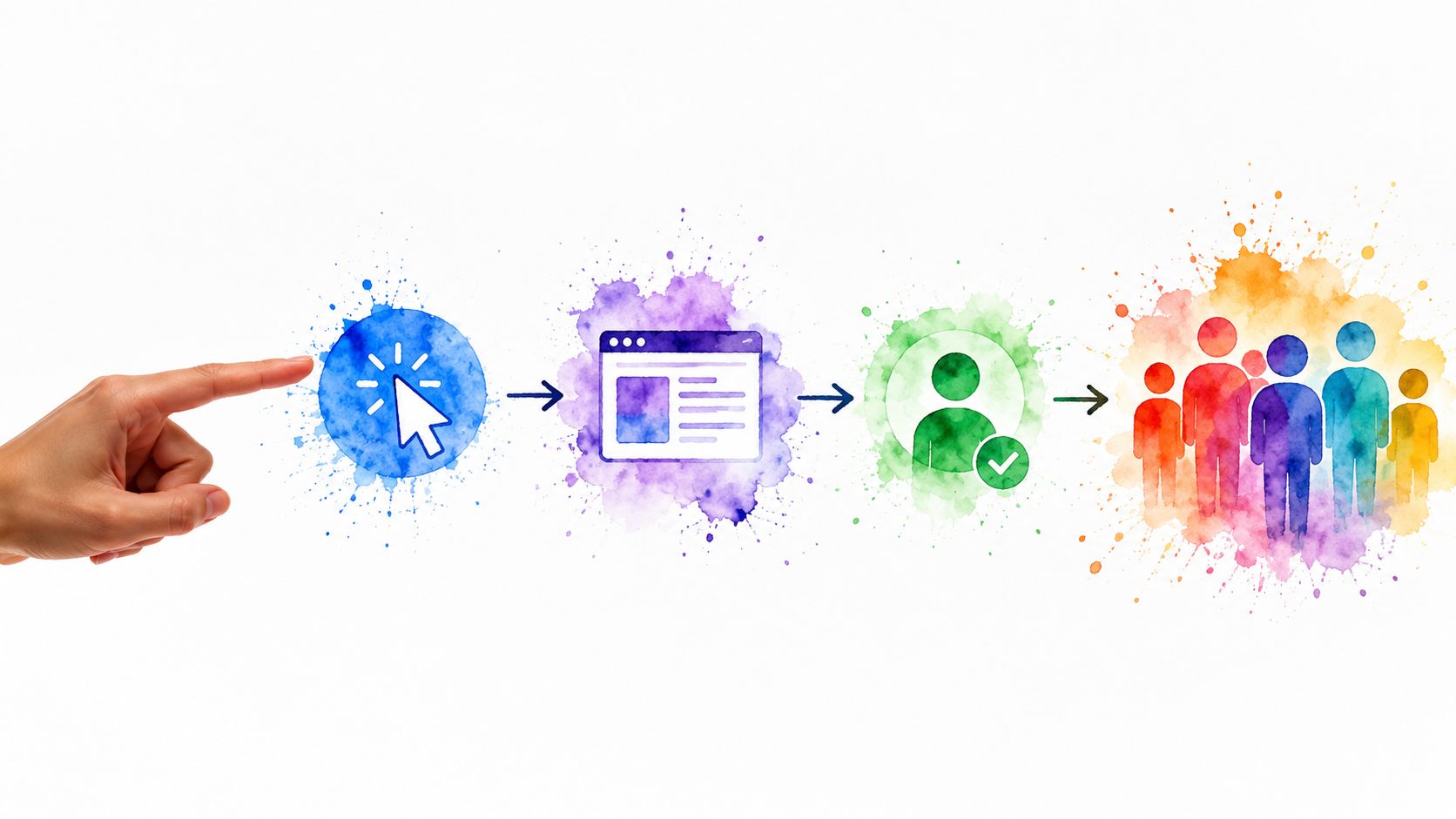
Customer behavior analytics gets useful when you stop treating every visitor like an isolated click and start reading behavior as a sequence.
A single click tells you almost nothing. A pattern of actions tells you intent.
Event data beats page-level guesswork
The strongest setup combines event-level behavioral data with identity and CRM context, because actions like clicks, page views, scroll depth, form interactions, and purchases can be tied to one journey and segmented into cohorts for attribution, funnel analysis, and retention modeling, as explained in this behavioral analytics guide.
That matters because page-level reporting flattens reality. It tells you a page was visited. It doesn't tell you whether the visitor showed buying intent, got stuck, hesitated, or moved deeper into the funnel.
Here's the practical difference:
- Page view means someone landed.
- Event sequence means someone landed, scrolled, clicked pricing, started a form, abandoned, returned by email, then booked.
- Identity-linked event sequence means you can connect that behavior to source, revenue, repeat actions, and account quality.
That's where attribution starts becoming operational instead of decorative. If you need a cleaner frame for that connection, this guide on what marketing attribution is is worth reviewing alongside your analytics setup.
Funnels show where money leaks
A funnel is just the path to a business outcome. For a local service brand, it might be landing page to call click to booked appointment. For e-commerce, it might be product view to cart to checkout to repeat purchase.
When people drop between steps, that's not an abstract analytics issue. That's lost revenue.
Use funnels to isolate friction such as:
- Weak landing-page alignment where ad promise and page content don't match
- Form fatigue where people start but don't finish
- Checkout hesitation where shipping, trust, or payment clarity falls apart
- Post-lead decay where prospects convert but never get contacted properly
Cohorts tell you who is worth acquiring
Cohorts are groups of customers who share a behavior, source, or experience.
Here, most SMBs finally stop overvaluing cheap leads. You compare groups, not just totals. The goal is to find patterns like which campaign attracts repeat buyers, which audience books but cancels, or which onboarding path leads to stronger retention.
Cohorts help you stop asking “Did this campaign work?” and start asking “Did this campaign bring the kind of customer we actually want more of?”
That's a better operating model. Clicks measure reaction. Cohorts measure business quality.
Building Your First-Party Data Flywheel
Third-party tracking has trained too many businesses to rent their own understanding of customers.
That model is getting weaker, not stronger. Privacy limits, incomplete attribution, and fragmented journeys mean you can't build a serious growth system on borrowed identifiers and scattered reports. If your data disappears every time a platform changes a rule, you never owned the insight in the first place.
First-party data is the asset
A major milestone in customer behavior analytics was the shift from basic descriptive reporting to predictive and behavioral analytics as digital channels matured. Modern guidance now frames the discipline around using historical customer data to forecast future actions, with models increasingly embedded in CRM, web analytics, and product analytics. The emphasis has moved toward connecting data across channels to measure revenue, retention, and lifetime value instead of vanity metrics, as described in this customer behavior analysis overview.
That shift changes how you should build your stack.
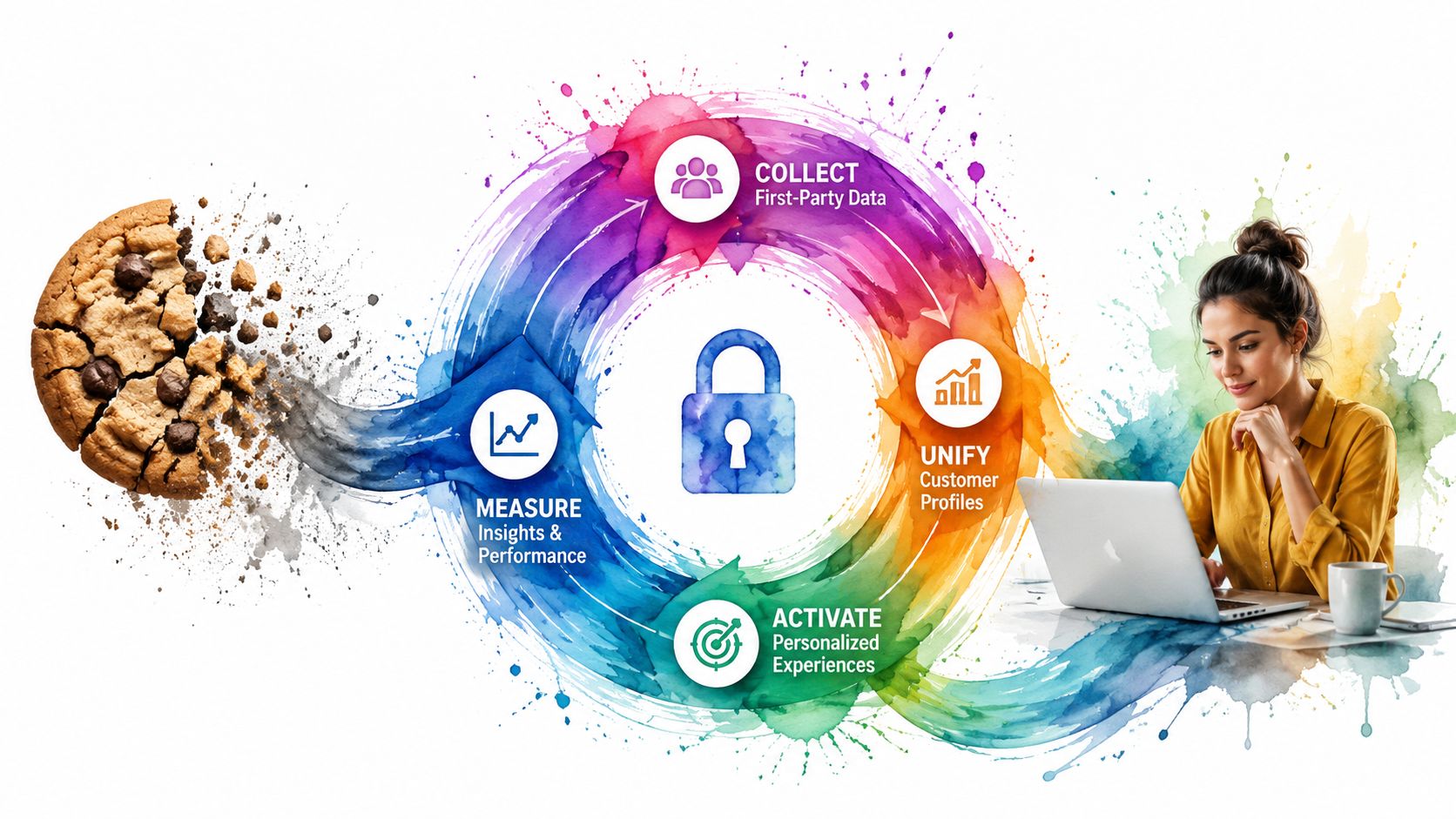
You need a first-party data flywheel built from assets you control:
- Behavioral signals from your site, app, forms, calls, and purchases
- Identity data that ties actions back to a customer or lead record
- Feedback signals from reviews, surveys, support conversations, and objections
- Outcome data like closed revenue, cancellations, repeat orders, and churn
The flywheel works because each layer sharpens the next. Behavior gives you the signal. CRM gives you identity. Feedback gives you motive. Revenue data gives you business value.
Your CRM should be the operational hub
A lot of companies treat the CRM like a storage closet. It should function more like a control room.
When event data and CRM context live apart, your team can see activity but not meaning. They know someone clicked, but not whether that person became a customer, no-showed, left a bad review, or renewed. Once those signals are unified, you can build workflows that react to real customer behavior rather than generic campaign logic.
That's where automation becomes useful instead of annoying.
For example:
- A lead who viewed pricing, started a form, and returned twice should not get the same follow-up as a casual blog visitor.
- A customer who purchased, opened support tickets, and left a lukewarm review needs a different retention path than a customer who purchased and referred a friend.
- A prospect who called, disappeared, then came back through branded search should be treated as a reactivated opportunity, not a brand-new lead.
A tighter marketing automation workflow only works when those signals are centralized and actionable.
Your first-party data strategy should do three things well: capture intent, preserve context, and trigger action.
Reputation data belongs in the same system
Reviews are behavior data. So are complaint patterns, response timing, and sentiment trends.
Too many brands keep reputation management in a separate silo, then wonder why acquisition gets more expensive. If leads are reading reviews before converting, then review behavior is part of the funnel. If customer complaints predict churn, then support and reputation signals belong in the same revenue conversation as campaign and conversion data.
That's the flywheel. Not more dashboards. Better signal quality.
Your Roadmap from Data Overload to Clear Decisions
Most businesses don't have an analytics problem. They have a decision problem.
They're collecting data before defining the question. That guarantees clutter. Customer behavior analytics starts working when every report is tied to a business decision that someone can make.
Start with one revenue question
Pick a question that affects revenue or lifetime value. One. Not twelve.
Good examples include:
- Which lead sources create customers who stay longer?
- Where do high-intent prospects abandon before contacting sales?
- Which pre-purchase behaviors correlate with repeat buying?
Bad questions usually sound impressive but lead nowhere. “How are users engaging with content?” is vague. “Which content paths lead to qualified consultations?” is useful.
Once you have the question, define the path that matters. Track the actions that sit directly on that path, then ignore the rest for now.
Build a dashboard that earns its space
A practical, high-value use case is predictive analytics on combined website or app and CRM data. By modeling historical sequences, teams can estimate purchase propensity, churn risk, and promotion response, then prioritize interventions for segments most likely to convert or defect. This works best when quantitative patterns are paired with qualitative context to explain why those segments behave the way they do, as noted in this guide to customer behavior analysis.
That doesn't require a monster dashboard. It requires a disciplined one.
Here's a simple starting point.
| Metric | What It Measures | Why It Matters Over Vanity Metrics |
|---|---|---|
| Qualified lead rate | How many leads match your sales criteria | Separates lead volume from lead quality |
| Funnel drop-off by step | Where prospects abandon the path to purchase or booking | Shows exactly where revenue leaks |
| Time to first response | How quickly your team follows up with high-intent leads | Connects operations to conversion outcomes |
| Repeat purchase behavior | Whether customers come back after the first sale | Ties acquisition to lifetime value |
| Churn-risk segment activity | Behaviors linked to cancellation or disengagement | Helps retention teams act before revenue is lost |
| Review and support pattern trends | What customers say and do after purchase | Adds motive and friction context to raw numbers |
If you're unsure whether your current reporting connects to actual profit, sharpen that lens with a clear framework for calculating marketing ROI.
Turn reports into actions
Reports don't grow a business. Decisions do.
Use this pattern:
- Observation: One funnel step underperforms.
- Hypothesis: The handoff, message, or offer is creating friction.
- Validation: Compare behavior by source, cohort, and feedback.
- Action: Change the page, follow-up sequence, qualification rule, or offer.
- Check: Watch whether downstream revenue quality improves.
Don't celebrate insight until it changes a workflow.
That's the shift founders need. Not better-looking reporting. Better next moves.
Analytics in Action Real-World Revenue Plays
Theory is easy. The hard part is turning customer behavior analytics into action that improves sales quality, conversion, and retention.
These examples are simple on purpose. They reflect how operators should think, especially in businesses where the customer journey doesn't end at the website.
Local service business fixes the hidden conversion gap
A service business says lead volume is fine, but booked jobs feel inconsistent. The marketing report blames seasonality. That's lazy analysis.
The better read is behavioral. An often-overlooked problem for SMBs and local services is analyzing offline and long-cycle behavior like repeat visits, call-ins, and review patterns. Omnichannel tracking is necessary to understand the full journey, and predictive analytics can identify friction, though most guides don't show how to connect those signals to lead quality and retention workflows, as outlined in this business analytics angle on offline behavior.
So the team maps the actual path: ad click, site visit, service page view, call button tap, missed call, delayed callback, no booking. Then they compare that with the path of customers who do book and later leave positive reviews.
The fix isn't more traffic. It's operational.
- Problem: Website conversions look healthy, but booked revenue lags.
- Analysis: High-intent prospects are calling, not filling forms. Missed calls and slow follow-up break the journey.
- Action: Prioritize call response, tag call-origin leads in the CRM, and follow review behavior after completed jobs.
- Result: The business starts optimizing for booked and retained customers, not just incoming leads.
E-commerce brand tightens targeting with behavior signals
An online store sees plenty of product views but inconsistent purchase quality from paid campaigns.
Instead of broad retargeting, the team isolates visitors by behavior. One cohort views product pages and pricing, returns later, and reaches checkout. Another cohort bounces after browsing category pages with no product intent. Treating those groups the same wastes budget.
The move is straightforward:
- Problem: Retargeting spend is chasing low-intent visitors.
- Analysis: Event patterns show clear differences between browsing behavior and purchase behavior.
- Action: Build audiences around high-intent sequences and align messaging to viewed products and abandoned actions.
- Result: Campaigns focus on buyers-in-progress, not casual window shoppers.
For brands working through that exact issue, these e-commerce growth strategies pair well with a behavior-led segmentation approach.
The best ad targeting usually starts after the click, not before it.
Membership business catches churn before it shows up in revenue
A membership brand notices cancellations rising only after the monthly numbers come in. By then, the damage is already baked in.
A smarter approach looks at pre-churn behavior. Members stop logging in, ignore key product features, submit support complaints, or leave neutral feedback before they leave. Those are early warnings, not random noise.
The workflow looks like this:
- Problem: Churn is measured too late.
- Analysis: Customers who disengage follow recognizable behavioral patterns before cancellation.
- Action: Flag those segments, trigger support outreach or reactivation offers, and compare outcomes by cohort.
- Result: Retention becomes proactive instead of reactive.
That's what revenue-focused analytics looks like in real life. Not a prettier dashboard. A business that intervenes earlier and wastes less money.
Becoming Your Own Growth-Focused Partner
Customer behavior analytics is only valuable when it changes how you run the business.
That means fewer reports built to impress and more systems built to answer hard questions. Where are we losing high-intent buyers? Which customers are worth acquiring again? What behavior shows loyalty, hesitation, or churn? Which signals deserve action today?
The hardest part isn't tracking. It's judgment.
A key challenge in customer behavior analytics is moving from descriptive dashboards to actual decision-making, especially under privacy restrictions. The highest-value work comes from combining first-party behavioral signals with qualitative feedback and controlled experiments to separate correlation from causation, as explained in this customer behavior analysis perspective.
What disciplined teams do differently
They don't obsess over measuring everything. They measure what helps them act.
They also stop splitting acquisition, conversion, retention, and reputation into separate conversations. Customers don't experience your business in silos. Your analytics shouldn't either.
The businesses that get this right tend to follow three rules:
- Track the journey, not isolated events. Single metrics mislead. Sequences reveal intent.
- Connect behavior to identity and outcomes. If actions can't be tied to revenue, retention, or customer quality, the analysis stays shallow.
- Test before declaring victory. Correlation can point you in the right direction, but only disciplined experimentation confirms what improves performance.
Build the operating system, not just the report
If you're agency-burned, this is the mindset shift that matters most. Stop hiring for activity. Start building for accountability.
A growth-focused partner shouldn't just send traffic, install tags, and hand over a dashboard. They should help you turn behavior data into a working system for better follow-up, stronger conversion paths, healthier retention, and better customer value over time.
That's how you become harder to waste money on. Your business stops reacting to marketing reports and starts using customer behavior analytics as an operating advantage.
If you want a partner that treats analytics as a revenue system instead of a reporting exercise, The Advertising Suite is built for that job. We combine strategy, execution, CRM, and reputation management so you can connect customer behavior to actual sales and long-term value. If you're ready to stop paying for vanity metrics, Request a Demo. If you want tighter economics across the funnel, Explore the Membership for the built-in software and the 25% discount on services. We're not here to act like another vendor. We're here to operate like an extension of your team.