More Facebook spend doesn't guarantee more revenue. Clicks, reach, impressions, and even low lead costs can look healthy while sales remain weak because the campaign is attracting the wrong people, losing prospects after the click, or measuring platform activity instead of incremental business impact.
The practical standard for Facebook advertising best practices is a complete revenue journey. That means defining a profitable conversion event, using trustworthy customer data, producing creative that earns attention, removing post-click friction, protecting the learning process, and reconciling platform reporting with actual sales. Privacy and consent changes make that discipline more important, not less. Meta is moving toward ad personalization based on AI-chat interactions, while regulators in the EU and UK are requiring clearer consent choices for personalized advertising, according to recent coverage of Meta's advertising direction and regulatory pressure.
The Advertising Suite approaches this as a growth-tech hybrid. Human strategy, creative execution, CRM, conversion-rate optimization, and reputation management work together instead of sitting in separate software accounts. The objective is simple: turn ad investment into sustainable growth and customer experience into a measurable part of acquisition.
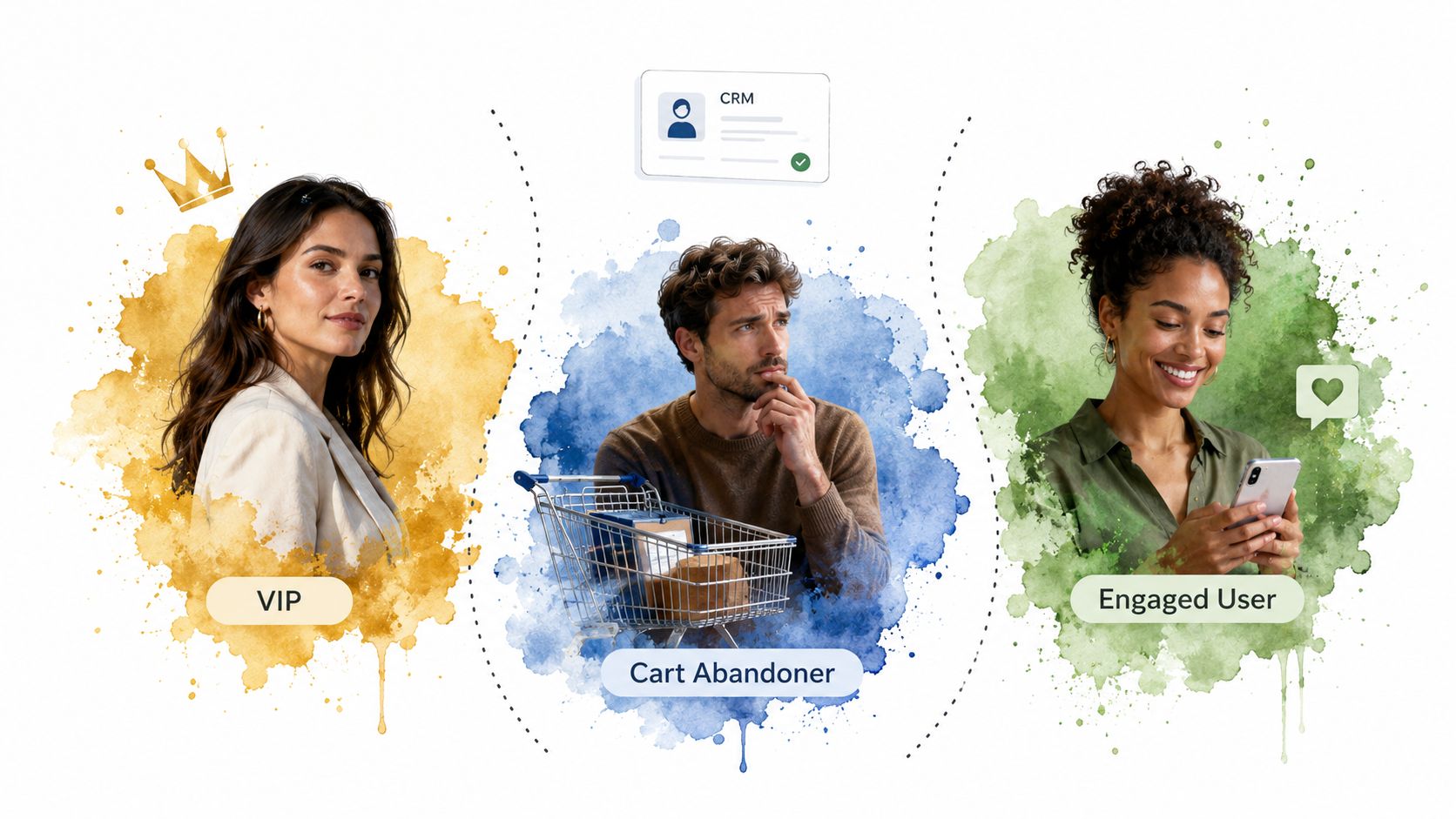
1. Segment Audiences Around Revenue, Not Demographics
Demographics can describe a prospect, but they rarely explain whether that person is likely to buy, book, renew, or become a profitable customer. Revenue-focused segmentation uses lifecycle stage, purchase history, behavior, and customer value to decide which message deserves budget.
An e-commerce brand might separate repeat buyers, one-time customers, and cart abandoners. An HVAC company could distinguish seasonal maintenance customers from emergency-repair prospects and warranty-expiration opportunities. A SaaS team might show advanced features to power users while giving new trial users onboarding-focused content.
Start with a small number of commercially meaningful groups. Overbuilding the audience structure creates administrative work without necessarily improving decision quality.
- Prioritize value: Use lifetime value and repeat behavior, not just recent website activity.
- Layer signals: Combine CRM records with email engagement, website actions, and previous purchases where consent allows.
- Control exclusions: Remove existing converters from cold acquisition campaigns when the objective is new customer growth.
- Match the message: A cart abandoner needs reassurance or product clarity, while a loyal customer may respond to replenishment or referral messaging.
Practical rule: If two groups have different reasons to buy, they probably shouldn't receive the same creative.
A CRM makes these audiences more useful because customer pools can update as prospects move from inquiry to appointment, purchase, renewal, or churn risk. That turns segmentation from a static spreadsheet into an operating process. The Advertising Suite's integrated CRM supports that connection, helping teams align advertising with the actual customer lifecycle rather than optimizing for superficial engagement.
2. Build Lookalikes From Profitable Customers
A lookalike audience inherits the quality of its source. Build one from every website visitor, and you may be asking Meta to find more people who behaved like visitors, including people who showed little buying intent. Build one from customers with strong retention, repeat purchases, high lifetime value, or credible reviews, and the signal becomes more commercially relevant.
That distinction matters for both e-commerce and services. A retailer should consider repeat purchasers rather than undifferentiated traffic. A service business can use customer records that reflect repeat bookings, completed jobs, and strong satisfaction. A SaaS company should favor retained customers and meaningful product adoption over trial signups that never activate.
Source quality comes before audience scale.
Use first-party data as the foundation
Customer data that your business collects with appropriate permission gives you more control than platform activity alone. It also creates a clearer bridge between advertising and revenue because the source list represents known business outcomes, not merely browsing behavior. Teams building this foundation can use first-party data for advertising as part of a broader measurement design.
Refresh source audiences as customer records change, and exclude current customers when a campaign's purpose is acquisition. For local businesses, weighting source data by service quality and repeat behavior can produce a more useful model than using every lead equally.
Meta's automation makes strong signals more valuable. Its AI creative tools reached over 8 million advertisers by Q1 2026, compared with 4 million at the end of 2024, according to coverage of Meta's AI advertiser adoption. That adoption suggests automated optimization is now mainstream, but automation doesn't repair weak inputs. Give the system high-quality customer definitions, then judge the resulting audience by qualified revenue, not audience size.
3. Treat Creative Quality as a Signal, Not Decoration
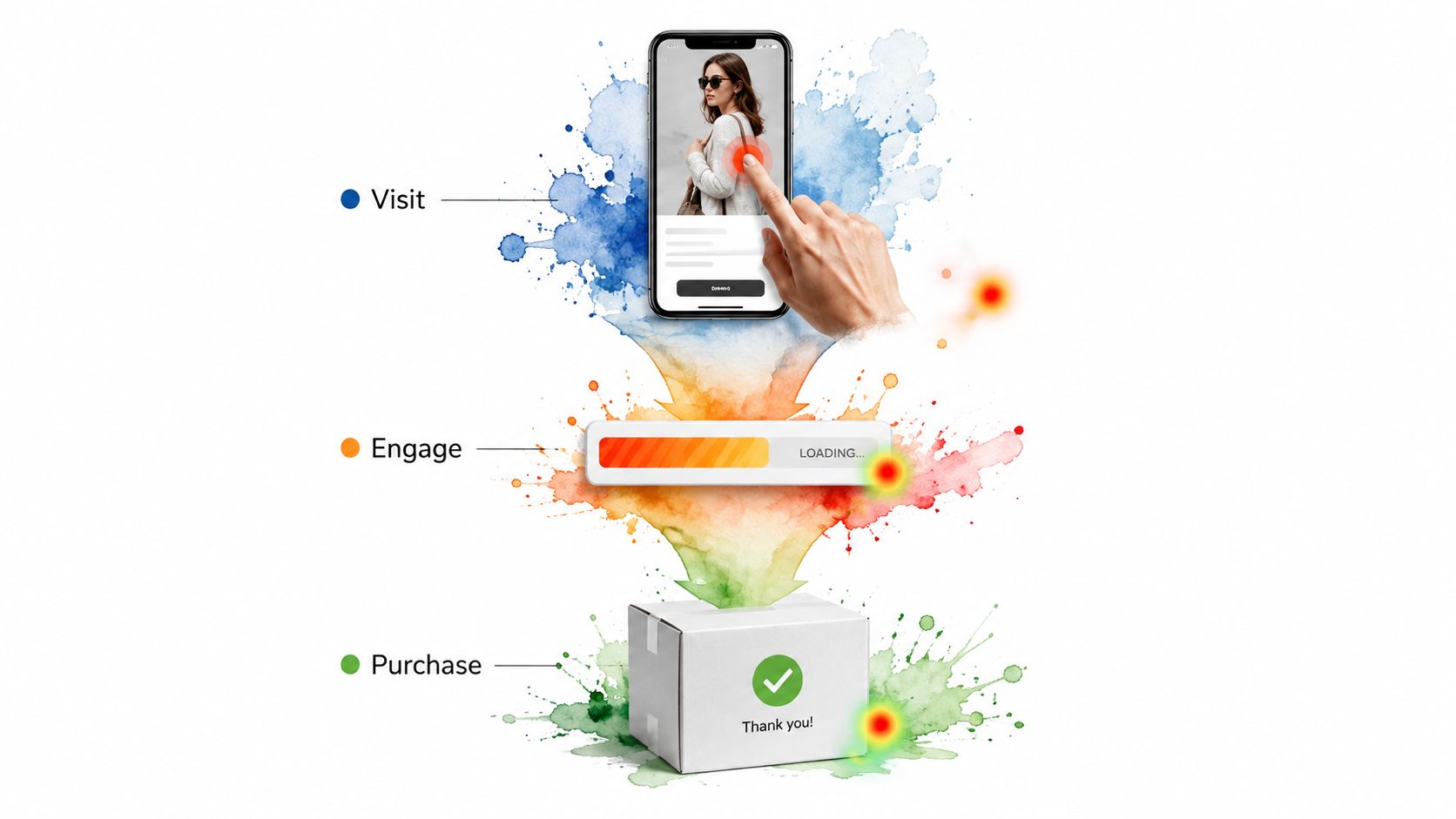
Creative quality determines whether ad spend earns attention or wasted display. The difference lies in whether the asset signals relevance to the right prospect and explains why the offer deserves consideration. A polished image that attracts curious but unqualified users can create expensive activity without improving revenue.
Video can demonstrate a product, show a service response, introduce a real employee, or let a customer describe the outcome in their own words. These formats provide context that static creative may struggle to convey, particularly for complex services or products that require explanation.
Asset volume does not, by itself, solve fatigue. Each variation should test a distinct angle, proof point, objection, or format. A service business might compare speed with reliability. An e-commerce brand could test product demonstration against customer experience. A B2B company might contrast an operational pain point with a financial outcome. Evaluate the winning variation by qualified leads, purchases, or booked work, not engagement alone.
Design for the viewing environment
Lead with the benefit or tension immediately. Make the message understandable without sound through captions and visual context. Use a clear CTA that matches the intended conversion, whether that means booking, purchasing, requesting a demo, or starting a conversation.
The former 20% text rule was a real Meta enforcement policy. Image-based placements could be rejected when more than 20% of the image contained text, while caption, CTA, and description text did not count toward that limit, as explained in the history of Meta's image-text policy. Advertisers should not treat an old enforcement rule as a complete creative strategy. Its practical lesson remains useful: make the visual message easy to process.
The Advertising Suite's video advertising approach connects creative production with campaign objectives. That connection lets teams assess whether an asset attracts qualified demand or merely generates attention.

4. Sequence Retargeting Around Objections
Retargeting shouldn't mean showing the same ad to everyone who visited your website. A product viewer, a completed lead form, a cart abandoner, and a past customer have different information needs. Repeating one offer across all of them wastes both budget and attention.
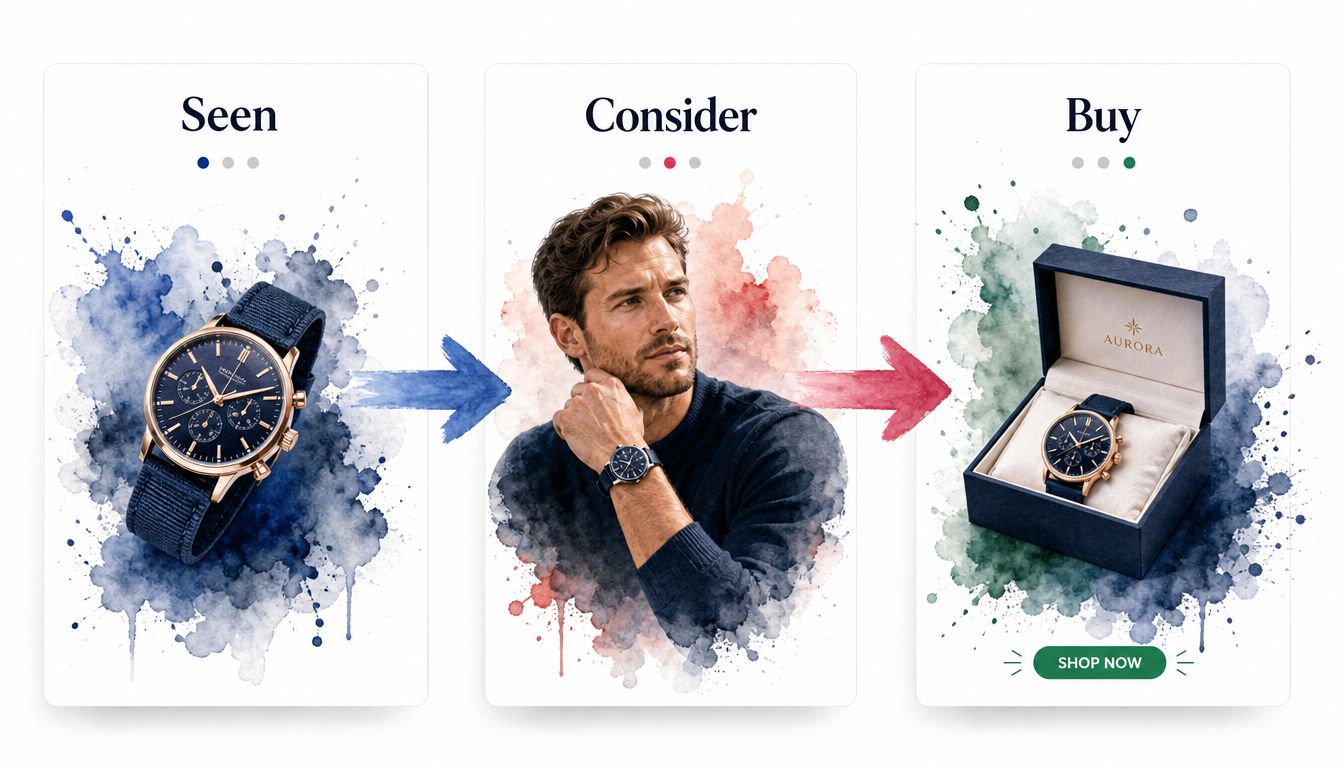
Sequential messaging gives each stage a job. A product viewer may need a reminder and clearer product benefits. A prospect who engaged with a testimonial may need pricing context, implementation details, or an answer to a common objection. A qualified service lead may need availability, proof of professionalism, or a direct booking path.
Build the sequence from behavior
Use audience rules that reflect what the person did. For e-commerce, a sequence could move from viewed product, to proof, to offer. For a local service, it might move from problem education, to customer evidence, to appointment availability. For a higher-consideration sale, the sequence can introduce the solution, explain how it works, then invite a consultation.
Exclude converters when the campaign is designed to acquire new customers. If the customer has already booked or bought, a fresh retention or cross-sell journey is usually more relevant than another acquisition message.
Multi-touch attribution planning helps teams evaluate how those touches contribute to a conversion without pretending that every interaction can be measured perfectly. Privacy restrictions can remove or distort some signals, so retargeting audiences should be treated as useful decision inputs, not an all-knowing record of intent.
The strongest sequence is often the one that stops at the right time. When someone becomes a customer, the message should change from persuasion to delivery, retention, review generation, or expansion.
5. Test One Commercial Variable at a Time
Campaign performance can improve for reasons unrelated to the change an advertiser intended to evaluate. Changing the audience, headline, offer, landing page, and creative simultaneously may produce a better result, but it leaves the cause unclear.
A controlled split test gives the team a cleaner learning condition. Meta Ads Manager's A/B workflow compares two versions that differ by one variable and defaults to a 50/50 budget split between Version A and Version B. The selected metric may be cost per result, cost per click, cost per purchase, or ROAS, as described in the Ads Manager split-testing workflow.
The metric still requires commercial judgment. A cheaper lead has limited value if sales rejects it. A higher click-through rate also fails to improve revenue when the landing page does not convert.
Choose tests that can change a decision
Start with the variable most likely to affect profit. Depending on the business, that may be the audience source, offer framing, proof point, or conversion event. Write the hypothesis before launch, preserve a control, and record the result in a central testing log.
A small fluctuation is not a reliable winner. Conversion-lift methodology offers a stronger way to assess incremental impact through randomized test and control groups. Guidance for Meta conversion-lift studies recommends Conversions API fully implemented, an Event Match Quality score above 5, and roughly 50 to 100 weekly conversions per test cell, based on conversion-lift study guidance.
Formal lift testing may be impractical for smaller teams and lower-volume campaigns. Those teams can still improve decision quality by narrowing the question, keeping controls clean, delaying conclusions until results stabilize, and recording uncertainty before shifting budget. The operating rule is simple: test one commercial variable, judge it against a revenue-relevant outcome, then apply the learning to the next decision.
6. Measure the Journey Across Channels
Facebook seldom receives the only interaction before a sale. A prospect may discover a business through social content, search for the brand, read an email, visit the website, then call sales. Last-click reporting credits the final interaction, hiding channels that created demand earlier.
A revenue-first measurement system connects Meta with search, email, analytics, call tracking, CRM stages, and accounting records. Use consistent campaign naming and preserve identifiers that follow a lead from ad interaction to qualified opportunity and closed revenue.
Separate platform reporting from business truth
Platform attribution helps optimize delivery within the platform. Business evaluation also requires CRM outcomes, refunds, cancellations, booked appointments, and completed sales. Service businesses should connect calls and offline outcomes where consent and technical capability permit.
Conversion lift helps leadership assess whether advertising produced additional results. Randomized test and control groups can isolate incremental impact more credibly than last-click reporting, though the method needs sufficient signal and careful implementation.
Privacy shifts make modeled conversion tracking and first-party data more important. Consent choices can reduce personalization and signal quality, so measurement should remain useful when individual-level visibility is incomplete.
The accounting system is the final referee. If platform results look strong but revenue, margin, or customer quality do not follow, investigate the campaign before celebrating.
A unified CRM gives marketing, sales, and operations one customer record. It connects advertising exposure with lead quality, sales progress, and realized revenue, making budget decisions less dependent on whichever dashboard reports the most favorable number. Teams can then identify whether weak performance begins with demand creation, lead qualification, fulfillment, or retention, instead of optimizing the easiest metric to improve.
7. Allocate Budget by Intent and Profitability
Equal budget allocation feels fair, but customers don't arrive with equal buying intent or economic value. A returning customer, a qualified service inquiry, a high-quality lookalike, and a cold prospect should not automatically receive the same investment.
Create performance tiers based on business value. Retargeting may deserve a strong role when it produces profitable conversions, while prospecting and creative exploration require protected test funding. Cold campaigns still matter because future customers must enter the journey, but awareness spend should have a defined learning purpose rather than an open-ended claim on the budget.
Use gradual changes to protect stability
Set a minimum acceptable ROAS or customer-acquisition cost before launch. Evaluate revenue and margin, not just conversion count. A low-value purchase and a high-value contract can both appear as one conversion, but they shouldn't receive identical treatment in a profitability model.
Large budget changes can disrupt delivery. Guidance cited in coverage of Meta budget scaling says increases above roughly 20% can restart the learning process, with 20% to 30% increments commonly preferred for more stable scaling. Treat that as an operating guideline, not a guarantee. Campaign volume, conversion quality, seasonality, and account history still matter.
- Protect winners: Increase investment when revenue quality remains acceptable.
- Fund learning: Keep a deliberate test allocation for new audiences and creative.
- Cut leakage: Don't let weak campaigns consume budget just because they have historical activity.
- Review contribution: Compare platform results with qualified pipeline and closed revenue.
The Advertising Suite's results-first framework is designed around this discipline. Budget should follow evidence, while experimentation remains funded enough to discover the next source of growth.
8. Protect the Learning Conditions
Automation needs usable conversion signals and enough activity to separate promising patterns from noise. Too few meaningful events leave the system with limited evidence for optimization. Frequent major edits create another problem: the team cannot identify whether results changed because of the audience, creative, budget, or a delivery reset.
Start each campaign with one primary conversion event. A purchase campaign should optimize for a meaningful purchase. A service business may need to distinguish completed consultations from low-intent form submissions. A SaaS company may need to connect signup data with activation or qualified pipeline.
Conversion-lift studies require sufficient volume within each test cell and reliable event implementation. The guidance cited earlier discusses roughly 50 to 100 weekly conversions per test cell, alongside requirements such as Conversions API and an Event Match Quality score above 5. These figures describe conditions for a lift study, not a universal performance threshold. The broader operating rule is practical: revenue decisions become less credible when the signal is sparse or poorly defined.
Stabilize before scaling
Avoid frequent major edits while a campaign is learning. Monitor conversion quality, cost behavior, and downstream revenue, then assess performance after the campaign has had a fair chance to gather evidence. The appropriate waiting period depends on conversion volume and sales-cycle length, so a fixed calendar rule can mislead.
Keep a separate experimental pool where possible. The core campaign can then preserve its signal while new creative, audience inputs, or offers are tested under controlled conditions.
Patience is an operating control. It prevents budget decisions based on unstable data and gives analysts a clearer basis for deciding whether to scale, revise, or stop a campaign.
9. Repair the Funnel Before Buying More Traffic
Ad performance often exposes a post-click problem. A compelling ad can generate qualified interest, but a slow page, unclear offer, complicated form, weak mobile layout, or missing trust signal can prevent that interest from becoming revenue.
Start by comparing the promise in the ad with the first screen of the landing page. The visitor should understand the offer, audience, next step, and reason to trust the business without hunting through navigation. For e-commerce, inspect product clarity, delivery information, returns, and checkout friction. For a service business, make the phone number, service area, availability, and proof easy to find.
Measure the conversion that matters
A form submission isn't always the business outcome. Track booked appointments, answered calls, attended consultations, purchases, qualified opportunities, renewals, and revenue where the sales process requires follow-up.
Use one-variable tests when diagnosing friction. Change the headline, form, CTA, proof, or layout in a controlled way rather than altering everything at once. Ethical urgency can help a buyer act, but only when availability or timing is genuine.
Web conversion optimization should sit beside media planning, not after it. The Advertising Suite treats CRO as part of the advertising system because traffic acquisition and customer conversion are financially connected.
Mobile experience deserves special attention because social traffic commonly arrives on phones, but avoid relying on unsupported universal percentages. Test the actual devices, pages, and conversion paths in your account. If the campaign attracts attention but revenue stalls, the landing page may be the most profitable place to work next.
10. Connect Reputation Data to Advertising
Advertising creates a promise. Reviews and customer experience determine whether the prospect believes it. A local service business can write persuasive copy about speed, professionalism, or quality, but recent customer feedback provides the proof that turns those claims into confidence.
Reputation should influence both message selection and campaign readiness. If customers repeatedly praise fast response times, that may be a stronger value proposition than a generic quality claim. If reviews reveal missed expectations, increasing ad spend before fixing operations can amplify the problem.
Turn customer feedback into creative input
Use permissioned testimonials, review excerpts, and customer stories in ads where appropriate. Match proof to the audience's concern. An HVAC prospect may care about arrival time and workmanship. A medical practice may need trust and clarity. An e-commerce buyer may want evidence that the product works as described.
Don't present reviews as a substitute for measurement. Track whether the creative attracts qualified inquiries, whether customers arrive with accurate expectations, and whether the resulting revenue supports acquisition costs. Reputation can improve conversion confidence, but the campaign still needs a defensible business outcome.
The Advertising Suite includes review management as part of its integrated CRM and customer-experience model. That matters for franchises and multi-location businesses, where location-level feedback can reveal operational differences that broad campaign reporting hides. A strong ad cannot permanently compensate for poor service, and a strong review profile can't rescue a confusing checkout. The two systems must reinforce each other.
10-Point Facebook Advertising Best-Practices Comparison
| Tactic | Implementation complexity | Resource requirements | Expected outcomes | Ideal use cases | Key advantages |
|---|---|---|---|---|---|
| Audience Segmentation & Custom Audiences for Revenue-Driven Targeting | Moderate–High, requires CRM integration and data pipelines | First‑party data, CRM, analytics resources, ongoing maintenance | Higher ROAS, lower CAC, more relevant messaging | E‑commerce, repeat‑purchase businesses, SaaS with LTV data | Precision targeting, dynamic audiences, reduced wasted spend |
| Lookalike Audience Modeling Based on Your Best Customers | Moderate, source data selection and audience creation | Sufficient high‑quality customer records (ideally 1k+), CRM sync | Higher conversion rate, lower CAC, scalable acquisition tiers | DTC, established e‑commerce, SaaS with large customer base | Finds high‑intent prospects, scalable 1%–10% tiers, leverages best customers |
| Video Creative as the Primary Conversion Driver | Moderate, creative production and rapid iteration | Video production capability or creators, editing tools, testing budget | Higher CTR/CR, improved engagement, often lower CPM | Product demos, testimonials, service transformations, lifestyle brands | Emotional connection, algorithm preference, strong retargeting signals |
| Retargeting & Sequential Messaging for Multi‑Touch Attribution | High, sequencing logic and pixel/CRM syncing | Pixel/CRM, multiple creative assets, campaign orchestration | 2–3x higher conversion for warmed audiences, lower CPC/CPM | Cart abandoners, trial users, long sales cycles, B2B funnels | Guides prospects across stages, reduces ad fatigue, tracks touchpoint impact |
| Testing Frameworks & Statistically Significant Campaign Optimization | High, requires test design and statistical rigor | Traffic volume, analytics tools, testing playbook, time for significance | Measurable lifts, reduced waste, repeatable optimization gains | Scale‑focused advertisers, high‑volume campaigns, CRO programs | Data‑driven decisions, compound improvements, predictable scaling |
| Omni‑Channel Attribution & Unified Campaign Measurement | Very high, cross‑platform tracking and modeling | Tracking infrastructure, integrations, analytics team, privacy compliance | Accurate channel contribution, better budget allocation across channels | Multi‑channel marketers, mid/large businesses, complex customer journeys | Prevents misattribution, optimizes full‑funnel investment, reveals undervalued channels |
| Strategic Bid Management & Budget Allocation Based on Performance Tiers | Moderate, rules and pacing setup, monitoring | Clean conversion data, automation/rules engine, reporting dashboards | Improved ROAS, efficient scaling, budget concentrated on winners | Campaigns with distinct audience tiers, e‑commerce, SaaS | Automated optimization, budget follows performance, clear accountability |
| Continuous Learning Phase & Budget Allocation for Algorithm Optimization | Low–Moderate, discipline on budget and edits | Sufficient budget to reach conversion thresholds, monitoring tools | Stable CPC/CPA after learning, better algorithmic performance | New campaigns, low‑volume initiatives needing algorithm training | Enables algorithm learning, avoids false negatives, smoother scaling |
| Conversion Rate Optimization (CRO) as the Counterbalance to Ad Spend | Moderate–High, site changes and iterative testing | CRO tools, developers/designers, traffic for tests, analytics | Higher conversion rates, increased LTV, lower effective CAC | High‑traffic landing pages, e‑commerce checkouts, SaaS signups | Multiplies ROI without extra ad spend, fixes funnel friction, improves quality |
| Review & Reputation Management Integration with Ad Strategy | Moderate, review systems and creative integration | Review management software, ops for responses, UGC/testimonial sourcing | Higher trust, 20–40% lift in conversion when leveraged correctly | Service providers, franchises, local businesses, appointment‑driven services | Social proof boosts conversion, testimonial content source, operational feedback loop |
Turn Facebook Advertising Into a Revenue Operating System
The strongest Facebook advertising best practices form a sequence, not a collection of isolated tricks. Define the conversion event that represents profitable progress. Build audience segments from high-quality first-party data. Use lookalikes based on valuable customers, not casual visitors. Develop creative that communicates a relevant promise, then test angles and formats without confusing volume for learning.
Protect the conditions that allow Meta's systems to optimize. Keep the conversion signal clean, avoid unnecessary edits, and separate core delivery from experimentation. Scale budgets gradually, especially when a large change could disrupt learning. Automation can accelerate iteration, but it can't decide whether a lead became a profitable customer unless your CRM and sales data feed that judgment.
Measurement should cover the full journey. Compare platform reporting with CRM stages, offline conversions, customer quality, refunds, renewals, and actual revenue. Conversion-lift methodology can help isolate incremental impact through randomized test and control groups, but it requires serious implementation and enough signal. Privacy and consent changes make first-party data, modeled tracking, and transparent measurement more valuable because advertisers can't assume complete individual-level visibility.
The post-click experience deserves equal attention. Repair landing-page friction, align ad and page messaging, simplify the next step, and measure completed business outcomes rather than stopping at forms or clicks. For service businesses, a booked and completed appointment may matter more than a cheap inquiry. For e-commerce, contribution margin and repeat purchase can matter more than a single transaction. For SaaS, activated accounts and qualified pipeline can matter more than registrations.
Reputation completes the loop. Customer feedback should inform creative claims, service expectations, and operational improvements. The Advertising Suite combines human-led strategy with CRM, CRO, and review management because advertising doesn't end at the impression. It ends when the customer experience supports profitable, repeatable growth.
Start your audit with three questions:
- Measurement gap: Which revenue event can't your current reporting verify?
- Audience-quality issue: Which segment contains activity but weak customer value?
- Funnel leak: Where do qualified prospects stop moving, after the ad, landing page, call, booking, or sale?
Fix one issue in each category before increasing spend. That approach gives SMB, e-commerce, service-business, and franchise teams a clearer path to accountable growth than adding budget to a campaign that hasn't earned it. The Advertising Suite is built to operate as an extension of your team, not a distant vendor, combining strategy, technology, creative, conversion work, and reputation management around the bottom line.
The Advertising Suite helps businesses connect Meta advertising with strategic creative, unified measurement, CRO, proprietary CRM access, and automated review management. Request a Demo or Book a Growth Consult through The Advertising Suite to identify the measurement gap, audience problem, and funnel leak holding back your next stage of growth, or explore the Membership for a 25% discount on services and access to the proprietary CRM.