Your Ad Copy Drives Clicks. Ours Drives Revenue.
Most ad copy examples obsess over the click. That's cute, but clicks don't pay payroll. Revenue does. If your campaigns keep generating traffic that bounces, ghosts your form, or stalls after the first touch, your problem usually isn't “bad ads.” It's disconnected ads.
Strong copy has a job beyond getting attention. It should pre-qualify the lead, set the right expectation, and hand clean intent into the next step, whether that's a booking page, checkout flow, CRM pipeline, or review request. Anything less is just expensive theater.
That's why the usual swipe-file advice falls short. Clever headlines matter, sure. But a smart ad copy example isn't just a line of text. It's part of a revenue system built to attract, convert, and retain the right customer. When the ad promise matches the landing page, the CRM tags the behavior, and the follow-up reflects what the buyer already showed interest in, ad spend starts acting like an investment instead of a gamble.
Below are 7 revenue-first ad copy models worth stealing. Not because they sound impressive, but because they align messaging with buyer intent, conversion mechanics, and actual business growth. If you're agency-burned, skeptical, or just tired of paying for vanity metrics, good. You're the right audience.
1. High-Intent Lead Generation Ad Copy for Google Search

Google Search is where urgency gets expensive fast. If you write soft, vague copy for hard-intent queries, you'll attract the wrong clicks and pay premium rates for people who were never serious.
For service businesses, the best ad copy example reads like a direct answer to an urgent problem. Legal: Emergency Family Law Help. 24-Hour Response Guarantee. HVAC: AC Down? Same-Day Service, No Hidden Fees. Medical: Board-Certified Specialists. 2-Week Appointment Guarantee. These don't flirt. They clarify.
One real-world Google Ads case study found that adding the brand name in the ad title, clearly describing the offering, and using relevant keywords increased conversions by 172% while reducing cost per conversion by 65.78% in the revised campaign, according to this Google Ads conversion case study.
What this copy does right
Search ads win when they cover three things in seconds:
- Pain point first: Lead with the problem the buyer is actively trying to solve.
- Credibility second: Use concrete signals like certified expertise, guaranteed response, or pricing clarity.
- Action third: Tell them exactly what to do next.
Practical rule: If someone searches with urgency, don't send them to a homepage. Send them to a conversion page wired into your paid search strategy.
That last part matters more than most founders realize. If your ad says “same-day service” but the landing page buries the booking form, your copy didn't fail. Your funnel did.
How to make it pull revenue, not just leads
Use ad extensions to reinforce availability, speed, and service detail. Then feed those leads directly into your CRM so your team can route, score, and follow up without delay.
A few smart moves:
- Match the promise: If the ad says “No Hidden Fees,” the landing page should show that plainly.
- Test angle against angle: Compare problem-focused headlines with outcome-focused headlines.
- Track quality, not volume: A lead that books and closes matters more than five that disappear.
The Advertising Suite's growth-tech hybrid approach earns its keep. Copy gets the lead in the door. The integrated CRM helps your team close the loop and protect margin after the click.
2. Conversion-Focused E-Commerce Ad Copy for Meta

Retargeting on Meta shouldn't sound like a desperate reminder. It should sound like a useful nudge from a brand that understands hesitation.
For cart abandoners, specificity wins. A clean ad copy example looks like this: You left [Product] in your cart. Only 2 left in stock. Claim yours with free shipping. For a SaaS trial: Almost ready to scale? Complete setup today and get your first month free. For a subscription brand: 8,000+ members got their first box today. Don't miss out. Lock in founding member pricing.
The copy works because it doesn't restart the sale. It resumes it.
The best retargeting copy feels like a continuation
Warm audiences already know who you are. Don't waste words reintroducing the brand. Address the friction instead.
- Cart abandoners need reassurance: Hit shipping, inventory, returns, or price hesitation.
- Product viewers need context: Remind them why the item matters and why now makes sense.
- Trial users need momentum: Show the next step, not the whole pitch.
Good retargeting copy doesn't shout louder. It removes the excuse that stalled the sale.
Behavior-based segmentation matters here. Cart abandoners and product page visitors are not the same audience, and writing one message for both is lazy marketing dressed up as efficiency.
Tie the ad to the recovery system
Meta can optimize delivery, but your backend still decides whether abandoned intent turns into revenue. Your ad should sync with your cart abandonment recovery flow so email, SMS, and retargeting all reinforce the same message.
Keep the copy short. Two or three sentences are plenty. Put the strongest benefit first, then your objection handler, then the CTA.
A strong formula looks like this:
- Reminder: You were looking at [Product].
- Reason to act: It's almost gone, shipping is free, or the offer ends soon.
- Next step: Return to cart, complete setup, claim your pricing.
Revenue-first teams distinguish themselves from brands chasing vanity metrics. They don't celebrate the click-through. They ask whether the message reduced friction enough to recover the sale.
3. Trust-Building Lead Magnet Ad Copy for LinkedIn
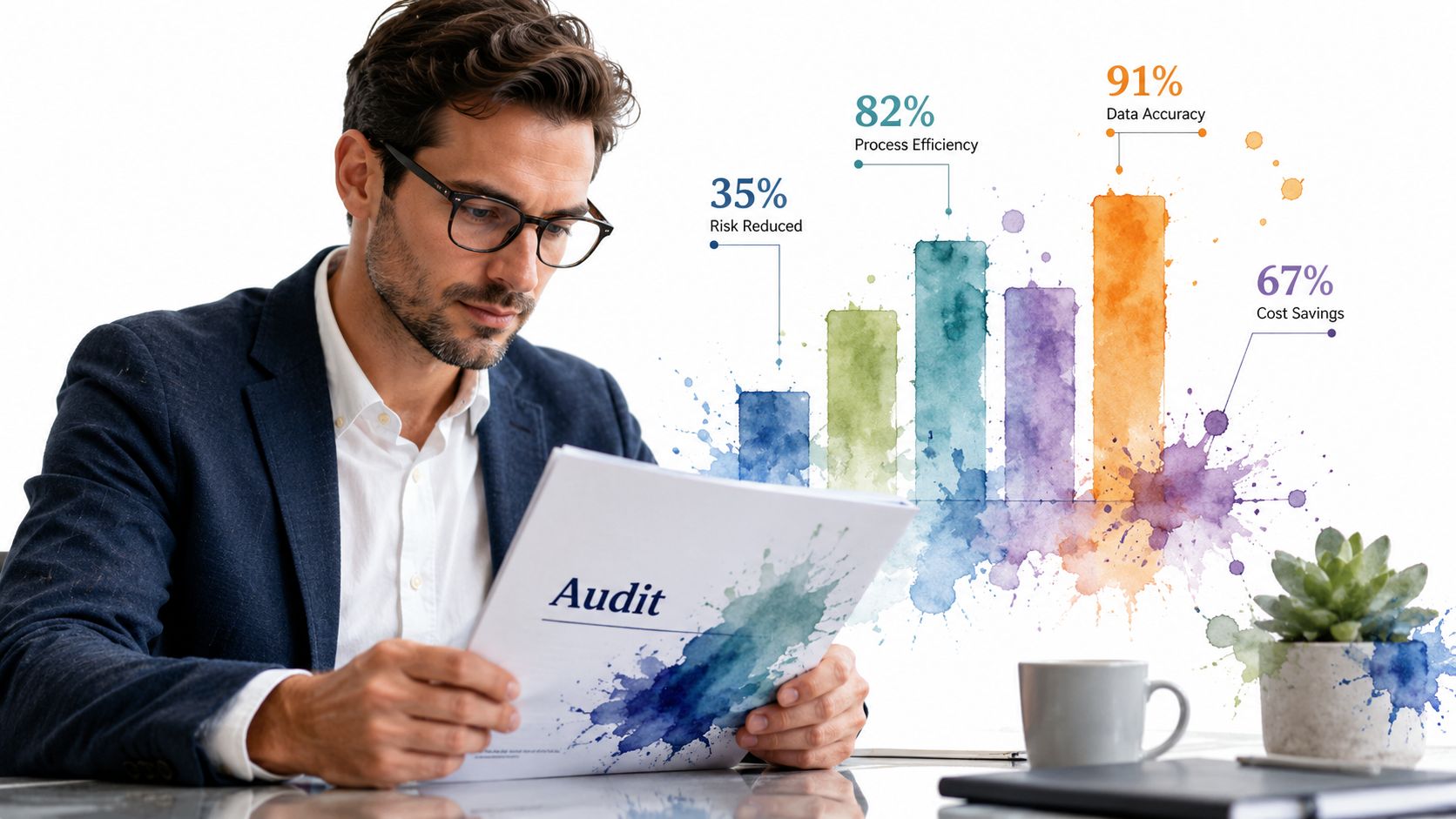
LinkedIn punishes fluff. Decision-makers scroll past vague promises because they've seen too many of them, usually attached to a PDF nobody asked for.
A better ad copy example sounds diagnostic, not promotional. Your ad spend is leaking revenue. Our free audit reveals where, and how to fix it. Or: From $500k to $10M. The 3 systems separating scale-ready brands from everyone else. See the framework. That language earns attention because it respects buyer skepticism.
For cold professional audiences, a lead magnet should feel like a working session in disguise. Useful. Specific. A little blunt.
Use evidence without sounding like a robot
One classic copy lesson still holds: specifics beat puffery. The historical influence of Claude Hopkins is still relevant because his famous work leaned on precise, factual detail instead of vague superlatives, a principle discussed in this historical ad copy analysis.
That's exactly why generic lead magnet copy underperforms. “Download our guide to improve performance” says nothing. “8 metrics most B2B marketers ignore” says something. It creates tension and implies a blind spot.
If you want stronger LinkedIn response, frame the asset around one of three jobs:
- Diagnosis: Find what's broken.
- Benchmarking: See where you lag.
- Decision support: Clarify what to fix first.
Make the handoff clean
LinkedIn ads don't close complex deals. They start qualified conversations. Your follow-up matters just as much as your hook, which is why persona clarity has to guide the copy and the nurture path. That's easier when the audience definition is sharp, not guessed. A useful place to tighten that foundation is this guide on how to create buyer personas.
Once the lead comes in, your CRM should segment based on asset type, engagement level, and company fit. Someone who downloads an audit checklist needs a different follow-up than someone who requests a strategic benchmark.
That's the key strategy. The ad earns trust. The CRM turns that trust into timing, context, and sales readiness.
4. Reputation-Amplifying Google Local Services Ads Copy
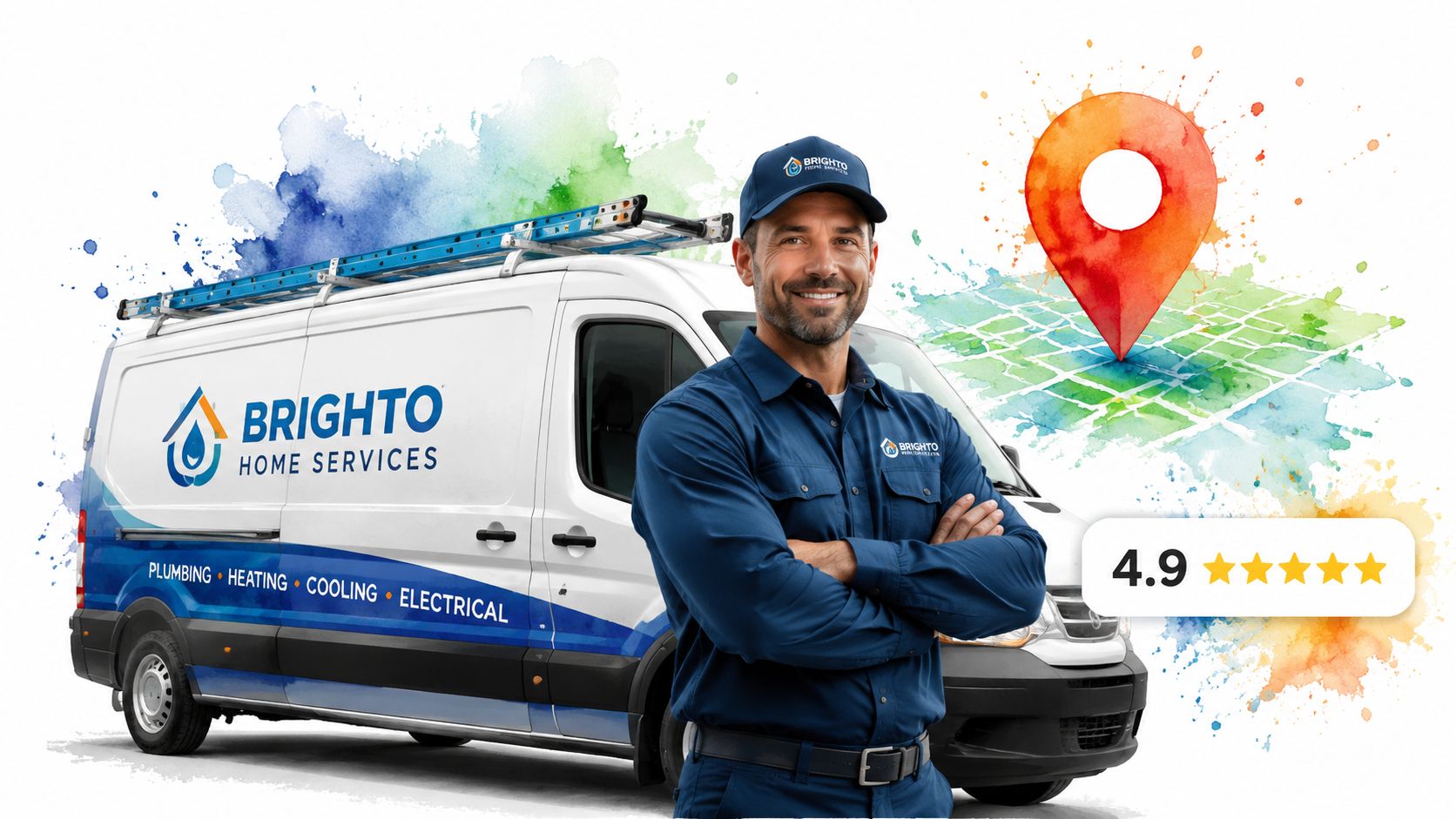
Local service ads don't just compete on offer. They compete on confidence. Buyers want proof that you'll show up, do the job right, and not create a second problem.
That's why reputation-heavy copy works so well for franchises and multi-location brands. Think: Same-Day Service Available | $0 Service Call, or Licensed & Insured | Emergency Calls Accepted 24/7, or Free Initial Consultation | Family Law Specialists. The strongest versions combine three trust signals: service clarity, response speed, and visible credibility.
This isn't branding fluff. It's booking insurance.
Reviews aren't a side asset
Your ad copy should reflect the customer experience you can consistently deliver. If your reviews are strong, bring that confidence into the offer language. If your review pipeline is weak, fix that before you pour more money into traffic.
That's why multi-location brands need a repeatable review engine, not a once-a-quarter scramble. Automated requests, fast responses, and sentiment tracking all support stronger ad performance because they reinforce trust before and after the lead comes in.
Field note: When local ads underperform, the issue often isn't visibility. It's that the listing looks less trustworthy than the one next to it.
Build the feedback loop
This model works best when ad messaging and service follow-up live inside the same operational system. A proper reputation management strategy helps you request reviews after service, monitor patterns, and spot when customer experience issues start eating into conversion.
Use copy that promises something your team can deliver every time:
- Availability: Same-day, emergency, after-hours.
- Assurance: Licensed, insured, specialist-led.
- Clarity: Free consultation, upfront pricing, no hidden fees.
Service franchises live or die by trust. The good news is that trust compounds. When your ads, reviews, and response systems line up, your brand becomes easier to choose, and that lowers friction across the funnel.
5. Awareness-to-Conversion Funnel Ad Copy for YouTube
YouTube works when you stop treating it like television and start treating it like sequenced intent. One video won't do the whole job for high-consideration offers. You need different messages for different awareness levels.
A strong awareness ad copy example opens with a direct problem. Your sales team is stuck in spreadsheets. A mid-funnel version teaches. Your ads drive clicks, not customers, because your landing pages leak conversions. A remarketing version closes. Ready to fix the leak? Book your consult today.
Three messages. Three jobs. One revenue path.
The funnel matters more than the script alone
When your video sequence aligns with buyer stage, every view becomes more useful. Someone who watched the hook video should see a different follow-up than someone who already engaged with your educational content. That's not overengineering. It's basic respect for buyer context.
There's also landing page reality to consider. In one case study, a podcast hosting platform improved conversion rate by 91% after testing a new pricing page headline and form structure, and the campaign achieved a 17.26% overall lift in conversions when the survey experience was targeted by device type, according to this conversion rate optimization case study. That matters here because video rarely fails alone. It often sends traffic into a page that asks too much, too soon.
Use view data to shape the next step
Your YouTube copy should route attention into the next logical action, then let your system segment viewers by behavior. That's where video becomes a revenue tool instead of a “brand awareness” line item nobody can defend.
A clean sequence usually looks like this:
- Awareness video: Hook the pain fast.
- Consideration video: Explain the mechanism or process.
- Conversion video: Offer the next step with clear stakes.
For teams building this out, these videos for advertising should work as connected assets, not isolated creatives.
That's the broader lesson. Video gets cheaper when it gets smarter. If you know what viewers watched, how long they stayed, and what they did next, your copy can stop entertaining strangers and start converting prospects.
6. Permission-Based SMS and Email Segmentation Copy
SMS and email are where sloppy ad promises get exposed. If the initial message overhyped the offer, the follow-up won't save it. If the ad promise was sharp, the nurture sequence can turn curiosity into action.
The highest-performing messages in these channels feel personal because they are behavior-based. Email after purchase might say: [Customer Name], 3 ways to maximize your [Product]. SMS before trial expiry might say: [Name], your trial ends in 3 days. Here's what top users accomplish in week 2. Lock in founding member pricing. A review request might say: Your service is complete. We'd love your feedback.
Simple wins here. Not bland. Just clear.
Structure matters more than cleverness
One useful lesson from ad testing is that direct, specific calls to action outperform vague ones. In upper-funnel brand awareness campaigns, putting a promotion directly in the ad headline produced a 75% higher click-through rate than placing it lower in the ad body, specific actionable CTAs doubled the likelihood of a click, and including price in the text increased average click-through rate by 10% to 15%, with brand awareness campaigns seeing increases up to 30% when prices were shown, according to this AdRoll ad copy analysis.
That principle carries beautifully into email and SMS. Lead with the reason to care. Don't bury the offer. Don't write “learn more” when “claim your pricing” is what you mean.
Write SMS like a concierge and email like a smart account manager. One prompts action. The other deepens trust.
Segment by what people did, not what you hope they'll do
The message should change based on behavior:
- Recent buyers: Send education, onboarding, and product-use tips.
- Inactive users: Send reactivation language tied to a clear next step.
- Hot leads: Send reminders, expiring offers, or booking prompts.
An integrated CRM stops being a nice add-on and becomes a growth lever. It holds the event history, purchase context, and engagement data that make segmented messaging possible. Without that system, most brands default to one-size-fits-all blasts and wonder why engagement decays.
The Advertising Suite's revenue-first lens is simple here. Don't “do email marketing.” Build a follow-up system that makes every paid click more valuable after the first touch.
7. Community-Driven Organic Social Copy
Organic social gets dismissed because it doesn't look tidy in attribution reports. That's a mistake. Strong owned media warms future buyers, creates reusable proof, and gives your paid campaigns better raw material.
The best organic ad copy example doesn't read like an ad at all. On LinkedIn, try: We audited client ad spend and found the leak wasn't traffic. It was conversion friction. On Instagram: I spent heavily on ads and learned the expensive way that clicks don't guarantee customers. On TikTok: Your B2B ads are boring because they sound like they were approved by twelve committee members.
That kind of copy works because it has a pulse.
Organic content should feed paid performance
Organic posts are a testing ground for angles, objections, and language. When a founder story, customer quote, or blunt opinion gets strong saves, shares, or comments, you've found messaging worth promoting.
There's also a strong case for testimonial-led structure. Recent 2025 LinkedIn B2B study data presented in this video discussion on testimonial ad structure says ads formatted as direct customer quotes outperformed traditional benefit-driven copy by 34% in top-of-funnel engagement, while 89% of current ad copy tutorials treat testimonials as optional instead of central. That's a big miss. Cold audiences trust peers faster than brands.
Use community signals as conversion fuel
What you post organically should serve at least one of three jobs:
- Build trust: Share customer language, proof, and lessons learned.
- Create audience data: Turn engagement into warm retargeting pools.
- Improve paid messaging: Promote what already earned attention.
There's another underused angle too. Recent 2024 to 2025 Meta ad testing data presented in this video on temporal context in ad copy showed a 27% higher conversion rate when copy referenced the user's current calendar reality instead of generic urgency. That insight works well in organic too. “It's Monday and your pipeline is already behind” will usually land harder than generic hustle-post nonsense.
7-Channel Ad Copy Comparison
| Ad Copy Type | Implementation Complexity | Resource Requirements | Expected Outcomes | Ideal Use Cases | Key Advantages |
|---|---|---|---|---|---|
| High-Intent Lead Generation Ad Copy for Google Search (B2B Services) | Medium–High: ongoing keyword research & bid management | Moderate budget, CRO-ready landing pages, CRM integration | Highly qualified leads and measurable ROAS; appointments | Local services, legal, healthcare, B2B services, franchises | Captures peak purchase intent; lower CPL; strong attribution |
| Conversion-Focused E‑Commerce Ad Copy for Meta (Retargeting) | Medium: pixel setup, dynamic creatives, audience segmentation | Continuous creative production, ad spend, CRM linkage | Higher conversion rate from warm audiences; lower CAC than cold traffic | E‑commerce, DTC, subscription offers, trial recoveries | Visual product ads; precise retargeting; sequential messaging |
| Trust-Building Lead Magnet Ad Copy for LinkedIn (ABM) | Medium–High: asset production and account-based targeting | Premium content (reports/audits), higher CPC budgets, sales follow-up | High-quality MQLs; longer sales cycle; strategic sales conversations | B2B SaaS, enterprise, consulting, agencies | Authority establishment; precise professional targeting; lead capture |
| Reputation-Amplifying Google Local Services Ads (Franchises & Multi‑Location) | Low–Medium: verification and review workflows required | Review management system, CRM, compliance checks | Local, intent-driven leads; pay-per-lead efficiency | HVAC, plumbing, electrical, multi-location service brands | Reviews visible in-ad; trust at decision moment; efficient spend |
| Awareness-to-Conversion Funnel Ad Copy for YouTube (Video Discovery & Remarketing) | High: multi-stage creative, sequencing, 5s hooks required | Video production budget, audience lists, CRM tracking | Multi-touch conversions; strong brand storytelling; uplift for high-ticket | SaaS, high-ticket consulting, online courses, complex sales | Storytelling and social proof at scale; effective remarketing |
| Permission-Based SMS & Email Segmentation Copy (Direct‑Response Nurture) | Medium: segmentation, compliance, workflow automation | Robust CRM, clean data, copy testing, opt-in management | Very high ROI; direct conversions and retention; clear attribution | E‑commerce, SaaS, subscriptions, service businesses | Owned channel; hyper-personalization; measurable performance |
| Community-Driven Organic Social Copy (Owned Media Amplification) | Medium: consistent content plan and community management | Time for content creation, engagement moderation, repurposing | Long-term brand authority; warm audiences for paid campaigns | SaaS, agencies, creators, DTC brands, course creators | Zero-cost reach potential; UGC and social proof; fuels paid media |
Stop Copying Ads. Start Building a Revenue Engine.
Great ad copy isn't the finish line. It's the starting gun.
The models above work because they don't treat copy as decoration. They treat it as a performance lever inside a larger system. Search ads qualify intent. Retargeting ads recover stalled demand. LinkedIn lead magnets build trust with skeptical decision-makers. Local service ads convert reputation into bookings. YouTube sequences move buyers from curiosity to action. SMS and email carry the sale forward. Organic social builds the proof and audience data that make paid media stronger.
That's how you stop chasing vanity metrics.
If all you optimize for is click-through rate, you can end up with a campaign that looks busy and performs poorly. Plenty of businesses have learned that lesson the expensive way. The better approach is revenue-first. Write copy that attracts the right person, connect it to a page that removes friction, route the lead into a CRM that tracks behavior, and follow up with messaging that reflects what the buyer already did. That's not just smarter advertising. It's scalable growth.
The tech layer matters here more than most agencies admit. If your CRM, billing, and reporting systems don't line up, teams end up reconciling data manually and leaking revenue through operational gaps. Effective revenue operations in hybrid pricing environments require unified object models across CRM, billing, and reporting so customer data, pricing rules, and usage attribution stay synchronized automatically, according to this revenue operations overview for hybrid pricing. Different business model, same lesson. Fragmented systems create friction. Integrated systems protect margin.
That's why The Advertising Suite doesn't stop at campaign management. We operate as a growth-tech hybrid built for businesses that care about the bottom line. Our integrated CRM and reputation ecosystem aren't side perks. They're core to how ad spend becomes sustainable growth. And for brands ready to go deeper, the Membership offers a 25% discount on services plus access to the proprietary software stack. That's useful if you're scaling and tired of duct-taping platforms together.
The bigger point is simple. Don't copy ads that look clever. Build messaging that fits a system designed to convert, retain, and grow. That's how businesses stop gambling on campaigns and start building a profit center.
If you want a partner who cares about revenue more than applause, The Advertising Suite is built for that job. We help scale-ready SMBs, service franchises, e-commerce brands, and agency-burned founders turn ad spend into measurable growth with strategy, CRO, an integrated CRM and reputation ecosystem, and a results-first framework validated by 10,000+ satisfied customers. If you're ready to tighten the funnel, sharpen the message, and make your marketing feel like an extension of your team, book a Growth Consult, request a demo, or explore the Membership for the 25% service discount and software access.