Most advice about cleaning leads commercial gets the business model backward. More traffic does not fix weak qualification, slow follow-up, or a buying committee that never gets the right message. If you're paying for inquiries and hoping the “right person” will sort it out later, you're funding friction.
The problem is that commercial cleaning is sold into organizations, not to one person in a vacuum. That means the wrong click, the wrong contact role, or the wrong follow-up sequence can turn a decent lead into wasted spend. In a market where inbound leads have been reported at roughly $30 to $50 per lead and outbound can reach $200+ per lead depending on region and efficiency, every bad lead gets expensive fast. commercial cleaning lead economics
Why Most Cleaning Lead Strategies Fail
The biggest myth in this space is that more leads equal more revenue. They don't, especially when half the inquiries are low-intent, residential-adjacent, or land with someone who cannot approve a contract. A cleaning company can stay busy and still miss the recurring work that drives real growth.
The leak is usually qualification, not traffic
Owners chase volume because it feels productive. Ads run, forms submit, phones ring, and the dashboard looks alive. If the inquiry does not match the facility type, contract size, or buying structure you need, the lead was never an asset.
Commercial cleaning is sold into organizations with layers of approval. A facility manager may like your offer, but a procurement lead, operations director, or office manager may be the person who controls the next step. Misaligned outreach wastes budget because the message reaches the wrong stakeholder or reaches the right one with the wrong angle.
Clean lead generation starts with a tighter definition of the buyer. If you are trying to win commercial accounts, stop celebrating any form fill that lands in the inbox. A small pool of high-intent prospects is better than a bigger pile of misfit names.
Practical rule: if the lead cannot plausibly become a recurring contract, it does not deserve the same follow-up energy as a real opportunity.
The agency-burned founder should care about cost control first
Many service businesses learn this the expensive way. They buy clicks, calls, and list pulls, then wonder why signed contracts do not follow. If you want predictable pipeline growth, you need to think in terms of lifetime value, not just lead count.
That is also why a useful next step is to tighten your local lead system before you scale spend. If you want a sharper framework for local business lead generation, start there and build around the channels that bring in real buying intent. The goal is not attention, it is contracted revenue.
The hard truth is simple. Most lost cleaning deals do not die because the prospect disappeared; they die because the vendor got slow.
Commercial buyers do not wait around. If your process lets prospects cool off while your team gets to it later, another company gets the meeting, the walkthrough, and the contract.
The Economics of Commercial Cleaning Acquisition
Commercial cleaning is a recurring B2B sale, so the math has to support retention, not just the first invoice. That changes what a lead is worth. An owner who treats every inquiry like a one-off job ends up underpricing risk and overpaying for acquisition.
Commercial cleaning buying decisions are rarely made by one person. Facility managers, office managers, operations leaders, and budget owners often weigh in before a contract gets signed. If your outreach only impresses one stakeholder, the deal still stalls, and the cost of chasing the wrong contact shows up fast in wasted follow-up and slow closes.
Channel cost should shape budget, not vanity preferences
The verified economics are blunt. In 2025, inbound commercial cleaning leads were reported at roughly $30 to $50 per lead, while outbound methods could reach $200+ per lead depending on region and campaign efficiency. The same source noted that broader Business Services campaigns saw PPC cost per lead around $214 and cold calling around $366, which is a useful warning about expensive prospecting when intent is weak.
For a recurring contract business, that means your acquisition ceiling should be set by expected account value and retention, not by what feels affordable in isolation. A high-cost lead can still work if the contract is large, sticky, and profitable. A cheap lead that never closes is still expensive.
Lead acquisition cost vs. channel
| Channel | Avg. Cost Per Lead | Intent Level | Best For |
|---|---|---|---|
| Inbound local search | $30 to $50 | High | Recurring commercial demand |
| Outbound prospecting | $200+ | Variable | Large accounts, targeted outreach |
| Broader PPC in business services | $214 | Mixed | Search-driven capture campaigns |
| Cold calling in business services | $366 | Low to mixed | Controlled account targeting |
Use that comparison as a budget filter, not a brag sheet. If a channel can't generate enough qualified conversations to justify the acquisition cost, it is the wrong channel for your current stage.
Bottom line: budget for signed contracts, not lead volume. The channel that looks cheapest on paper can become the most expensive once your team has to sort through bad-fit prospects.
The hard truth is simple. Most lost cleaning deals do not die because the prospect disappeared; they die because the vendor got slow. Commercial buyers do not wait around. If your process lets prospects cool off while your team gets to it later, another company gets the meeting, the walkthrough, and the contract.
A strong budget also depends on contribution margin discipline. If you do not know what each account can carry after service delivery and sales cost, you are guessing. That is why a financial lens matters before you scale any lead engine, and why contribution margin analysis belongs in the planning stage, not after the money is gone.
Capturing High-Intent Local Demand
Commercial cleaning is local by nature, but too many campaigns are built like they're selling a national software product. That's backwards. Buyers search within a service area, and they want a vendor who looks close, credible, and commercially relevant.

Tight geography beats broad reach
Geo-targeting should be specific, not sloppy. One practical source notes that ad targeting can be set to cities, zip codes, or neighborhoods, which is exactly how commercial cleaning should be bought and sold. geo-targeting for cleaning campaigns is useful because it keeps your ad spend inside the market you can serve.
The winning setup is simple. Target the exact business districts, industrial corridors, and service zones you can support, then write copy that speaks to commercial needs, not household chores. If your ad language is vague, you'll attract the wrong people and pay for the privilege.
The local SEO trinity still matters
Strong local demand capture usually comes down to three things.
- Google Business Profile: Fill it out completely, keep the service area clear, and make sure the profile looks like a real commercial operator.
- Location pages: Build pages around city and service combinations, so searchers see immediate relevance.
- Reviews and proof: Manage B2B reviews so prospects can see evidence of reliability and professionalism.
This isn't branding theater. It's filtering. When a facilities manager sees a locally relevant page and a credible profile, the vendor feels closer to shortlist status.
Write for the commercial buyer, not the general public
Your keywords and ad copy should screen out residential curiosity fast. Use phrases tied to office buildings, clinics, warehouses, schools, or property management. If you want a visitor to become a lead, the message needs to confirm that you handle the type of facility they run.
The same logic applies to the phone call path. If someone lands on your profile and clicks to call, that moment has to be treated as a sales event, not a casual inquiry. The difference between a booked walkthrough and a missed opportunity often starts with how clearly you present service fit, and Google Business Profile phone calls should be treated like a conversion channel, not a side effect.
Navigating the B2B Buying Committee
The weakest assumption in commercial cleaning is that one person makes the decision. Often, the person asking for quotes isn't the person signing the contract. If your outreach sounds generic, it can easily miss the actual blocker in the room.
The contact role is not the same as the buyer
A facilities coordinator might care about responsiveness. An operations lead might care about service continuity. An owner or finance approver might care about cost control and risk. If you send the same message to all three, you're asking each person to do the work of translating your value.
That's why committee-aware messaging wins. The operational contact needs proof that the crew will show up, communicate, and keep standards stable. The financial approver needs confidence that the contract won't become a budget leak. The final signer needs a reason to believe the vendor won't create more management work.
Different facilities have different power structures
The committee shape shifts by segment. In a clinic, compliance and patient perception matter more than in a warehouse. In a school, safety and scheduling dominate. In a multi-location office account, central approval might come from leadership while local managers influence the shortlist.
Use that structure to sharpen your pitch.
- Offices: emphasize consistency, low disruption, and responsiveness.
- Clinics: emphasize cleanliness discipline, process control, and trust.
- Warehouses: emphasize operational timing, safety, and scale.
- Schools: emphasize daily reliability, shared-space upkeep, and visibility.
- Multi-location accounts: emphasize repeatability, reporting, and centralized oversight.
A generic “decision-maker” message wastes time because it ignores how organizations actually buy. The closer your messaging matches the stakeholder's job, the less budget you burn chasing the wrong person.
Ask better questions before you pitch harder
The goal isn't to sound clever. It's to identify who controls the next step, who can stall the deal, and who needs proof to move forward. That means asking direct questions early about decision timing, internal approval, and who else reviews the quote.
When your outreach reflects the buying committee, you stop treating commercial cleaning like a simple lead capture game. You start treating it like a business sale, which is what it is.
The 5-Minute Follow-Up Protocol
Speed-to-lead beats almost everything in service sales. If a prospect reaches out and hears nothing while your team “circles back later,” you've already made the buying decision harder. The best vendors don't just respond, they respond first.
The first response has to be immediate
A commercial cleaning follow-up study reported that prospects should be contacted within 5 minutes of inquiry, and that the chances of success drop tenfold after 10 minutes. The same source recommends calling each lead at least 6 times before giving up, with about 12 touches total across calls and messages. commercial cleaning follow-up timing is a reminder that speed and persistence are operational advantages, not soft skills.
That means your system needs a trigger, not a memory. The lead comes in, the call goes out, the email follows, and the sequence keeps moving. If that chain depends on someone “seeing it when they can,” you're already behind.
Build the follow-up rhythm around the buyer's window
The strongest contact windows identified in the source were Wednesday or Thursday, early in the morning or between 4 p.m. and 5 p.m. That doesn't mean those are magic hours. It means your team should stop pretending all outreach times are equal.
A disciplined Day 1 to Day 14 cadence works better than random checking in.
- Day 1: call and send a personalized email.
- Day 3: follow with a short note that adds context and reminds them why the conversation matters.
- Day 7: use a different angle, usually tied to a specific facility concern.
- Day 14: send a clean breakup message and leave the door open.
The point is persistence without spamming. People often reply after the second or third touch, not the first, so silence after one email is not a signal to quit.
Keep the sequence tight and track the touches
If your CRM or spreadsheet doesn't show every attempt, your process will drift. Track the call count, the response channel, and the next scheduled touch. That's how you prevent hot inquiries from cooling off unnoticed.
For contractors who want a better structure for this kind of sales motion, leads for contractors should be treated as an operational system, not a pile of names. The hard truth is simple. Most lost cleaning deals don't die because the prospect disappeared, they die because the vendor got slow.
Closing the Loop with Integrated Tech
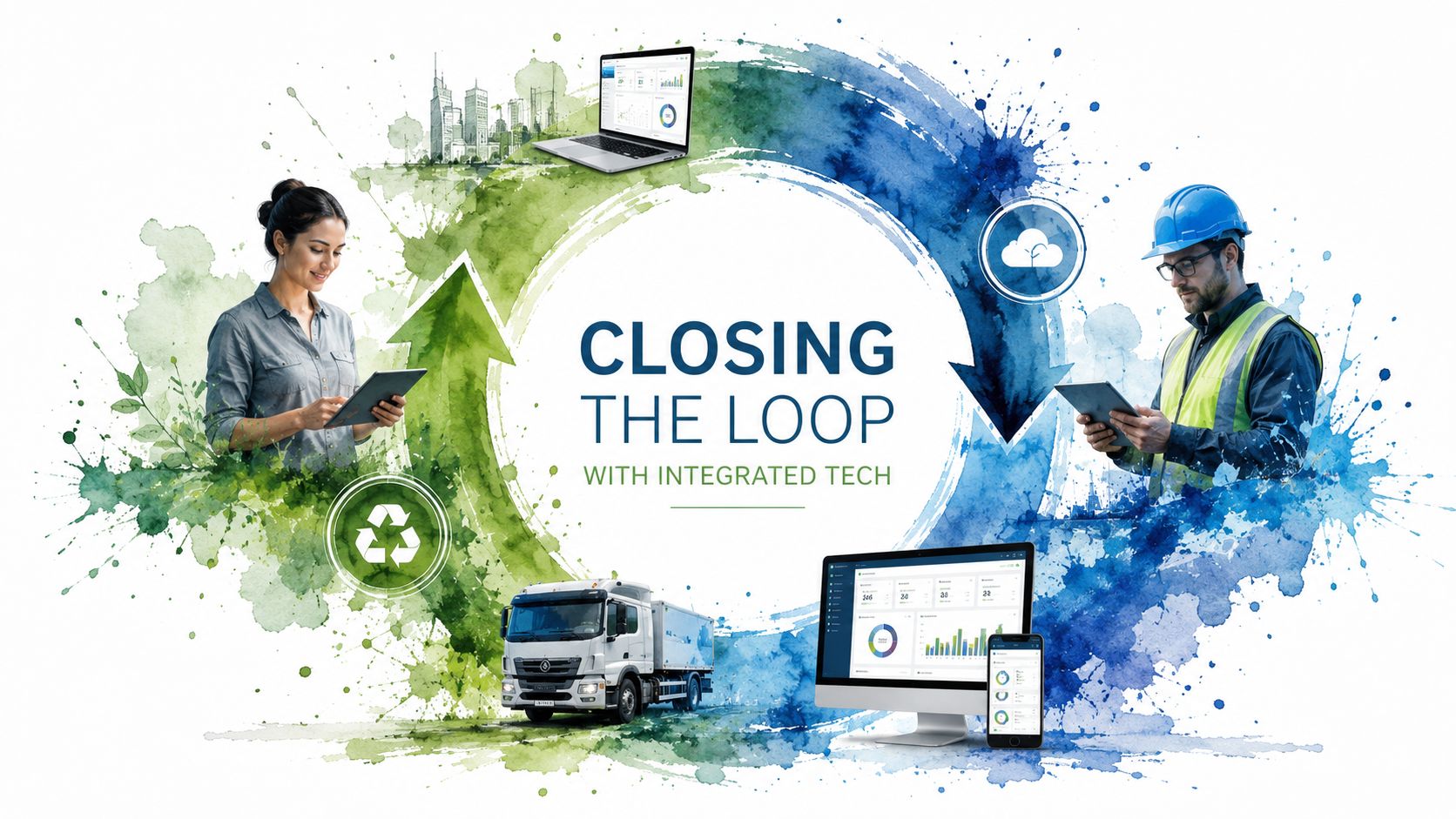
Lead generation without a feedback loop is just expensive guesswork. If you can't trace an inquiry from first click to signed contract, you don't have a growth system. You have a collection of disconnected tactics.
The CRM is where pipeline discipline lives
A practical commercial-cleaning workflow is to define the ideal client profile, then set up CRM lead-source tracking so every inquiry can be tied to a closed contract, then run a channel mix, then review cost per lead, conversion rates, and customer acquisition cost over a 90-day optimization cycle. That phased structure is recommended in commercial cleaning lead generation planning because it forces attribution instead of guesswork.
Volume alone doesn't tell you which channel is worth scaling. A spreadsheet full of names is not a system. A CRM tied to source, stage, and outcome gives you the truth.
Reputation is part of acquisition, not a separate department
The best acquisition systems don't stop after the signed contract. They keep the service experience feeding the next round of demand. Review requests, testimonial capture, and post-job feedback all lower future acquisition friction because they build trust before the next sales conversation even starts.
That's the practical value of an integrated reputation loop. It reduces the cost of convincing the next buyer. It also protects the company from the classic service business problem, which is strong sales, weak retention, and no proof to support either.
A useful internal control is to review where leads stall. If they're arriving but not booking, the issue is often message fit or speed. If they're booking but not closing, the issue may be the buying committee. If they're closing but not recurring, the issue is service experience and account management.
Best practice: treat marketing, sales, service, and reviews as one revenue chain. If any link breaks, the contract value drops.
If you want a cleaner operating system for that chain, CRM for service businesses is the right place to start thinking. Commercial cleaning grows best when the marketing team and the delivery team stop acting like separate worlds.
The Advertising Suite helps service businesses turn lead flow into signed, recurring revenue with strategy, CRM, and reputation management working together. If you're tired of paying for the wrong cleaning leads commercial campaigns bring in, visit The Advertising Suite and see how a revenue-first partner can plug the leaks in your pipeline.