
A franchise network can add outlets and still lose revenue when customers can't identify the right branch, feel confident in its reviews, or complete a booking. Industry franchise outlook data projected nearly $900 billion in U.S. output in 2024. Each location must turn its share of that scale into local demand.
Customers discover branches through search, maps, social media, review sites, and AI tools. Managing those channels takes more than copying a campaign across markets: each branch has a distinct service area, reputation, and set of conversion barriers. Review performance is also an operating signal. When unresolved complaints point to service problems, fix them before increasing ad spend. A consistent brand matters, but local execution must reflect customer experience and produce measurable results.
Why Multi Location Marketing Matters More Than Ever
The U.S. franchise network was projected to grow by about 1.9% in 2024, according to the industry outlook cited earlier. That growth means more branches competing for attention in local markets. For marketers, the challenge is to help each location stand out across search, maps, social media, review sites, and AI-assisted discovery.
Each outlet serves a distinct customer base. A national campaign can build recognition, but local customers still need accurate branch information, a relevant offer, and a clear next step. Managing these details across many locations takes shared standards and location-level execution.
Growth depends on more than opening locations
A larger network does not automatically make existing branches more productive. A location can have demand and still lose customers through outdated business details, unanswered calls, concerning reviews, or a landing page that routes everyone to a generic contact form. More advertising can amplify those problems without fixing them.
Multi location marketing should connect discovery with lead handling and customer experience. Corporate teams can set standards for branding, measurement, and customer care while tracking each location's results separately.
Operator's rule: Allocate spend according to each location's opportunity, readiness, and ability to convert, not simply by dividing the budget evenly.
Location-level results help managers separate a traffic problem from a service problem. If a branch receives relevant inquiries but fails to turn them into appointments or sales, check how leads are handled before paying for more reach.
For operators building that foundation, local business marketing connects local visibility with the next action a customer can take. A larger footprint creates opportunity; consistent execution makes it commercially useful.
The Core Principle of Location-Level Marketing
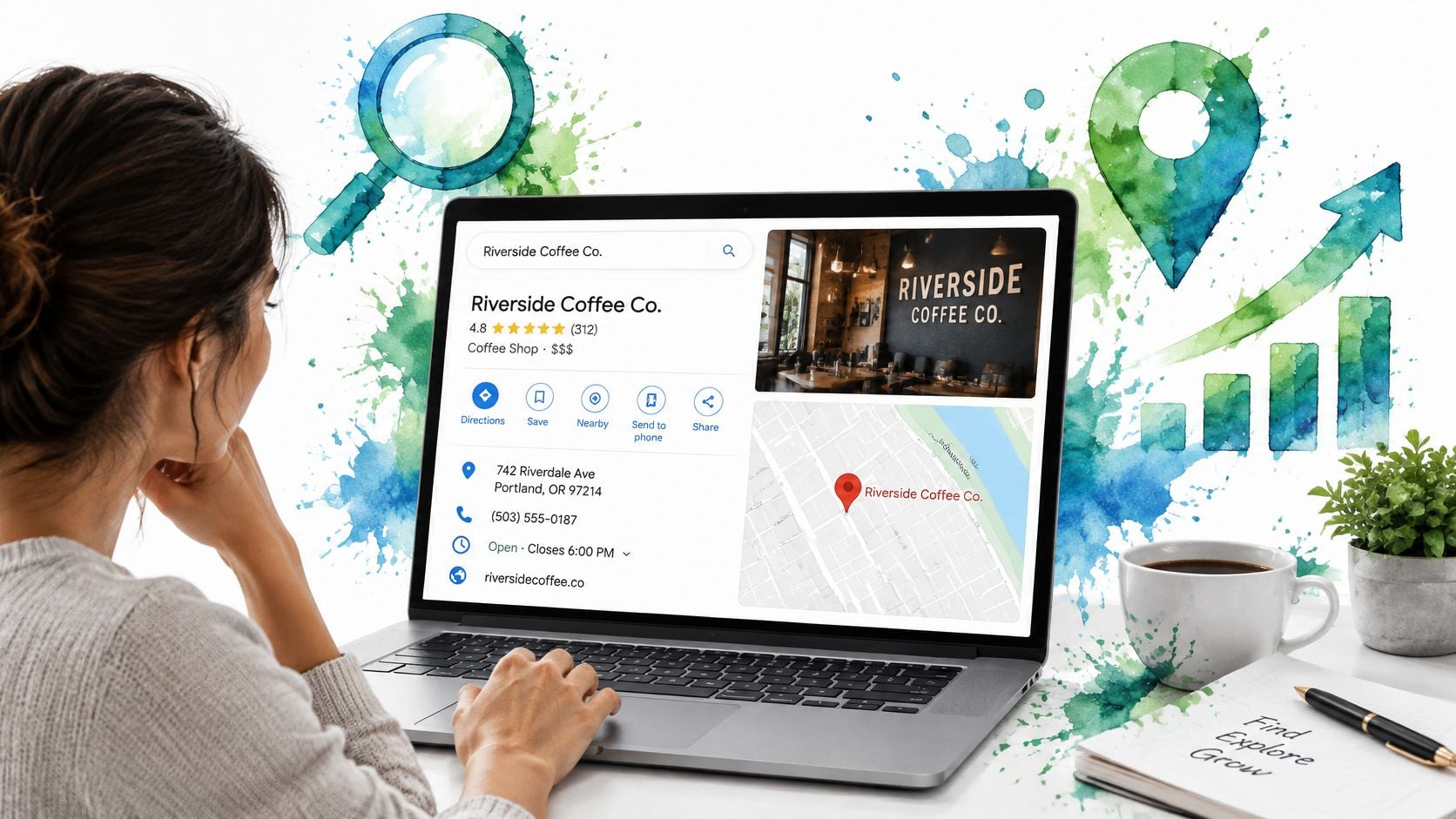
A national brand isn't a single local search result. Customers search from specific places, and individual branches compete with nearby alternatives. Treat every location as its own local entity, not as a pin beneath one national profile.
Google identifies relevance, distance, and prominence as the primary factors in local rankings. Relevance reflects how closely a Business Profile matches a query; distance depends on the searcher's location or the location Google estimates; prominence reflects how well-known the business is and can be influenced by backlinks, review volume, and review sentiment (Google's explanation of local ranking).
Why a strong brand can still lose locally
Consider a familiar brand with a new branch in a busy market. The company may be well-known overall, but if that location has incorrect hours, missing services, few reviews, or a weak local page, it may not appear as a compelling match for nearby customers. National authority doesn't erase location-level gaps.
The factors work together. A complete profile that clearly matches a search can improve relevance; geography determines which nearby branches are in the running; and prominence affects how a location compares with other eligible options. Marketers can't control where a searcher is, but they can improve the accuracy and strength of each branch's local presence.
That cause-and-effect relationship should shape budget decisions. An equal budget split feels fair, but fairness isn't a performance strategy. Prioritize branches with meaningful local demand and fixable weaknesses, such as incomplete information, low review activity, or poor conversion performance. A branch with strong results may need less support than a nearby market with similar opportunity and weaker execution.
Local relevance isn't created by adding a city name to corporate copy. It comes from accurate location data, evidence of local trust, and a useful next step for the customer.
Central governance still matters. Corporate should establish brand rules, approved claims, and reporting definitions. Local teams need room to reflect the services, customer questions, and practical realities of their own market. The goal is not identical execution everywhere. It's a consistent experience that makes sense wherever the customer encounters the brand.
Local SEO and Location Pages That Actually Rank
A location profile and a location page do different jobs. The profile helps customers discover a branch and evaluate basic details; the page gives them a useful destination with local information and a clear conversion path. Treating either one as a substitute for the other leaves a gap.
Build a reliable local foundation
Start with the information customers and search systems need to identify the branch. Check each location's name, address, phone number, primary category, service attributes, and opening hours. Keep details aligned between the profile and the company website, and assign someone responsibility for updating changes rather than relying on occasional cleanup.
Then give each branch a dedicated, useful landing page. Include its contact details, services, hours, and location-specific information that helps a customer decide whether to call, book, or visit. Avoid publishing dozens of pages that differ only by city name. A location page should answer real local questions and point to the correct branch, not function as a thin duplicate of the national page.
Manage locally, govern centrally
Local search work becomes difficult to scale when every branch makes changes without a shared process. Set clear rules for what corporate controls and what local teams can update. Corporate can govern naming, brand language, and approved claims; local owners can flag changed hours, service coverage, and community-specific details for review.
Use a location-level checklist to keep routine work visible:
- Profile accuracy: Verify core information and service details for each branch.
- Local page quality: Confirm that the page describes the right location and directs customers to the correct contact or booking path.
- Market-specific signals: Review categories, service-area coverage, citations, locally relevant links, and review activity.
- Performance tracking: Compare profile completeness, local traffic, calls, bookings, and conversions by location.
A clean dashboard matters more than a polished corporate average. Brand-level reporting can hide branches that have stale information or weak conversion. Segment results by location, then investigate whether low performance comes from visibility, customer experience, or the page itself.
Local search marketing should support that operating discipline: consistent core data, relevant pages for each market, and a way to compare how well locations turn discovery into qualified demand. The payoff isn't a healthier set of listings. It's a more dependable route from local search to a customer action.
Advertising Across Multiple Locations Without Waste
Paid campaigns should reflect the service area each branch can serve. A broad campaign across a whole city or region may reach people who are too far away, while a tightly drawn target can be too small to deliver reliably. The right structure balances geographic relevance with enough audience scale to make the campaign useful.

Set geographic targets around real service areas
Google Ads supports radius targeting, so advertisers can reach people within a specified distance of a business. To set it up, select the campaign, choose Radius under Locations, enter the business address, specify a distance and unit, check the map, and save the target. Google cautions that very small geographic targets may not meet its targeting criteria, so don't assume a narrow radius will generate impressions (Google Ads location and radius targeting).
The practical question isn't “How small can we make the radius?” It's “Where can this branch serve customers well, and is there enough audience in that area for the campaign to work?” A mobile service provider and a walk-in location may need different geographic boundaries. Test the structure against actual service coverage and lead quality, not a map that merely looks precise.
Google Ads can also use Business Profile locations as advertising targets. That gives marketers another way to organize campaigns around specific branches rather than relying only on broad geographic areas. Campaign budgets, creative, landing pages, and lead measurement can then align with one location or a sensible group of locations.
Keep the branch experience intact
Even well-targeted ads waste potential when they send every customer to the same homepage. Route each ad to the location page that matches its market, use the correct phone number, and make the next step clear. If nearby branches overlap, decide how each campaign should handle that overlap before separate teams bid against one another or compete for the same lead.
Google Ads for local businesses is most useful when campaign design and the branch's ability to handle demand stay connected. Don't scale spend because impressions or clicks rise. Check whether the right location receives qualified inquiries and can respond promptly.
The trade-off is straightforward: broader targeting can increase reach but may dilute local relevance; tighter targeting can improve alignment but may restrict delivery. Adjust based on service coverage and actual conversion quality. A precise-looking map is not proof of an efficient campaign.
Review Management as a Revenue System
Reviews influence more than reputation. They help customers assess whether a location is trustworthy and give operators clues about the service experience. A 2025 survey of 1,026 U.S. adults found that 89% of consumers would use a business that responds to all reviews, 44% would use a business that doesn't respond to reviews, and 74% check at least two review platforms when researching local businesses (BrightLocal's 2025 review survey).
Read the signal at branch level
| Consumer review behavior | Percentage |
|---|---|
| Would use a business that responds to all reviews | 89% |
| Would use a business that doesn't respond to reviews | 44% |
| Check at least two review platforms | 74% |
A corporate average can make reputation look stable while individual branches collect unanswered complaints. Track review count, sentiment, rating, unanswered reviews, response speed, and platform coverage by location. Flag branches that fall below the 89% response benchmark in the survey, but don't mistake that benchmark for a guarantee of conversion.
Build a workflow that routes new review alerts to an accountable owner, sets response-time expectations, and escalates sensitive complaints for appropriate handling. Decide in advance who can respond locally, which issues need corporate review, and how the team will handle privacy or safety concerns. Templates can protect brand and legal requirements, but the response should still address the customer's specific experience. A generic reply may satisfy a process checklist while making the business sound inattentive.
Treat recurring complaints as operating data
A location's reviews can reveal a service issue that marketing alone can't solve. If customers repeatedly describe long waits, missed appointments, or incorrect hours, investigate staffing and process before sending more paid traffic to that branch. Reputation management isn't just a task for customer service. It can act as an early warning system for problems that affect conversion and retention.
Review requests should invite authentic feedback without steering customers toward a particular sentiment. The FTC's Consumer Reviews and Testimonials Rule took effect on October 21, 2024, and authorizes courts to impose civil penalties for knowing violations. It prohibits practices including creating or distributing fake reviews and conditioning incentives on a particular positive or negative opinion; it also bars certain intimidation or unfounded legal threats intended to suppress negative reviews (FTC rule announcement).
Review management works best as a governed operating system: automate routing and visibility, but leave consequential responses to human judgment. Connect review patterns to calls, bookings, and conversion quality by location. That gives managers a basis for deciding whether to improve the customer experience, adjust campaign support, or both.
Measuring Success Across Search, Social, Maps, and AI
A customer can find a location on social media, check its map listing, read a few reviews, and call from the location page without ever touching a traditional search result. That path is now typical. A study found that 83% of consumers use traditional search engines for discovery, while 73% use social media, 58% use navigation apps, and 19% use AI tools, according to a 2025 multi-platform discovery study. The same research reported that Gen Z moved across an average of 3.6 platforms before deciding, and that search impressions for multi-location brands fell 10% year over year.
Measure the journey, not just the last click
Strong Google rankings still matter, but they cover only one route into a location. They won't explain why a customer picked one branch over another, or which earlier interaction did the work. Reporting has to follow the places customers search, browse, and evaluate.
Build a consistent view by market, platform, and location. Capture the first known discovery point where it's available, then record assisted interactions: map activity, review engagement, calls, direction requests, bookings, and completed sales. Location-specific phone numbers, booking paths, and campaign links let teams tie each action back to the branch that handled it.
Last-click reporting is convenient. It's also frequently wrong, over-crediting the final interaction and undervaluing the discovery work that happened earlier. A good attribution view makes that limitation visible instead of flattening every journey into a single line item. Compare channel performance within each market rather than rolling results into a brand-level average, because national rollups hide branch-level problems.
Connect measurement to budget decisions
Keep the scorecard practical. For each location, weigh qualified leads, booking or sales outcomes, conversion quality, response handling, and cost against the relevant campaign and market context. Ranking branches by raw lead volume alone misallocates budget. A location that receives fewer inquiries but converts them well may deserve different support than one drowning in leads with weak outcomes.
Review performance belongs on that scorecard as an operating-quality signal. When a branch's ratings slip or complaints cluster around the same issue, treat that as a reason to hold additional spend until the operation stabilizes. Paying to send more customers into a weak experience burns budget twice: once on the media, and again on the negative feedback those customers generate.
Cross-channel attribution earns its place when it answers a budget question: which combinations of discovery and follow-up produce valuable customers in each market? Pair review trends with calls, direction requests, bookings, and revenue where tracking allows, then let the pattern decide whether a branch gets more reach, a journey fix, or a pause.
Putting It All Together With a Real-World Example
Consider a regional HVAC brand whose locations serve different neighborhoods and face different customer concerns. The corporate team starts by auditing each profile for correct contact information, hours, categories, and service details. It then builds useful local landing pages that route customers to the right branch instead of sending every visitor to a generic contact form.
Next, the team aligns paid campaigns with each branch's service area. It uses location-aware targeting, checks whether the audience is large enough to support delivery, and sends each campaign to the matching page. The team also assigns review alerts to local owners, defines escalation rules, and monitors unanswered feedback by branch.
Diagnose before increasing spend
One location attracts inquiries but receives recurring complaints about missed appointments. Instead of increasing its budget, the team investigates scheduling and response handling. It addresses the service issue, tracks whether customer feedback and conversion quality improve, and then reassesses whether additional advertising is justified.
Meanwhile, a different branch has accurate profiles, a responsive team, and steady lead handling but limited local awareness. The company tests increased campaign support there and reports outcomes by location. Its dashboard follows assisted discovery across platforms and connects inquiries with bookings and sales, so a lead generated after a map search doesn't disappear from the story just because the final action happens elsewhere.
The sequence is simple to adapt: maintain accurate branch information, give each location a useful destination, target ads to viable service areas, route reviews to accountable people, and measure customer outcomes by market. Franchise growth projections show why execution across a distributed footprint matters, but adding locations alone doesn't guarantee stronger results. Each branch needs a local system that turns visibility into a good customer experience and measurable business value.
The Advertising Suite combines human-led marketing strategy with paid media, CRM, review management, and conversion support to help multi-location teams connect local discovery with revenue. If you want a growth-focused partner that can work as an extension of your team, visit The Advertising Suite to request a demo or book a growth consult.