Most ad headlines don't fail because they're boring. They fail because they're aimed at the wrong win.
You've been told to optimize for clicks and impressions. That's outdated advice if those clicks don't turn into pipeline, booked calls, purchases, or repeat business. A headline isn't decoration. It's the first filter in your sales process. It should attract the right prospect, repel the wrong one, and set the expectation your landing page can fulfill.
That isn't a new idea. Headline writing became a formalized advertising craft in the early 20th century, and David Ogilvy later helped popularize the view that the headline is the gatekeeper for the rest of the message. Modern testing made that principle measurable through A/B testing on outcomes like click-through rate and conversion rate, rather than leaving it to creative instinct alone, as noted in this history of ad headlines and testing.
Today, that matters even more because digital ad environments are crowded and measurable. Global advertising reached USD 706.4 billion in 2025, with internet advertising at 34.7% of spend and internet plus mobile together at 47.8%. In plain English, your headline is competing in channels where attention is expensive and every weak click costs money.
These 10 headline formulas are built for one thing. Turning ad spend into a predictable profit center. They connect the headline to business intent, platform fit, and conversion behavior, so you're not just writing sharper copy. You're building a revenue-first system that more than 10,000 brands already trust.
1. The Number-Based Promise Headline

If you have a real number, lead with it. Not a fluffy claim. A concrete outcome.
Number-based headlines work because they force specificity. "More leads" is vague. "10,000+ Brands Trust Us" signals scale. "25% off with Membership" signals a clear economic reason to pay attention. People don't buy adjectives. They buy outcomes, proof, and a believable path to value.
For founders, this is one of the strongest headlines for advertising when the offer already has traction. It works especially well on Meta, landing pages, and retargeting ads where trust is the bottleneck.
Where this headline earns its keep
Use number-based promises when you need to answer one question fast. Why should this prospect believe you?
A few examples:
- Trust signal: "Join 10,000+ Brands Using a Results-First Growth Framework"
- Offer signal: "Membership Clients Get 25% Off Services Plus Access to Our CRM"
- Process signal: "3 Steps to Turn Ad Clicks Into Qualified Revenue"
The key is honesty. If you don't have the number, don't use the formula.
Practical rule: Only use figures you can defend on a sales call, on a landing page, and in writing.
On Google Search, keep the number tight and tied to intent. Search traffic wants clarity. On Meta, a stronger pattern is number plus payoff, such as "3 Ways to Stop Wasting Qualified Lead Volume." One channel rewards direct relevance. The other rewards interruption plus intrigue.
How to keep it from sounding fake
Number headlines fail when marketers stuff them with chest-thumping. Prospects can smell fiction.
Use this filter:
- Lead with the buyer outcome: revenue, qualified leads, conversion rate, cost control
- Pair the number with context: membership discount, customer count, framework steps
- Match the promise to the page: if the ad says CRM access, the landing page must show the CRM
That's the revenue-first move. The headline opens the sale, and the page closes the trust gap.
2. The Curiosity Gap Headline

Curiosity works. Cheap clickbait doesn't.
A strong curiosity-gap headline withholds just enough information to trigger action, while still signaling relevance. That's useful when your prospect knows they have a problem but doesn't yet know what caused it. Think wasted search spend, poor lead quality, weak landing page alignment, or disconnected attribution.
Examples:
- The Paid Search Mistake That's Subtly Wasting High-Intent Budget
- Why Good Ads Still Fail After the Click
- The Messaging Gap That Turns Qualified Traffic Into Dead Leads
This formula shines in top-of-funnel education and mid-funnel remarketing. It gets the click by promising resolution, then earns the conversion by delivering the answer fast.
Best use case for Google and Meta
On Meta, curiosity is usually stronger because the user wasn't actively searching for you. The job is to interrupt with a sharp tension point.
On Google, use controlled curiosity. Search users already have intent, so don't get too cute. A headline like "Why Your Search Traffic Doesn't Convert" is better than a vague mystery line. If you're tightening this angle for paid search, study how intent alignment works in this paid search strategy guide.
Curiosity should open a loop, not create confusion.
That distinction matters. Confused people don't convert.
The rule most teams ignore
The body copy has to answer the tension immediately. If your ad says "The Reason Your Leads Go Cold," the landing page can't make the reader dig through generic agency copy. Put the answer near the top. Then show the fix.
Use curiosity headlines when:
- You found a hidden leak: weak follow-up, poor offer framing, low trust signals
- You need education before the sale: attribution, CRM workflows, review response systems
- You want better traffic quality: the right buyer clicks because the tension feels familiar
Done right, curiosity headlines don't chase vanity metrics. They pre-frame the sales conversation.
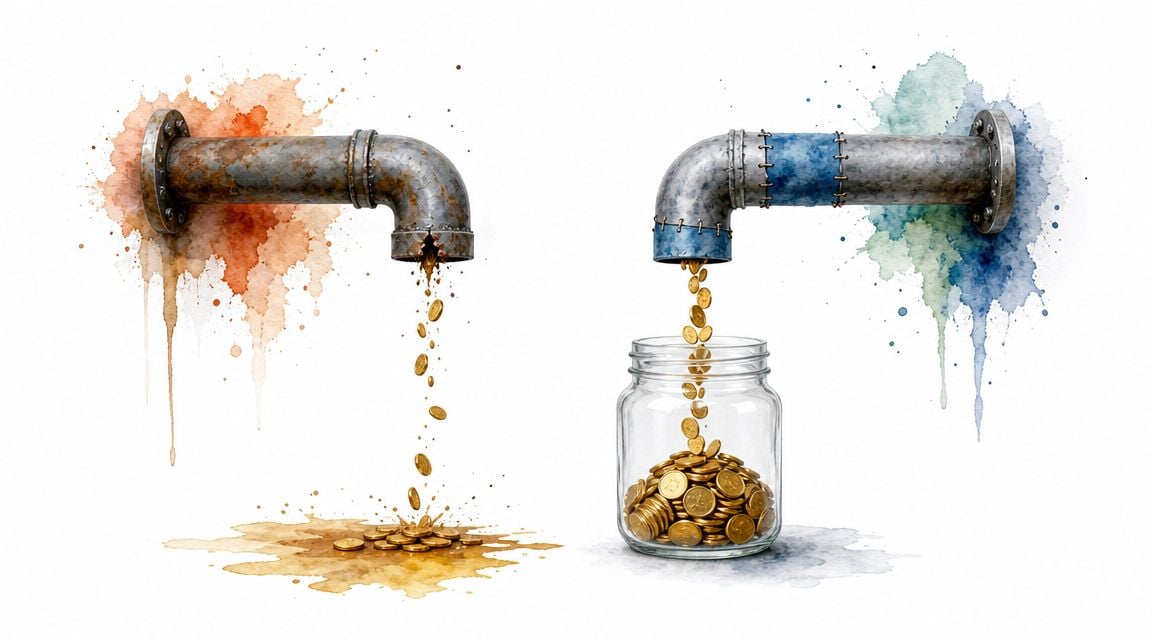
3. The Problem Plus Solution Headline
This is the workhorse. It isn't sexy, but it converts.
Problem-plus-solution headlines work because they mirror how buyers think. They name the pain in plain language, then immediately point to relief. No riddle. No chest beating. Just direct relevance.
Examples:
- Unqualified Leads Draining Your Budget? Fix the Funnel Before You Buy More Traffic
- Bad Reviews Slowing Sales? Centralize Reputation Management Across Locations
- Agency-Burned and Skeptical? Build Around Revenue Tracking, Not Vanity Reports
This formula is ideal for founders who are already feeling the pain. They don't need entertainment. They need clarity.
Why it works with skeptical buyers
The best prospects often arrive with scar tissue. They've paid for traffic before. They've heard the promises. They're done funding "awareness" campaigns that never become revenue.
A direct problem-plus-solution headline respects that skepticism. It says, "We know what hurts. Here's the fix." If you're building campaigns for smaller brands, this angle pairs well with these advertisement ideas for small businesses, especially when budget efficiency matters more than broad reach.
Use it in these scenarios:
- Search campaigns: when the user is actively looking for a solution
- Landing page hero copy: when bounce risk is high
- Retargeting ads: when the buyer needs a clearer reason to come back
How to sharpen the formula
Don't name a vague problem like "marketing challenges." Name the operational issue the buyer complains about in meetings.
Good:
- Leads aren't qualified
- Reviews are inconsistent
- Sales follow-up is slow
- Traffic doesn't convert
Weak:
- Growth has stalled
- Marketing is difficult
- Results aren't ideal
The more precisely you name the pain, the more qualified the click becomes.
This is one of the most dependable headlines for advertising because it filters early. Better filtering usually means better downstream sales conversations.
4. The Exclusivity and Access Headline

People want outcomes. They also want access.
Exclusivity headlines perform when your offer has a real boundary around it. Membership, application review, hands-on strategic support, proprietary CRM access, review management infrastructure. If everyone gets in and everything is available to everyone, don't fake exclusivity. It backfires.
For The Advertising Suite, this angle is strong because the business isn't just selling services. It's selling a system. The Membership includes a 25% discount on services and grants access to the proprietary CRM, which gives the headline a genuine access layer.
What to say instead of "limited time only"
Weak exclusivity sounds like a department store sale. Strong exclusivity sounds like a strategic advantage.
Try:
- Membership Clients Access the CRM That Connects Marketing to Follow-Up
- Built for Scale-Ready SMBs Ready for a Growth-Tech Partner
- Apply for a Revenue-First System, Not Another Vendor Relationship
This formula works well in founder-focused ads, consult booking pages, and sales emails aimed at businesses that have already outgrown freelancers or disconnected tools.
A few practical triggers:
- Membership value: discount plus software access
- Strategic access: direct support instead of generic account management
- Operational access: one system for leads, follow-up, and reputation
When this headline converts best
Use exclusivity when the buyer already understands the category and is comparing options. At that stage, access and differentiation matter more than broad education.
It also works when your audience is tired of patchwork solutions. Service businesses don't want five tools and three vendors. They want one accountable partner with a working system behind the ads.
Keep the tone confident, not smug. You're not trying to sound elite. You're showing that the offer is built for businesses serious about revenue.
5. The How-To Headline
The how-to headline still works because buyers love clarity. They want a path. They want steps. They want to know whether you understand execution.
This format is especially effective for educational ads, downloadable assets, landing pages, webinars, and long-form content. It performs best when your buyer is asking, "How do we fix this without adding chaos?"
Examples:
- How to Turn Ad Traffic Into Qualified Pipeline
- How to Audit Your Landing Page for Conversion Leaks
- How to Connect Paid Media, CRM Follow-Up, and Review Growth
Why this format builds trust fast
A how-to headline positions you as a partner who can teach the process, not just sell the service. That's important when founders have been burned before. They don't want mystery. They want competence.
Modern headline testing reinforces this mindset. Current guidance treats headline structure as a measurable optimization problem, and recommends testing variables like persona framing, category anchoring, curiosity, and urgency, while keeping the headline promise aligned with the post-click experience, as explained in this overview of what to test in ad headlines.
That's the operational takeaway. Don't write one clever headline and declare victory. Test multiple versions against a real business outcome.
Best applications for how-to headlines
Use this formula when the audience needs confidence before commitment.
- For search intent: "How to Improve Lead Quality From Paid Search"
- For Meta education: "How to Stop Paying for Clicks That Never Close"
- For lead magnets: "How to Build a Revenue-First Follow-Up System"
A few rules make it stronger:
- Promise a process: audit, framework, workflow, system
- Name the result: qualified leads, cleaner attribution, stronger conversion
- Keep it executable: buyers should believe the path is real
How-to headlines don't need hype. They need a credible roadmap.
6. The Social Proof and Authority Headline
Authority isn't about sounding important. It's about reducing buyer risk.
When you use social proof in headlines for advertising, you answer a silent question. "Has this worked for businesses like mine?" That question gets louder when ad costs rise, teams are lean, and trust is low.
The Advertising Suite has a straightforward authority asset. More than 10,000 satisfied customers. That's useful because it's broad enough to show market acceptance and simple enough to understand immediately.
What to emphasize
Good authority headlines don't just say you're trusted. They tell the buyer what that trust is attached to.
Examples:
- 10,000+ Brands Chose a Revenue-First Alternative to Vanity Metrics
- Trusted by 10,000+ Customers for Advertising, CRM, and Review Management
- The Growth-Tech Hybrid Built for Businesses That Need Accountability
If your business depends on reputation, pair authority with proof of customer experience. A service company with weak reviews can kill conversion after the click, even when the ad is solid. That's why reputation management belongs in the acquisition conversation, and why improving Google reviews for local credibility isn't a side project. It's part of conversion.
Field note: Trust starts before the form fill. Your ad headline, landing page proof, and public reviews all shape the same buying decision.
Where authority headlines are strongest
Use them in:
- Branded search campaigns
- Comparison-stage landing pages
- Retargeting sequences
- Homepage hero sections
The mistake is using authority with no context. "Trusted by many" says nothing. "10,000+ customers using a revenue-first framework" says a lot more.
Authority headlines work best when they remove uncertainty, not when they inflate ego.
7. The Objection-Busting Headline
This is one of the most profitable formulas because it attacks bad assumptions directly.
A good objection-busting headline names the belief that's holding the buyer back, then flips it. That pattern grabs attention because it challenges something the reader already thinks is true.
Examples:
- More Traffic Won't Fix a Broken Follow-Up System
- Stop Optimizing for Clicks. Start Optimizing for Revenue
- You Don't Need More Leads. You Need Better Lead Handling
These headlines are strong when your market is saturated with outdated advice. And frankly, a lot of advertising advice still worships clicks as if they pay invoices.
Where this gets real traction
Use objection-busting angles when your audience has likely tried the common playbook and failed. Founders who have bought traffic without fixing the funnel are ideal for this message.
For search ads, headline quality matters more than often acknowledged. One expert analysis on Google Search Ads notes that headline improvements can move CTR from roughly 1 to 2 percent up to 4 to 8 percent in strong cases, when the headline aligns tightly to user intent and leads with benefits rather than bland features. That doesn't mean every campaign will do it. It means the headline is often the most impactful text element in the unit.
So yes, challenge the lazy assumption. The wrong message can waste even high-intent traffic.
Three objections worth attacking
- Budget objection: "You don't need to spend more first"
- complexity objection: "You don't need more tools. You need connected systems"
- trust objection: "You don't need another agency report. You need visibility into revenue"
This formula works because it resets the frame. Instead of following the buyer's old logic, you replace it with a better one.
Used well, objection-busting headlines don't create friction. They remove it.
8. The Specific Target Audience Headline
The fastest way to improve relevance is to name the buyer.
Specific audience headlines work because they let the right prospect self-identify instantly. If you're speaking to local service providers, franchise operators, or scale-ready SMBs, say it. Don't blur everyone together under "business owners."
Examples:
- Local Service Providers Who Need More Qualified Calls, Not More Noise
- Franchise Teams That Need One System for Leads and Reputation
- Scale-Ready SMBs Looking for a Growth Partner, Not Another Vendor
Precision beats broad appeal
This headline type is especially useful in paid social, display, and segmented landing pages. A founder scrolling quickly will ignore vague messaging. But they'll stop when they feel directly called out.
That doesn't mean stuffing every industry label into one line. Pick the clearest identity trigger:
- Business type: HVAC, legal, medical, multi-location service brand
- growth stage: scale-ready, agency-burned, expanding locations
- role: founder, operator, marketing leader
If you're targeting local brands, this audience-specific framing should match the acquisition offer and local funnel, such as lead generation for local businesses.
How to use this without narrowing too hard
Specificity should attract the right buyer, not eliminate adjacent fits.
A better audience headline says:
- For Multi-Location Service Brands That Need Consistency Across Every Location
A weaker one says:
- For Dentists in One Particular Zip Code Who Need Tuesday Appointments
Be specific enough to feel relevant. Broad enough to scale.
This is one of the most practical headlines for advertising because relevance usually beats cleverness, especially when you're buying cold attention.
9. The FOMO and Urgency Headline
Urgency works when it's earned. It fails when it's fake.
Most businesses overdo this one. They shout "last chance" every week, train the market not to believe them, and then wonder why response fades. Real urgency comes from capacity, timing, seasonal demand, pricing changes, or competitive movement. If none of those exist, don't manufacture panic.
Examples:
- Book Before Peak Season and Fix the Funnel Before Demand Spikes
- New Member Capacity Is Limited Because Strategy Is Hands-On
- Competitors Are Improving Conversion While You're Still Buying More Clicks
What real urgency looks like
Strong urgency headlines tie action to a business consequence. Not vague scarcity. A real operational consequence.
Good urgency triggers:
- Capacity: limited onboarding bandwidth
- Timing: campaign setup before a key sales period
- Revenue leakage: every week of delay means more wasted traffic
- Conversion lag: leads keep slipping because follow-up is weak
If the issue is post-click performance, urgency is justified. Paying for traffic while your funnel leaks isn't patience. It's waste. If that's your bottleneck, focus on improving conversion rate across the funnel before buying more volume.
Waiting to fix conversion is expensive because the ad platform still charges you while your funnel underperforms.
Platform-specific use
On Meta, urgency can be emotional and momentum-driven. On Google, keep it practical and tied to timing or need state.
For example:
- Meta: "Still Sending Paid Traffic to a Weak Landing Page?"
- Google: "Fix Low Conversion From Existing Ad Traffic"
The smartest urgency headlines don't pressure people. They make the cost of delay obvious.
10. The Transformation Story Headline
Story sells because buyers want to see themselves in the outcome.
A transformation headline frames movement from a painful starting point to a better operating reality. Not fantasy. Progress. That's what makes it powerful for founders who've lost trust in polished promises.
Examples:
- From Scattered Leads to a Managed Revenue Pipeline
- From Strong Ad Clicks to Better Sales Conversations
- From Reputation Problems to a More Credible Local Brand
Why this headline lands with skeptical founders
Most buyers aren't just buying traffic. They're buying relief from chaos.
A transformation headline works because it captures both the tactical and emotional shift:
- disorganized follow-up becomes structured pipeline
- inconsistent reviews become trust assets
- disconnected marketing becomes one accountable system
That matters for businesses that have bounced between vendors, tools, and dashboards without getting a clear line to revenue. The story isn't "we ran ads." The story is "we made growth easier to manage."
How to keep the story believable
Don't write like a movie trailer. Write like an operator.
Use before-and-after contrasts that reflect real business life:
- Before: leads came in, but no one followed up consistently
- After: the team used a CRM-driven process to track and respond
- Before: locations had uneven public trust
- After: review management created a more reliable customer experience
You don't need inflated numbers for this formula to work. In many cases, a clear operational transformation is more persuasive than a loud claim.
Done right, the transformation headline helps the buyer picture the next version of their business. That's often what pushes a serious prospect to book the call.
10-Point Advertising Headline Comparison
| Headline Type | Implementation Complexity | Resource Requirements | Expected Outcomes | Ideal Use Cases | Key Advantages |
|---|---|---|---|---|---|
| The Number-Based Promise Headline | Medium, needs verifiable claims and careful wording | Case studies, audited data, legal/marketing review | Measurable lifts in trust and conversions when credible | Performance ads, ROAS-focused landing pages, paid campaigns | Specificity and urgency; appeals to analytical buyers |
| The Curiosity Gap / Open Loop Headline | Low–Medium, craft intrigue and ensure follow-through | Strong copywriting; supporting content that satisfies curiosity | Very high CTR; conversion depends on content delivery | Awareness campaigns, social feeds, cold-audience outreach | Exceptional stopping power; drives clicks and engagement |
| The Problem + Solution Headline | Low, straightforward formula if problem is accurate | Customer research, clear solution messaging, supporting proof | High relevance and conversion due to direct resonance | Consideration/conversion funnels, targeted ads, landing pages | Validates pain points quickly; easy to personalize |
| The Exclusivity/Access Headline | Medium, requires real scarcity mechanics and consistency | Membership infrastructure, limited spots, testimonials | Higher perceived value and higher-quality leads; lower volume | Memberships, masterminds, premium offers, gated programs | Leverages scarcity and belonging; attracts premium clients |
| The How-To / Tutorial Headline | Medium–High, needs substantive, actionable content | Expert creators, step-by-step guides, downloads or templates | Builds authority and qualified traffic; slower direct conversions | Content marketing, lead gen funnels, educational sequences | Positions brand as expert; strong SEO and shareability |
| The Social Proof / Authority Headline | Low–Medium, collect and present credible proof | Testimonials, metrics, awards, logos, case studies | Reduces skepticism; increases conversions and trust rapidly | Landing pages, cold traffic credibility-building, ads | Lowers perceived risk; scalable credibility in competitive markets |
| The Objection-Busting / Counter-Intuitive Headline | Medium–High, must be evidence-backed and nuanced | Research, data, case studies, thought-leadership assets | High engagement and discussion; memorable positioning | Thought leadership, differentiation campaigns, mid-funnel content | Surprises audience; positions brand as innovative and credible |
| The Specific Target Audience Headline | Low–Medium, requires precise segmentation | Audience research, segmented creatives, tailored landing pages | Higher CTR and conversion; reduced wasted ad spend | ABM, verticalized campaigns, segmented ad sets | Exceptional relevance; easier personalization and higher ROI |
| The FOMO / Urgency Headline | Low–Medium, must ensure genuine scarcity to stay credible | Operational limits, timed offers, countdown creatives | Immediate action and higher short-term conversions | Product launches, limited offers, retargeting and cart recovery | Drives fast decisions; increases funnel velocity and conversions |
| The Transformation Story / Before-After Headline | Medium, needs real client stories and narrative structure | Detailed case studies, permissions, multimedia assets | Strong emotional resonance; persuasive conversion over time | Case studies, video testimonials, mid-to-bottom funnel content | Evokes aspiration; demonstrates tangible, relatable results |
From Headline to High-Value Client Your Next Step
A killer headline gets attention. It doesn't create revenue by itself.
Revenue comes from sequence. The ad catches intent. The landing page confirms the promise. The offer makes sense. The CRM captures the lead. The follow-up turns interest into conversation. The reputation layer reinforces trust before the sale and after it. If any one of those pieces breaks, your headline ends up carrying too much weight.
That's why so many businesses think their ads are the problem when the actual issue sits further down the funnel. They buy traffic before fixing the handoff. They chase CTR before tightening qualification. They rewrite headlines while leads sit untouched in an inbox. That isn't a copy problem. It's a systems problem.
The smart move is to treat headlines for advertising as the front door to a larger conversion framework. Every headline should match one of three business jobs:
- Attract the right buyer
- Set the right expectation
- Move the prospect to the next high-intent action
If your headline does those three things, you've got an advantage. If it only gets clicks, you've got an expense.
Most traditional agencies often fall short. They stop at traffic and reporting. A growth-focused partner builds the entire chain from message to conversion to retention. This constitutes a significant advantage of a growth-tech hybrid model. Strategy and software work together. Creative doesn't live in isolation. The ad, the landing page, the CRM, and the review engine all support the same revenue goal.
For service-based businesses, that alignment matters even more. A local prospect might click because of the ad headline, but they'll decide based on the full experience. Can they trust you? Can they book easily? Do your reviews support the promise? Does someone follow up fast? Advertising doesn't end at the click. It starts there.
For scale-ready SMBs, the same rule applies. Growth stalls when execution is fragmented. One team runs ads. Another handles leads. Nobody owns the conversion journey. The result is familiar. High spend, muddy attribution, weak accountability. Strong headlines can improve response, but sustainable growth comes from connecting acquisition to operations.
That's the difference between vanity metrics and a revenue machine. One looks good in a report. The other helps you hire, expand, and sleep better.
If you're serious about turning ad spend into measurable growth, tighten the headline. Then tighten everything that comes after it. That's how you turn attention into high-value clients, and high-value clients into durable revenue.
If you're done paying for clicks that never become customers, The Advertising Suite is built for that next step. We combine strategic creative, omni-channel execution, CRO, a proprietary CRM, and review management into one revenue-first system. Request a Demo, book a Growth Consult, or explore the Membership for the 25% service discount and software access. We're here to operate as an extension of your team.