

Stop chasing clicks. Most franchise marketing strategies still revolve around impressions, traffic charts, and platform dashboards that look busy but don't explain why one location grows while another stalls. That's why so many franchisees feel agency-burned. They were sold activity, not revenue.
The fix isn't “more marketing.” It's a tighter system. Digital marketing now drives 65% of new franchise leads, and local SEO drives nearly one-fifth of new franchise sign-ups, according to franchise marketing statistics compiled here. If your network still treats digital as a side channel instead of the growth engine, you're leaving expansion to chance.
The strongest franchise brands don't run isolated campaigns. They connect local visibility, lead capture, follow-up, reviews, and reporting into one operating model. That's the difference between a brand that buys attention and a brand that compounds revenue.
At The Advertising Suite, that's how we think. We're a growth-tech hybrid, not another agency throwing reports over the fence. Strategy matters. So does software. So does customer experience after the click. If those three pieces aren't aligned, your ad spend leaks.
Here are 10 battle-tested franchise marketing strategies that build a predictable revenue engine.
1. Localized Digital Dominance and Multi-Location Brand Strategy
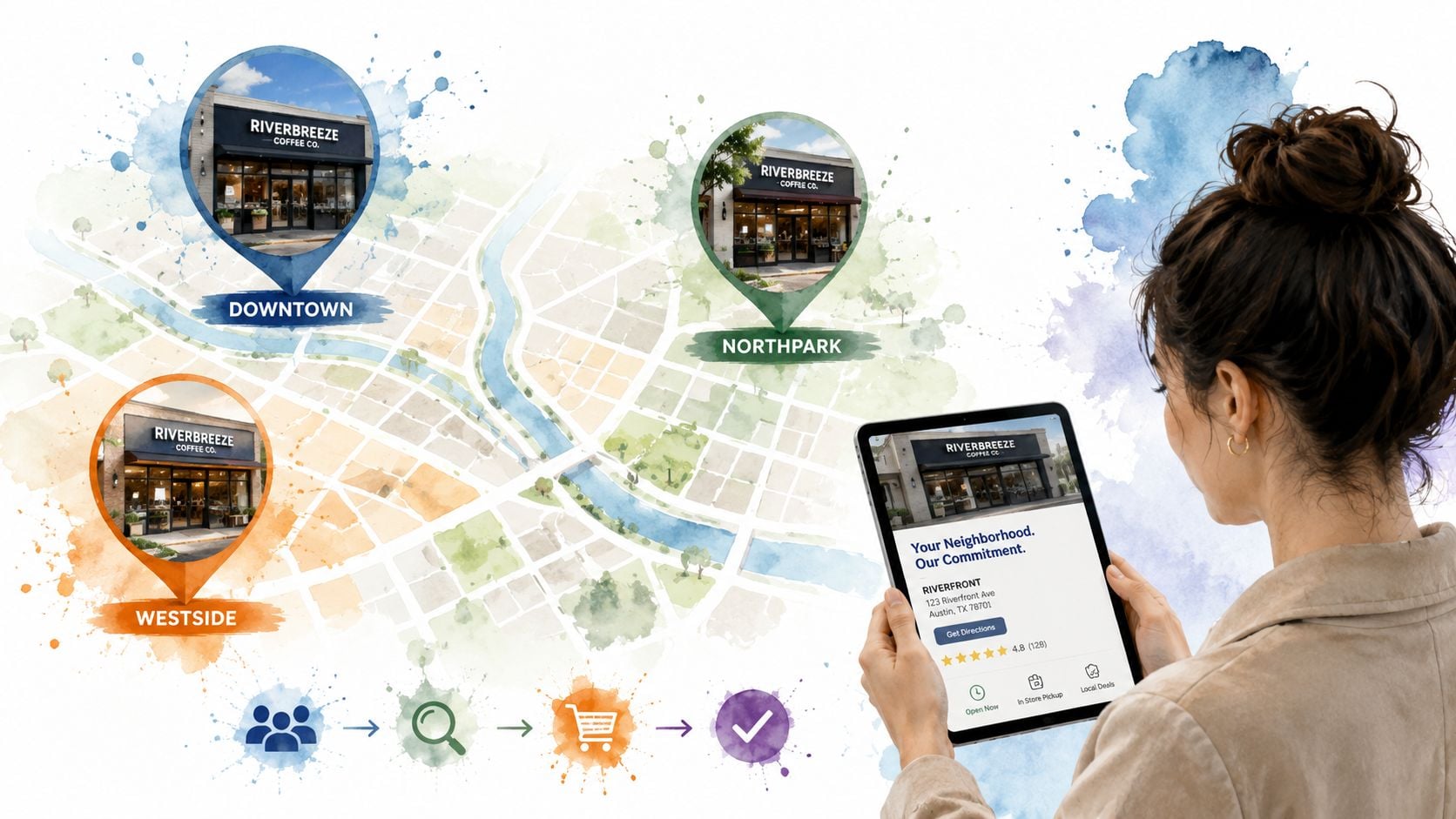
A national brand without local execution is just expensive wallpaper. Every franchise location needs its own digital footprint, its own conversion path, and its own local proof of trust.
Think about how service brands operate in real life. An Anytime Fitness location doesn't win because the parent brand exists. It wins because the local offer, local page, local reviews, and local follow-up make joining easy. Great Clips and Servpro work the same way. Corporate brand power opens the door. Local relevance closes the deal.
Build one brand with many local profit centers
Treat each unit like a revenue center, not a pin on a map. That means each location should have its own landing pages, Google Business Profile governance, localized offers, and a clean handoff into a shared CRM.
The tension here is real. You need local flexibility without brand drift. A 2025 to 2026 projection highlighted by Wrapmate's franchise marketing analysis says franchises with unmanaged local Google Business Profiles can see a 30 to 40% lower lead conversion rate than brands using centralized, real-time data governance. The same analysis also argues that over-centralization can reduce local responsiveness by 25%.
Practical rule: Centralize the guardrails. Decentralize the market insight.
What to operationalize now
- Sync customer data network-wide: Use a proprietary CRM across all locations so sales activity, lead source, and follow-up don't live in separate systems.
- Score locations on revenue, not noise: Show unit leaders lead volume, conversion quality, booked jobs, and closed revenue. Clicks belong in the background.
- Give franchisees approved launch kits: Pre-approved ad templates, offer frameworks, and page structures reduce delay and keep compliance intact.
- Review local performance quarterly: Compare top and bottom performers by location, then coach the laggards with specifics, not generic encouragement.
- Automate review management: Reputation is local. Your process for generating and responding to reviews should be systematic.
Franchise marketing strategies cease to be theoretical. A localized digital system gives every location room to win without letting the brand fracture.
2. Reputation-Driven Lead Generation and the Review-to-Revenue Engine
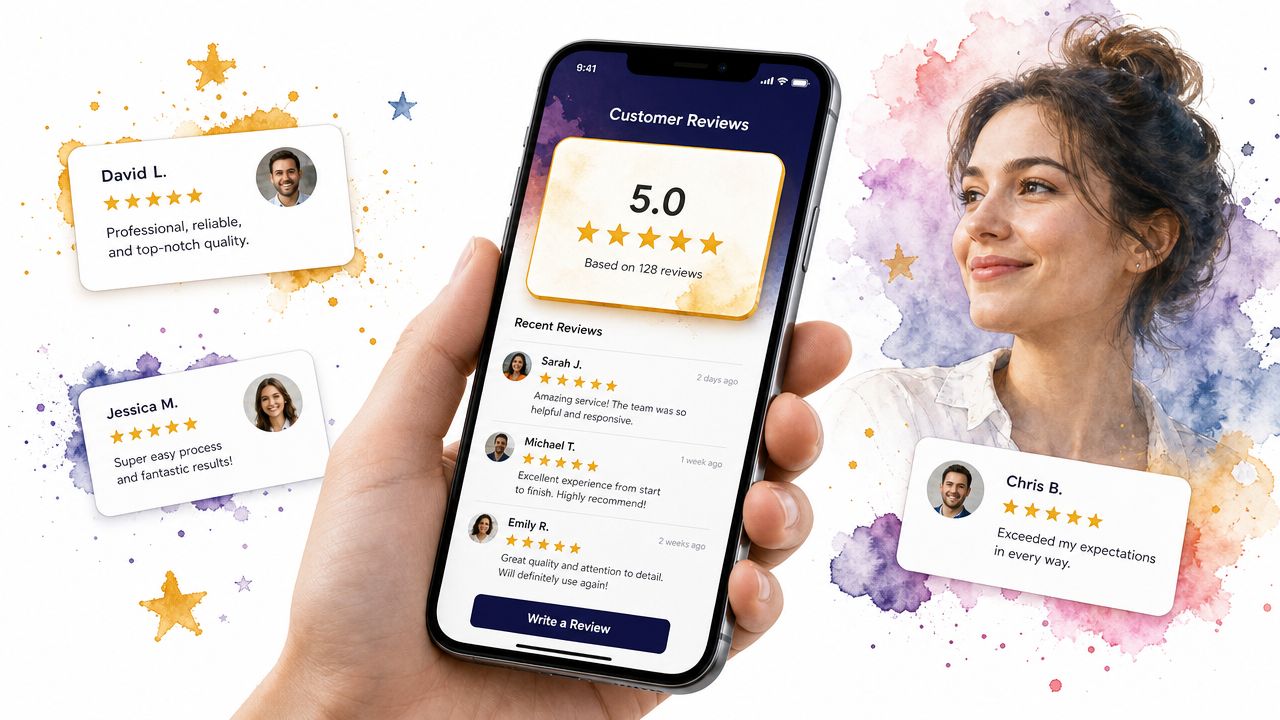
Reviews aren't a vanity layer. They are part of the sales process.
For service-based franchises, especially HVAC, legal, medical, and home services, buyers often decide whether to contact you before they ever fill out a form. They scan your rating, read two or three recent comments, and make a snap judgment about competence, speed, and trust. That's not branding fluff. That's lead qualification happening in public.
A local HVAC franchise with strong review velocity will usually convert more high-intent calls than a franchise with the same ad budget and weaker social proof. Medical and legal buyers behave the same way. They don't want the most “creative” brand. They want the safest credible choice.
Reviews need a system, not reminders
Manual review gathering breaks down fast across multiple locations. Some owners ask consistently. Some forget. Some ask at the wrong moment. Some respond to negative feedback emotionally, which is a polite way to say badly.
That's why review generation needs to sit inside your operating system. A strong reputation management strategy automates requests at the point of highest satisfaction, routes responses through brand-approved workflows, and keeps corporate visibility intact.
Reviews pre-sell the lead before your team ever answers the phone.
Turn reputation into a lead asset
- Trigger review requests automatically: Send them after a completed service, resolved support issue, or successful appointment.
- Respond fast with approved messaging: Every positive and negative review needs a professional response that protects the brand and shows accountability.
- Mine review language for ad copy: Your customers often write your best headlines for you. Pull recurring trust phrases into paid search and landing pages.
- Push review visibility into the CRM: Sales teams should see reputation context before they call a prospect.
- Make franchisee accountability visible: A shared dashboard changes behavior fast when everyone can see who's building trust and who's neglecting it.
Franchise marketing strategies that ignore reviews usually overpay for demand they could've converted more efficiently. Trust lowers friction. Friction kills revenue.
3. Performance-First Creative Ecosystem and Data-Driven Content Rotation

Most franchise creative decisions are still driven by taste. Someone at corporate likes a headline. A franchisee prefers a photo. A regional manager wants “something fresh.” That's how weak creative survives for months.
Winning brands treat creative like inventory. Every image, headline, video, testimonial, and offer earns its place by producing high-intent revenue. If it doesn't pull its weight, it gets cut.
This matters even more in franchises because creative has to scale across locations. A legal service franchise may find founder-story videos build trust faster than generic office visuals. A home services brand may learn that before-and-after content beats broad service messaging. An e-commerce franchise may discover lifestyle imagery converts better than polished product-only shots in cold traffic. The lesson is the same. Test, learn, distribute, repeat.
Build a shared library of proven assets
Creative should never live in random folders, text threads, or one designer's memory. Build a centralized asset library with tagged winners by audience, market, funnel stage, and offer type.
Then make local access easy. Franchisees should be able to pull approved assets, localize the offer, and launch without reinventing the message.
- Test against revenue signals: Measure booked calls, qualified leads, sales pipeline movement, and closed business.
- Separate cold and warm creative: What introduces the brand rarely closes the sale. Build assets for each stage.
- Document why an asset wins: Was it urgency, trust, visual clarity, local specificity, or stronger proof?
- Retire losers quickly: Don't let underperformers stay active because someone likes them.
What smart creative rotation looks like
A medical franchise might rotate three ad types in one quarter. One focused on patient reviews, one on provider authority, one on convenience. A legal franchise might test local attorney video, case-type messaging, and consultation urgency. A home cleaning brand might split test seasonal offers against reliability-focused copy.
The point isn't endless experimentation. It's disciplined replacement. Creative that wins in one market becomes a controlled rollout in others. Creative that loses gets archived.
Franchise marketing strategies improve fast when the network stops debating aesthetics and starts scaling evidence.
4. Omni-Channel Attribution and Lead Nurturing with the CRM as Revenue Lever
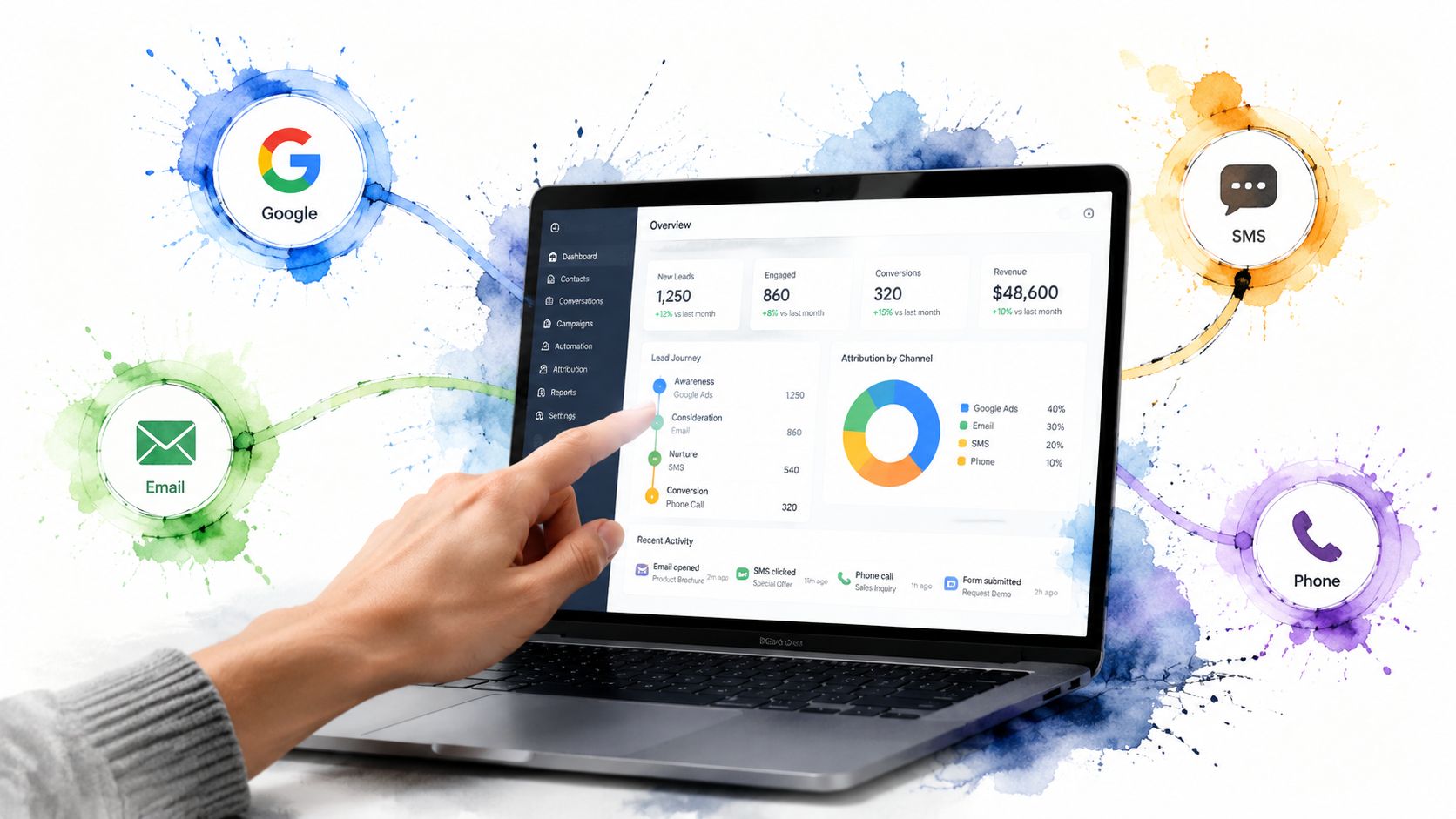
A lead rarely converts because of one touch. They click a Google ad, ignore the first email, read reviews, visit the site again, get an SMS, then finally book. If your reporting only credits the first click or the last click, you're not managing growth. You're guessing.
That's why the CRM matters so much. Not as a glorified contact list. As the operating system that connects Google Ads, Meta, forms, calls, email, SMS, and sales outcomes.
Stop letting channels operate like separate businesses
When channels run in silos, teams optimize for their own dashboards. Paid search wants cheaper leads. Email wants opens. Social wants engagement. Leadership wants revenue. Those goals clash unless attribution lives in one place.
A clear multi-touch attribution model shows which combinations move a buyer from interest to booked business. That lets you reinvest in proven sequences instead of overfunding whichever platform shouts loudest.
Track the sequence, not just the source
A DailyStory analysis reports that 87% of franchise organizations rely on analytics to measure campaign effectiveness, with key KPIs including delivery rates, response rates, and opt-out rates. It also stresses weekly tactical adjustments based on email click-through rate and SMS response rates, plus monthly location-level reviews for lead volume, conversion rate, and CPA, as outlined in this breakdown of franchise marketing metrics.
If your franchisees can't see which follow-up sequence drives revenue, they won't trust the system long enough to use it.
The right rollout sequence
- Start simple: Build three to five high-impact nurture paths first.
- Use SMS with intention: Email alone misses people. Timely text follow-up keeps the conversation moving.
- Review attribution weekly: Show franchisees which sequences produced calls, appointments, and sales.
- Report by role: Paid teams need channel detail. Leadership needs unified revenue reporting.
- Make adoption mandatory: Optional CRM usage becomes partial data, and partial data becomes bad decisions.
The best franchise marketing strategies don't just acquire leads. They control what happens next.
5. Franchisee Enablement Program and Distributed Marketing Authority
A franchise network grows faster when local operators can move. It breaks when they improvise without guardrails.
That balance matters. Franchisees know their neighborhoods, seasonal patterns, referral sources, and buyer objections better than corporate ever will. But if every owner creates their own ads, rewrites offers, or changes brand language on the fly, the network loses consistency and wastes money relearning the same lessons.
Give franchisees authority with constraints
Enablement starts with clarity. Franchisees need a dashboard they can understand, templates they can launch fast, and support that feels practical instead of corporate.
Many brands frequently overcomplicate this process. Don't bury owners in jargon about platform metrics. Show them cost per lead, booked appointments, close rate, and revenue contribution. Then connect them to a repeatable lead generation system for local businesses so they can execute locally without going rogue.
What strong enablement actually includes
- Self-serve campaign templates: Owners should launch approved local campaigns in minutes.
- A green-light approval path: Fast approvals keep momentum and reduce side-channel improvisation.
- Monthly wins calls: Top-performing franchisees should teach peers what's working in the field.
- One-to-one coaching: Underperformers need specific help, not generic accountability speeches.
- Shared visibility: When owners can benchmark themselves against similar units, excuses shrink.
One practical scenario: a home services franchisee notices a local spike in demand tied to weather events. With approved creative, fast launch rights, and CRM-backed tracking, they can move quickly while staying on brand. Without enablement, they either wait too long or run unauthorized campaigns that create downstream cleanup.
Franchise marketing strategies work better when franchisees feel like growth partners, not just local operators following orders.
6. Conversion Rate Optimization and the Leaky Bucket Fix
If your landing pages, forms, and booking flow leak, buying more traffic won't save you. It just makes the waste more expensive.
This is one of the easiest places to cut through marketing theater. A franchise can spend months debating new channels while a broken form, slow page, confusing offer, or weak mobile experience erodes conversions every day. The problem usually isn't demand. It's friction.
Fix the bottleneck closest to money
Start where leads fall out. For one franchise, that's a cluttered booking page. For another, it's a call form asking for too much information too early. For another, it's a mismatch between ad promise and landing page copy.
The fastest way to improve performance is often through focused testing. A smart conversion rate improvement process looks at landing pages, form length, trust signals, mobile usability, and post-submit follow-up as one connected system.
The CRO priorities that usually matter most
- Shorten forms first: Every unnecessary field creates hesitation.
- Add proof at decision points: Reviews, testimonials, and service guarantees belong where buyers stall, not sprayed everywhere.
- Test mobile separately: Mobile buyers behave differently and often abandon for different reasons.
- Measure micro-conversions: Calls, quote starts, downloaded guides, and video views often predict downstream revenue.
- Change one major variable at a time: Clear tests beat messy guesses.
A legal franchise might discover that consultation pages convert better when the attorney image appears above the fold. A medical franchise might improve bookings by simplifying appointment request language. A service franchise might recover lost leads by making the “book now” path obvious on mobile.
CRO isn't glamorous, which is exactly why it works. Franchise marketing strategies get more profitable when you stop pouring water into a cracked bucket.
7. Membership Loop and Ad Suite Integration with the Proprietary Advantage
Most franchises treat software, advertising, and reputation management like separate purchases. That's inefficient, and it leaves performance gains on the table.
A stronger model creates a loop. Ad spend brings in demand. The CRM captures behavior. Review management strengthens trust. Better trust improves conversion. Better data improves targeting. Better targeting improves future ad efficiency. That's compounding, not campaign hopping.
Why the integrated model wins
At The Advertising Suite, the Membership is designed to make that loop practical. Members receive a 25% discount on all services and access to the proprietary CRM and review management software. That isn't a side perk. It's the system that keeps marketing execution tied to customer experience and revenue.
For franchise networks, this matters because disconnected tools create disconnected accountability. One vendor runs ads, another sends follow-up, no one owns reviews, and leadership gets six dashboards that don't agree. An integrated ecosystem fixes that.
Membership should feel less like a fee and more like operational leverage.
What the Membership changes for franchise brands
- Lower friction to adopt: The service discount gives owners an immediate reason to standardize.
- Better data quality: More locations inside one CRM means cleaner attribution and stronger forecasting.
- Stronger reputation at scale: Review workflows don't depend on local memory.
- More consistent execution: The same system powers creative, follow-up, and reporting.
- Longer-term retention: Software embedded in daily operations makes good habits stick.
This is also where The Advertising Suite's growth-tech hybrid model becomes practically useful. We don't separate strategy from the platform that executes it. We align them.
And yes, scale matters. Over 10,000 satisfied customers have validated that methodology. That kind of volume doesn't happen from chasing vanity metrics. It comes from building systems that drive the bottom line.
If you're serious about franchise marketing strategies, stop stacking disconnected subscriptions. Build one engine.
8. Predictive Analytics and Franchisee Performance Modeling for Data-Driven Support
Reactive support is expensive. By the time a franchisee asks for help, the pipeline is often already thin, reviews may be slipping, follow-up is inconsistent, and local confidence is down.
Predictive analytics gives franchisors a chance to intervene earlier. Not with guesswork, and not with punishment. With pattern recognition.
Use data to spot trouble before revenue drops harder
Top-performing franchise owners already rely on a broad analytics stack that includes Google Analytics, CRM systems such as Salesforce and HubSpot, social analytics tools like Hootsuite and Sprout Social, and business intelligence platforms such as Tableau and Power BI, according to Wild Coffee Marketing's overview of franchise analytics tools. More important than the tool list is the operating discipline behind it: clear objectives, real-time dashboards, team training, and feedback loops.
That's the core of predictive support. You don't need a flashy AI label to make this work. You need connected inputs and consistent review habits.
Signals worth watching
- Lead volume changes: A drop in inbound demand often shows up before a location reports a revenue problem.
- Review trends: Slower review generation or rising negative sentiment usually signals operational slippage.
- Response behavior: Delayed follow-up hurts close rates and usually indicates staffing or process issues.
- Pipeline movement: If opportunities stall longer than normal, the local sales motion may need intervention.
- Campaign adoption: Franchisees who stop using approved tools often drift into underperformance.
A practical scenario: a medical franchise location shows weaker lead response, fewer recent reviews, and a lower rate of appointments moving to completed visits. That location needs coaching, staffing review, and local execution support now, not three months from now.
Franchise marketing strategies become much more durable when support is proactive. The point of prediction isn't surveillance. It's earlier help, smarter coaching, and less avoidable revenue loss.
9. Competitive Market Share Capture with the Hyper-Local Playbook
Spreading budget evenly across every market feels fair. It also makes it harder to dominate anywhere.
Franchises win faster when they concentrate firepower. Pick the markets where your model has a real advantage, align corporate support with local execution, and flood the zone with better visibility, stronger reputation, and tighter follow-up. You're not trying to be mildly present everywhere. You're trying to become the default option in the markets that matter most.
Focus beats dilution
This works especially well in fragmented service categories where independent operators still control a lot of local demand. A franchise can out-execute smaller local businesses by combining approved creative, cleaner follow-up, stronger review generation, and coordinated search visibility.
The mistake is assuming hyper-local means improvisational. It doesn't. It means precise. A legal franchise may prioritize neighborhoods with strong demographic fit and weak local review competition. A home service brand may target territories where response speed and trust matter more than lowest price. A medical franchise may build local authority around provider credibility and convenience.
How to structure a local market push
- Choose markets intentionally: Look at demand, local fragmentation, operational readiness, and franchisee capacity.
- Customize the message: Local buyers care about local proof, local availability, and local trust signals.
- Support density: Multiple strong units in one market create referral momentum and stronger local presence.
- Set clear thresholds: If a market isn't responding to focused effort, rework the offer or shift the budget.
- Coordinate brand and local activity: National campaigns should reinforce local visibility, not compete with it.
One common pattern in strong franchise systems is this: the markets with the best local operator discipline tend to convert national brand strength into regional dominance faster. Not because the logo is better, but because the execution is tighter.
Franchise marketing strategies should help you win specific ground, not just generate generic awareness.
10. Customer Journey Mapping and Experience Optimization from Prospect to Advocate
Marketing can't fix an experience problem. It can only expose it faster.
A franchise might run strong ads, generate good leads, and still underperform because the phones aren't answered, appointment confirmations are clunky, front-desk communication is slow, or post-service follow-up never happens. That isn't a lead generation issue. It's a journey issue.
Map the full path, not just the first click
The strongest franchise brands connect ad promise to operational reality. If your ad says “fast response” but calls go unanswered, your campaign is creating disappointment at scale. If your landing page sells trust but the handoff feels chaotic, conversion suffers and reviews follow.
This is why customer experience optimization belongs inside your growth plan. It aligns messaging, service delivery, follow-up, and advocacy so each stage supports the next.
Where franchises usually lose momentum
- Phone response gaps: The lead was ready, but no one picked up.
- Slow email or SMS follow-up: Intent cooled while the team waited.
- Mismatch between ad and offer: Buyers clicked one promise and found another.
- Weak onboarding or service confirmation: Uncertainty creates drop-off.
- No advocacy process: Satisfied customers leave without reviewing, referring, or returning.
The newer frontier here is intelligence at the local level. Xpressdocs highlights a key emerging question for franchises: how to use AI-driven predictive analytics for local market segmentation without violating privacy rules. Its 2025 framing says 70% of franchises struggle to implement AI-driven local segmentation because of privacy compliance hurdles, while less than 10% of marketing content addresses the issue. It also notes that privacy-first AI models using aggregated local data can improve local campaign ROI by 35%, as explained in this discussion of strategic franchise marketing and privacy-aware AI.
That matters because customer journey optimization is no longer just operational. It's also about using compliant data to understand local buyer behavior without overstepping privacy boundaries.
A mapped journey turns random customer interactions into a repeatable experience. That's how franchises create advocates, not just transactions.
Top 10 Franchise Marketing Strategies Compared
| Item | Implementation complexity | Resource requirements | Expected outcomes | Ideal use cases | Key advantages |
|---|---|---|---|---|---|
| Localized Digital Dominance: Multi-Location Brand Strategy | High, multi-location governance and tooling | High, local pages, local SEO, unified CRM | Increased foot traffic and per-unit revenue with clear ROI | Service-heavy franchises with many local units (HVAC, salons) | Unit-level accountability; captures local buyer intent |
| Reputation-Driven Lead Generation: The Review-to-Revenue Engine | Medium, automation + policy standardization | Moderate, review tooling, response teams | Higher conversion rates, improved local search ranking | Trust-driven categories (medical, legal, home services) | Authentic social proof that qualifies inbound leads |
| Performance-First Creative Ecosystem: Data-Driven Content Rotation | Medium–High, testing framework and governance | Moderate–High, creative production and analytics | Lower CPA and faster scale of winning assets | Ad-intensive franchises and e-commerce models | Data-backed creatives; reduces wasted ad spend |
| Omni-Channel Attribution and Lead Nurturing: The CRM as Revenue Lever | High, integrations and attribution modeling | High, CRM, automation, data engineering | Better channel mix visibility and higher conversion rates | Complex journeys across Google, Meta, email, SMS | Unified customer view; optimized multi-touch nurturing |
| Franchisee Enablement Program: Distributed Marketing Authority | Medium, platform + training + approvals | Moderate, self-service tools, training resources | Higher franchisee adoption and increased local spend | Networks wanting decentralized execution and accountability | Scales local execution; improves franchisee satisfaction |
| Conversion Rate Optimization (CRO): The Leaky Bucket Fix | Medium, rigorous testing and cross-functional buy-in | Moderate, testing tools, analytics, ops support | Immediate ROI on current traffic; lower cost-per-customer | Mature traffic channels needing efficiency gains | High ROI without extra traffic; fixes funnel leaks |
| Membership Loop and Ad Suite Integration: The Proprietary Advantage | High, build and maintain proprietary systems | Very high, platform dev, support, discounts | Compounding member advantages; recurring franchisor revenue | Franchisors seeking monetization and data lock-in | Financial alignment; proprietary data network effects |
| Predictive Analytics and Franchisee Performance Modeling | Very high, advanced models and validation | Very high, long-term data, data science teams | Early detection of at-risk units; targeted growth opportunities | Large networks with historical data and scale goals | Proactive interventions; market and churn foresight |
| Competitive Market Share Capture: The Hyper-Local Playbook | Medium–High, market selection and execution discipline | High, concentrated media spend and local ops | Rapid market dominance and lower CAC in focus areas | Brands targeting concentrated metro markets for share | Efficient capital use; builds local fortress positions |
| Customer Journey Mapping and Experience Optimization: From Prospect to Advocate | Medium–High, cross-functional mapping and fixes | Moderate, research, ops changes, feedback systems | Higher retention, increased LTV, improved referrals | Franchises where operations impact conversion heavily | Aligns marketing and operations; sustainable growth |
Your Franchise Is a Revenue Engine. Let's Build It Together.
Most franchise brands don't have a traffic problem. They have a systems problem.
They generate leads in one place, track them in another, follow up inconsistently, and treat reviews like a side task. Then they wonder why ad costs rise while unit-level performance varies wildly. That's what happens when marketing, sales, and customer experience operate like separate departments with separate definitions of success.
The fix is integration. That's why the best franchise marketing strategies don't live in a slide deck. They live in the day-to-day operating system of the business. Local pages, paid media, review generation, CRM workflows, franchisee dashboards, conversion paths, and customer experience all need to point at the same target. Revenue.
That's the lens we use at The Advertising Suite. We don't optimize for vanity metrics because vanity metrics don't pay franchise fees, fund expansion, or help a struggling location recover. We optimize for the bottom line. Qualified leads. Better follow-up. Stronger local trust. Higher conversion efficiency. Cleaner visibility into what each location is producing.
This is where our growth-tech hybrid model matters. Elite strategy without infrastructure breaks at scale. Software without strategy becomes shelfware. Franchises need both. Our built-in CRM and reputation ecosystem aren't add-ons. They are core to making your ad spend accountable. They create the closed-loop visibility most multi-location brands are missing.
That matters even more for service-based franchises where reputation and responsiveness shape every buying decision. A legal office, medical practice, HVAC team, or home service location doesn't get many second chances. If the customer journey is slow, confusing, or inconsistent, the lead moves on. If the experience is sharp from search to follow-up, the same media budget performs better.
There's also a compounding effect that weak marketing partners rarely build for. When your franchisees use one system, you create cleaner data, better benchmarking, stronger accountability, and faster rollout of what works. When they're all improvising, every location pays tuition for the same lesson.
That's why our Membership matters. It gives brands a practical path to standardize the right things without slowing local action. The 25% discount on all services lowers friction. The proprietary CRM improves visibility and follow-up. The review management software strengthens trust where it counts most, at the local level. Together, those pieces create a repeatable engine instead of a pile of disconnected tactics.
If you're an agency-burned founder, this should sound refreshingly simple. Less reporting theater. More operational clarity. Less obsession with clicks. More focus on booked calls, closed deals, and retained customers.
If you're leading a scale-ready franchise network, the opportunity is bigger than improving campaign performance. You can build a model that helps every unit act like a stronger local business while benefiting from centralized strategy, technology, and support. That's how brands scale without losing control.
And if you want a partner who can execute this with you, not just advise from the sidelines, that's where we fit. We're built to be the extension of your team. Strategy, execution, CRM visibility, review management, and CRO all tied to growth you can measure.
Book a Growth Consult if you're ready to turn disconnected marketing into a predictable profit center. Or explore the Membership if you want the software access and service discount that make scale easier to manage.
The Advertising Suite helps franchises turn ad spend into sustainable growth with a results-first framework built around strategic creative, omni-channel execution, conversion rate optimization, and a proprietary CRM plus review management ecosystem. If you're ready to stop buying vanity metrics and start building a scalable revenue engine, book a Growth Consult or explore the Membership and access the 25% discount on all services.
